
On To vs Onto

On To vs Onto: Meaning, Difference, Rules & Examples Explained

“On to” and “onto” are both correct, but they are used differently.

  • Onto = movement to a position on a surface or something becoming attached/placed.
  • On to = continuing an action, moving forward, or moving from one thing to another.

Examples:

✔ The cat jumped onto the table.
✔ Let’s move on to the next topic.

The difference between on to vs onto depends on whether you are talking about physical movement or continuation.

The confusion between on to vs onto is one of the most common spelling and grammar problems in English. These two expressions look almost identical, sound similar when spoken, and are often used in similar situations. However, they do not always carry the same meaning.

Many writers wonder whether they should write on to or onto when describing movement, progress, or position. The answer depends on the role each word plays in a sentence.

The word onto is usually a preposition that describes movement toward a surface, location, or position. Meanwhile, on to is made of two separate words and often shows continuation, progress, or a transition from one activity to another.

This guide explains the difference between onto vs on to, provides examples, covers common mistakes, and shows how these expressions work in everyday English.

On To vs Onto – Main Difference

FeatureOn ToOnto
Word typeTwo separate wordsOne word
Main meaningContinue or move forwardMove to a surface or position
ShowsProgress or transitionPhysical movement
ExampleMove on to the next lessonJump onto the chair
Common useActions and topicsLocations and surfaces

What Does “Onto” Mean?

The word onto is a preposition that describes movement from one place to another where something ends up on a surface, object, or position.

It answers the question:

Where did something move?

For example:

  • The child climbed onto the bed.
  • The bird flew onto the roof.
  • She placed the book onto the desk.

In these sentences, something moves and finishes on top of something else.

The idea behind onto is usually a change of position. There is movement from one place to another, and the final location is on a surface or object.

What Does “On To” Mean?

The phrase on to has a different purpose. It usually means continuing forward, changing to another activity, or moving from one stage to another.

It answers questions like:

What happens next?

Examples:

  • After dinner, we moved on to dessert.
  • The teacher went on to explain the next chapter.
  • She moved on to a new project.

Here, there is no physical movement onto a surface. Instead, the meaning is about progress or continuation.

On To or Onto – How to Choose the Correct One

Choosing between on to or onto becomes easier when you look at the meaning.

Ask yourself:

Is something physically moving onto a surface?

Use:

✔ Onto

Example:

The dog jumped onto the sofa.

Is something continuing or moving to the next thing?

Use:

✔ On to

Example:

Let’s move on to the next question.

This simple difference solves most confusion.

Onto vs On To in Real-Life Examples

The difference becomes clearer through everyday situations.

Physical Movement

  • The phone fell onto the floor.
  • He stepped onto the bus.
  • The child climbed onto the chair.

These examples involve position.

Progress or Change

  • She moved on to a new career.
  • We went on to discuss another topic.
  • He continued on to the final stage.

These examples involve progress.

On To vs Onto Sentence Comparison

SentenceCorrect ChoiceReason
The cat jumped ___ the tableOntoPhysical movement
We moved ___ another topicOn toChanging subject
The player stepped ___ the fieldOntoEntering a place
She went ___ bigger goalsOn toContinuing forward
The keys fell ___ the floorOntoLanding on surface

Why People Confuse On To and Onto

The confusion happens because English often combines words that look separate but have related meanings.

Several factors create this problem:

Similar Sound

When spoken, “on to” and “onto” often sound almost identical.

Similar Appearance

The only difference is the space between the words.

Overlapping Meanings

Both can involve movement, which makes choosing difficult.

Informal Writing

People often write quickly in messages and use the wrong form without noticing.

Is It On To or Onto in Questions?

Many people search for its it on to vs onto because they are unsure how to use these words in questions.

The correct phrase depends on the sentence.

Examples:

✔ Is it onto the table?
✔ Are we moving on to the next chapter?

Incorrect:

❌ Its it onto the table?

Remember:

“Is it” asks a question.
“Its” shows possession.

Onto vs On To in Grammar

From a grammar perspective, onto functions as a preposition.

A preposition shows the relationship between things.

Examples:

  • on the table
  • under the chair
  • onto the roof

The phrase on to contains:

  • on (preposition/adverb)
  • to (preposition/particle)

Together, they create the idea of continuing or moving forward.

Common Mistakes With Onto and On To

Mistake 1: Using Onto for Every Movement

Incorrect:

I moved onto the next lesson. ❌

Correct:

I moved on to the next lesson. ✔

The lesson is not a physical surface.

Mistake 2: Separating Onto When It Shows Position

Incorrect:

The cat jumped on to the table. ❌

Correct:

The cat jumped onto the table. ✔

Although some writers may use both forms, “onto” is the standard choice for physical movement.

Mistake 3: Confusing Progress With Location

Incorrect:

She went onto another topic. ❌

Correct:

She went on to another topic. ✔

The topic is a subject, not a place.

On To and Onto in Different Contexts

Animals

  • The dog jumped onto the bed.
  • The bird landed onto the branch.

People

  • He stepped onto the stage.
  • She moved on to a new opportunity.

Conversations

  • Let’s move on to another point.

Objects

  • Put the cup onto the shelf.

The History Behind Onto

The word onto developed as English combined the idea of “on” with movement toward something.

Over time, “onto” became accepted as a single word when describing physical movement or position.

However, “on to” remained separate when it meant continuing, advancing, or moving forward.

This explains why both forms exist today.

On To vs Onto in Writing

In careful writing, choosing the correct form improves clarity.

Writers often use:

Onto:

  • movement
  • placement
  • physical location

On to:

  • transition
  • progress
  • next step

Examples:

  • The box was moved onto the truck.
  • The company moved on to a new plan.

Everyday Examples You Can Remember

Onto:

  • Put the phone onto the charger.
  • The baby climbed onto the chair.
  • Snow fell onto the ground.

On To:

  • I moved on to another job.
  • Let’s go on to the next idea.
  • He went on to become famous.

Quick Memory Trick

A simple way to remember:

Onto = on a thing

Example:

The cup is onto the table.

On to = next thing

Example:

Move on to the next task.

If the sentence is about a surface, choose onto.
If it is about progress, choose on to.

See Also:

FAQs

What is the difference between on to vs onto?

Onto describes movement to a surface, while on to describes continuation or moving forward.

Which is correct: on to or onto?

Both are correct, but they are used in different situations.

Is onto one word?

Yes, “onto” is a single word when it means movement to a surface or position.

Can on to and onto be interchangeable?

Sometimes they can appear similar, but they often change the meaning of a sentence.

How do I remember onto vs on to?

Use “onto” for physical location and “on to” for the next step or continuation.

Is “its it on to vs onto” correct?

No. The correct question structure uses “Is it,” not “Its it.”

Conclusion

The difference between on to vs onto becomes simple once you focus on the meaning of the sentence. Use onto when something moves to a surface, object, or position. Use on to when someone continues, progresses, or moves to another stage.

Although these words look almost identical, the small space between them can completely change the meaning. Paying attention to context helps you choose the correct form every time.

Whether you are writing an email, a message, or an article, knowing when to use on to or onto makes your sentences clearer and more accurate.


Dreamed vs Dreamt

Dreamed vs Dreamt: Meaning, Difference, Usage?

Dreamed and dreamt are both correct past tense forms of the word “dream.” The main difference is based on regional English usage.

✔ Dreamed = More common in American English
✔ Dreamt = More common in British English

Both words mean having a dream while sleeping or imagining something.

Examples:

  • I dreamed about my childhood home.
  • I dreamt about my childhood home.

Both sentences are correct.

The confusion between dreamed vs dreamt is very common because both words describe the past form of the verb “dream.” Many English learners wonder whether one spelling is correct and whether the other one should be avoided.

Unlike many confusing word pairs where one option is completely wrong, dreamed and dreamt are both accepted English words. The difference mainly comes from language style, location, and writing preference.

People often search for dreamed or dreamt because they see both forms used in books, movies, conversations, and online content. Some speakers prefer the regular past tense “dreamed,” while others naturally use the shorter form “dreamt.”

This guide explains the difference between dreamed and dreamt, their meanings, grammar rules, examples, common mistakes, and when to use each form.

Dreamed vs Dreamt – Main Difference

FeatureDreamedDreamt
Correct spellingYesYes
Past tense of dreamYesYes
Common inAmerican EnglishBritish English
StyleRegular verb formIrregular-style form
MeaningSameSame
Formal usageCommonCommon

What Does Dreamed Mean?

The word dreamed is the simple past tense and past participle form of the verb “dream.”

It means:

  • Experienced dreams during sleep
  • Imagined something
  • Hoped for something

The word is created by adding -ed to the base verb.

Dream → Dreamed

Examples of Dreamed:

  • I dreamed about traveling around the world.
  • She dreamed of becoming a doctor.
  • They dreamed about their future together.
  • He dreamed a strange story last night.

In modern English, especially in the United States, “dreamed” is the form most people naturally choose.

What Does Dreamt Mean?

The word dreamt is another past tense form of “dream.”

It has the same meaning as dreamed but is more frequently used in British English.

Dream → Dreamt

Examples of Dreamt:

  • I dreamt about an old friend.
  • She dreamt of visiting Paris.
  • He dreamt that he was flying.
  • We dreamt about a better future.

Dreamt often sounds slightly more traditional or literary, but it is still completely correct.

Dreamed or Dreamt – Which One Should You Use?

The choice between dreamed or dreamt depends mostly on the type of English you are using.

If you write American English, “dreamed” will usually feel more natural.

If you write British English, “dreamt” is very common.

However, neither choice is wrong.

American Style:

  • I dreamed about my old school.

British Style:

  • I dreamt about my old school.

Both communicate the same idea.

Dreamt vs Dreamed – Regional Difference Explained

The difference in dreamt vs dreamed is mainly connected with geography.

English TypePreferred Form
American EnglishDreamed
British EnglishDreamt
Canadian EnglishBoth
Australian EnglishDreamt more often
Online communicationBoth

English has many examples where different regions prefer different spellings or word forms.

Why Are There Two Forms?

The English language has two common ways to create past tense verbs:

Regular Verbs

Add “-ed”

Example:

  • Walk → Walked
  • Play → Played
  • Dream → Dreamed

Alternative Verb Forms

Some verbs developed shorter historical forms.

Example:

  • Dream → Dreamt

Both forms remained in use.

Dreamed vs Dreamt in Sentences

Seeing both forms in real examples makes the difference easier to recognize.

With Sleeping Dreams

  • I dreamed about a mysterious place.
  • I dreamt about a mysterious place.

With Goals and Hopes

  • She dreamed of owning a house.
  • She dreamt of owning a house.

With Imagination

  • They dreamed of a new invention.
  • They dreamt of a new invention.

The meaning stays the same.

Is It Dreamed vs Dreamt? Correct Question Usage

Many people search for its it dreamed vs dreamt because they are confused about the phrase structure.

The correct question form is:

✔ Is it dreamed or dreamt?
✔ Which one is correct: dreamed or dreamt?

Not:

❌ Its it dreamed vs dreamt?

The phrase “it’s” means “it is,” while “is it” is used to create a question.

Examples:

  • Is it dreamed or dreamt in British English?
  • Is this sentence better with dreamed or dreamt?

Common Mistakes With Dreamed and Dreamt

Although both words are correct, people still make mistakes.

Mistake 1: Thinking Dreamt Is Wrong

Some people believe dreamt is incorrect because it looks unusual.

Example:

“I dreamt about my vacation.”

This is completely correct.

Mistake 2: Mixing Forms

Incorrect:

“I dreamt about it and dreamed about it yesterday.”

This sounds repetitive.

Better:

“I dreamed about it yesterday.”

or

“I dreamt about it yesterday.”

Mistake 3: Using Dream Instead of Past Tense

Incorrect:

“I dream about my old house last night.”

Correct:

“I dreamed about my old house last night.”

Mistake 4: Confusing Dreamed With Imagined Only

Dreamed can refer to sleep dreams and life goals.

Examples:

  • I dreamed about a dragon. (sleep)
  • I dreamed of becoming famous. (goal)

Dreamed vs Dreamt Usage Comparison

SituationExample
Sleep experienceI dreamed about a beach
Sleep experienceI dreamt about a beach
Future goalShe dreamed of success
Future goalShe dreamt of success
MemoryHe dreamed of his childhood
MemoryHe dreamt of his childhood

Dreamed and Dreamt in Daily Conversation

Both forms appear in everyday communication.

People use them when talking about:

  • Night dreams
  • Memories
  • Ambitions
  • Hopes
  • Imagination

Examples:

“My dream last night was strange.”

“I dreamed I was flying.”

“I dreamt about my old neighborhood.”

These sentences all sound natural depending on the speaker’s preference.

Dreamed vs Dreamt in Writing

In writing, both forms are acceptable.

However, consistency matters.

If you start using “dreamed,” continue using it throughout your writing.

If you choose “dreamt,” keep that style consistent.

Mixing them unnecessarily can make writing feel less polished.

Similar Words Related to Dreams

The word dream connects with many related expressions.

WordMeaning
DreamA thought or image during sleep
DreamingThe act of having dreams
DreamerA person who dreams
DreamyHaving a pleasant or magical feeling
DaydreamImagining while awake

Dreamed vs Dreamt in Literature and Media

Writers often choose between dreamed and dreamt based on style.

“Dreamt” is often seen in:

  • Poetry
  • Classic writing
  • British literature

“Dreamed” is common in:

  • Modern writing
  • American books
  • Everyday communication

Neither form changes the emotional meaning.

How to Remember the Difference

A simple way to remember:

Dreamed = American preference
Dreamt = British preference

Think of “dreamed” as the regular English pattern and “dreamt” as the shorter traditional form.

See Also:

FAQs

Is dreamed or dreamt correct?

Both are correct past tense forms of “dream.”

Which is better, dreamed or dreamt?

Neither is better. Choose based on your English style.

Is dreamt used in American English?

Yes, but dreamed is more common in American English.

Is dreamed used in British English?

Yes, but British speakers often prefer dreamt.

What is the difference between dreamt vs dreamed?

The difference is mainly regional preference, not meaning.

Is “its it dreamed vs dreamt” correct?

No. The correct form is “Is it dreamed or dreamt?”

Conclusion

The difference between dreamed vs dreamt is simple: both words are correct and have the same meaning. The main difference comes from regional English preferences.

“Dreamed” is more common in American English, while “dreamt” is frequently used in British English. Whether you choose dreamed or dreamt, your sentence will still be correct as long as the usage is consistent.

The confusion around dreamed or dreamt happens because English allows multiple forms for some verbs. In this case, both versions work perfectly.

Quite or Quiet

Quite or Quiet Meaning, Difference, Usage & Examples Explained

Quite and quiet are two different words with different meanings.

✔ Quite = completely, fairly, or to a certain degree
✔ Quiet = making little or no noise; calm or silent

The confusion between quite vs quiet happens because both words look almost identical but their meanings are completely different.

Examples:

  • The movie was quite interesting. (fairly interesting)
  • The room was quiet. (no noise)

The words quite or quiet are among the most commonly confused words in English. They have almost the same letters, similar pronunciation in some accents, and only one small difference in spelling, which makes many writers mix them up.

Even though they appear similar, these two words describe completely different ideas. Quite is usually used to describe the level or degree of something, while quiet describes sound, silence, or a peaceful environment.

People often search for quite vs quiet because they want to know which spelling is correct in a sentence. The answer depends entirely on the meaning you want to express.

For example, if you want to say something is very interesting, you use quite. If you want to describe a place with no noise, you use quiet.

This guide explains the complete difference between these words, their meanings, examples, common mistakes, and easy ways to remember the correct usage.

Quite vs Quiet Main Difference Table

WordMeaningPart of SpeechExample
QuiteCompletely, fairly, ratherAdverbThe test was quite easy
QuietWithout noise, calm, silentAdjectiveThe library is quiet
QuiteShows degree or intensityDescribes amountShe is quite happy
QuietShows lack of soundDescribes environmentThe street is quiet

What Does Quite Mean?

The word quite is an adverb that changes the strength or degree of another word. It tells us how much something happens or how strong a quality is.

Depending on the sentence, quite can mean:

  • Very
  • Completely
  • Fairly
  • Rather
  • To some extent

The exact meaning depends on the context.

Examples of Quite:

  • The food was quite delicious.
  • She is quite talented.
  • The book was quite long.
  • I am quite sure about my answer.

In these sentences, quite does not describe silence. It describes the level of something.

What Does Quiet Mean?

The word quiet describes a place, person, situation, or environment with little or no sound.

It can also describe someone who is calm, reserved, or not very talkative.

Examples:

  • The classroom is quiet.
  • Please keep your voice quiet.
  • He is a quiet person.
  • The night was peaceful and quiet.

Quiet is related to sound and behavior, not degree.

Quiet or Quite How to Choose the Correct Word

Choosing between quiet or quite becomes easier when you focus on the meaning.

Ask yourself:

“Am I talking about noise?”

If yes → use quiet

Example:

  • The baby is quiet.

Meaning: The baby is not making noise.

“Am I describing how much or how strongly something happens?”

If yes → use quite

Example:

  • The baby is quite sleepy.

Meaning: The baby is very or fairly sleepy.

Quite vs Quiet Pronunciation Difference

The pronunciation difference can be small, especially for new English learners.

Quite:

Pronounced like:

kwite

It sounds similar to “white” with a “kw” sound.

Example:

  • Quite good
  • Quite interesting

Quiet:

Pronounced like:

kwy-et

It has two parts and includes an extra “et” sound.

Example:

  • Quiet room
  • Quiet place

The extra sound in quiet can help you remember that it relates to silence.

Why People Confuse Quite and Quiet

There are several reasons these words create confusion.

Similar Spelling

Both words contain:

  • q
  • u
  • i
  • t

The only spelling difference is the placement of the “e.”

Similar Sound

In fast speech, quite and quiet may sound close, especially for learners.

Different Language Backgrounds

People often translate words directly from their first language, which can cause spelling confusion.

Typing Mistakes

When writing quickly, people may accidentally replace one word with another.

Common Sentences With Quite

The word quite is often used before adjectives and adverbs.

Examples:

  • This restaurant is quite popular.
  • The weather is quite warm today.
  • She speaks English quite well.
  • The movie was quite enjoyable.

Here, quite adds extra information about the degree.

Common Sentences With Quiet

Quiet usually describes sound, places, or people.

Examples:

  • The room became quiet.
  • I need a quiet place to study.
  • The children are being quiet.
  • The neighborhood is very quiet.

These sentences focus on the absence of noise.

Quite or Quiet in Everyday Conversations

Both words appear frequently in daily communication.

A person may say:

“The restaurant was quite good.”

This means the restaurant was fairly or very good.

A person may also say:

“The restaurant was quiet.”

This means there was little noise inside.

The two sentences may talk about the same restaurant but describe completely different things.

Examples Showing the Difference

SentenceCorrect WordMeaning
The movie was ___ goodQuiteFairly good
The room was ___QuietNo noise
She is ___ confidentQuiteDegree of confidence
The baby is ___QuietNot making sound

Its It Quite or Quiet Correct Usage

Many people search for its it quite or quiet because they are unsure which word fits in a question.

The correct phrase depends on what you want to say.

Correct:

✔ Is it quite good?
✔ Is it quiet here?

Incorrect:

❌ Its it quiet good?
❌ Its it quite room?

Remember:

  • Quite = degree
  • Quiet = silence

Also, “it’s” and “its” are different words.

It’s means “it is.”

Example:

  • It’s quite nice.

Its shows ownership.

Example:

  • The dog moved its tail.

Quite vs Quiet in Different Situations

SituationCorrect WordExample
Talking about noiseQuietKeep quiet
Describing qualityQuiteQuite amazing
Talking about personalityQuietA quiet person
Showing degreeQuiteQuite difficult

Common Mistakes People Make

Mistake 1

Using Quiet for Degree

Wrong:

  • The movie was quiet good. ❌

Correct:

  • The movie was quite good. ✔

The sentence is about quality, not sound.

Mistake 2

Using Quite for Silence

Wrong:

  • The room is quite. ❌

Correct:

  • The room is quiet. ✔

The room has no noise.

Mistake 3

Mixing Them in Writing

Wrong:

  • It was a quiet interesting story. ❌

Correct:

  • It was a quite interesting story. ✔

Mistake 4

Confusing Spelling

Wrong:

  • The place was quite. ❌

Correct:

  • The place was quiet. ✔

Memory Trick to Remember Quite vs Quiet

A simple trick can help:

Quiet has “ie” inside it.

Think:

Quiet = silence = “shhh”

Quite has no “e” after the t sound.

Quite = amount or degree

Examples:

  • Quite big = degree
  • Quiet room = silence

Quite and Quiet in Writing and Speaking

The difference between quite and quiet becomes more important when you use English in daily writing, conversations, or professional communication. These words may look almost identical, but using the wrong one can completely change the meaning of a sentence.

For example:

  • “The office is quiet today.”
    This means the office has less noise than usual.
  • “The office is quite busy today.”
    This means the office has a high level of activity.

Both sentences are correct, but they describe completely different situations.

When speaking, context usually makes the meaning clear. However, in writing, spelling matters because readers cannot hear your pronunciation. Choosing the correct word helps your message stay clear.

Quiet vs Quite Examples in Real Life

Here are some everyday situations where these words appear:

At Home

  • The house is quiet because everyone is sleeping.
  • The house is quite comfortable.

The first sentence talks about noise, while the second talks about quality.

At School

  • The students became quiet during the exam.
  • The exam was quite difficult.

At Work

  • The meeting room is quiet.
  • The project is quite successful.

Quite vs Quiet Sentence Comparison Table

Incorrect SentenceCorrect SentenceReason
The room is quite.The room is quiet.Room has no noise
The food is quiet tasty.The food is quite tasty.Describes taste level
She is quite person.She is a quiet person.Describes personality
It was quiet amazing.It was quite amazing.Shows degree

Different Meanings of Quite

The word quite can have slightly different meanings depending on the sentence.

Quite Meaning “Very”

Example:

  • The movie was quite excellent.

Meaning:
The movie was very excellent.

Quite Meaning “Fairly”

Example:

  • The weather is quite cold.

Meaning:
The weather is fairly cold.

Quite Meaning “Completely”

Example:

  • Are you quite sure?

Meaning:
Are you completely sure?

Because of these different uses, quite depends heavily on context.

Different Meanings of Quiet

Quiet also has multiple uses.

No Sound

Example:

  • The room is quiet.

Meaning:
The room has little noise.

Calm Personality

Example:

  • He is quiet.

Meaning:
He does not talk much.

Request for Silence

Example:

  • Please be quiet.

Meaning:
Stop making noise.

Quiet or Quite in Social Media and Texting

In online communication, spelling mistakes between these words are common because people type quickly.

Someone may write:

“This place is quite.”

when they mean:

“This place is quiet.”

Although readers may guess the meaning, the sentence is technically incorrect.

In texting, people often ignore small spelling differences, but in formal writing, choosing the right word matters.

How to Avoid Confusion Between Quite and Quiet

A few simple checks can help you select the correct word.

Check the Topic

If your sentence is about:

  • Sound
  • Silence
  • Noise
  • Talking

Use quiet.

Examples:

  • quiet room
  • quiet street
  • quiet voice

If your sentence is about:

  • Amount
  • Level
  • Degree
  • Intensity

Use quite.

Examples:

  • quite good
  • quite large
  • quite interesting

Quite and Quiet Word Forms

These words can appear in different forms.

Quite Forms

Quite usually stays the same because it works as an adverb.

Examples:

  • quite happy
  • quite slowly
  • quite difficult

Quiet Forms

Quiet can change depending on usage.

Examples:

  • quiet (adjective)
  • quietly (adverb)
  • quietness (noun)

Sentences:

  • She is quiet.
  • She spoke quietly.
  • The quietness of the room was relaxing.

Common Phrases With Quite

Some popular phrases include:

  • Quite good
  • Quite sure
  • Quite different
  • Quite interesting
  • Quite possible
  • Quite clear

Examples:

  • This idea is quite interesting.
  • I am quite sure about that.

Common Phrases With Quiet

Popular quiet expressions include:

  • Quiet place
  • Quiet person
  • Quiet voice
  • Quiet moment
  • Keep quiet
  • Stay quiet

Examples:

  • I enjoy quiet places.
  • Please keep quiet during the movie.

Quite vs Quiet: Which One Is More Common?

Both words are commonly used, but they appear in different situations.

Quite appears often when people describe things:

  • quite good
  • quite expensive
  • quite unusual

Quiet appears often when people describe environments:

  • quiet room
  • quiet area
  • quiet evening

Neither word replaces the other.

See Also:

FAQs

What is the difference between quite and quiet?

Quite describes degree or level, while quiet describes silence or lack of noise.

Is quiet or quite correct?

Both are correct words, but they have different meanings.

Which is correct: quite vs quiet?

Both are correct depending on the sentence.

Example:

  • Quite good ✔
  • Quiet room ✔

Can quite mean very?

Yes, quite can mean very, fairly, or completely depending on context.

Can quiet describe a person?

Yes. A quiet person is someone who does not talk much or is calm.

Is “its it quite or quiet” correct?

No. The correct question would be:

“Is it quite or quiet?”

or:

“Is it quite good or quiet?”

Why are quite and quiet confused?

They have similar spelling and pronunciation, which causes mistakes.

Conclusion

The difference between quite or quiet is simple once you focus on the meaning behind each word. Quite is used when describing the level, amount, or intensity of something, while quiet relates to silence, calmness, or low noise.

The confusion between quite vs quiet happens because the spelling is very similar, but they cannot be used interchangeably. A sentence about sound needs quiet, while a sentence about degree needs quite.

Remember:

Quite = How much?
Quiet = How much noise?

Using these words correctly will make your writing clearer and prevent common spelling mistakes.

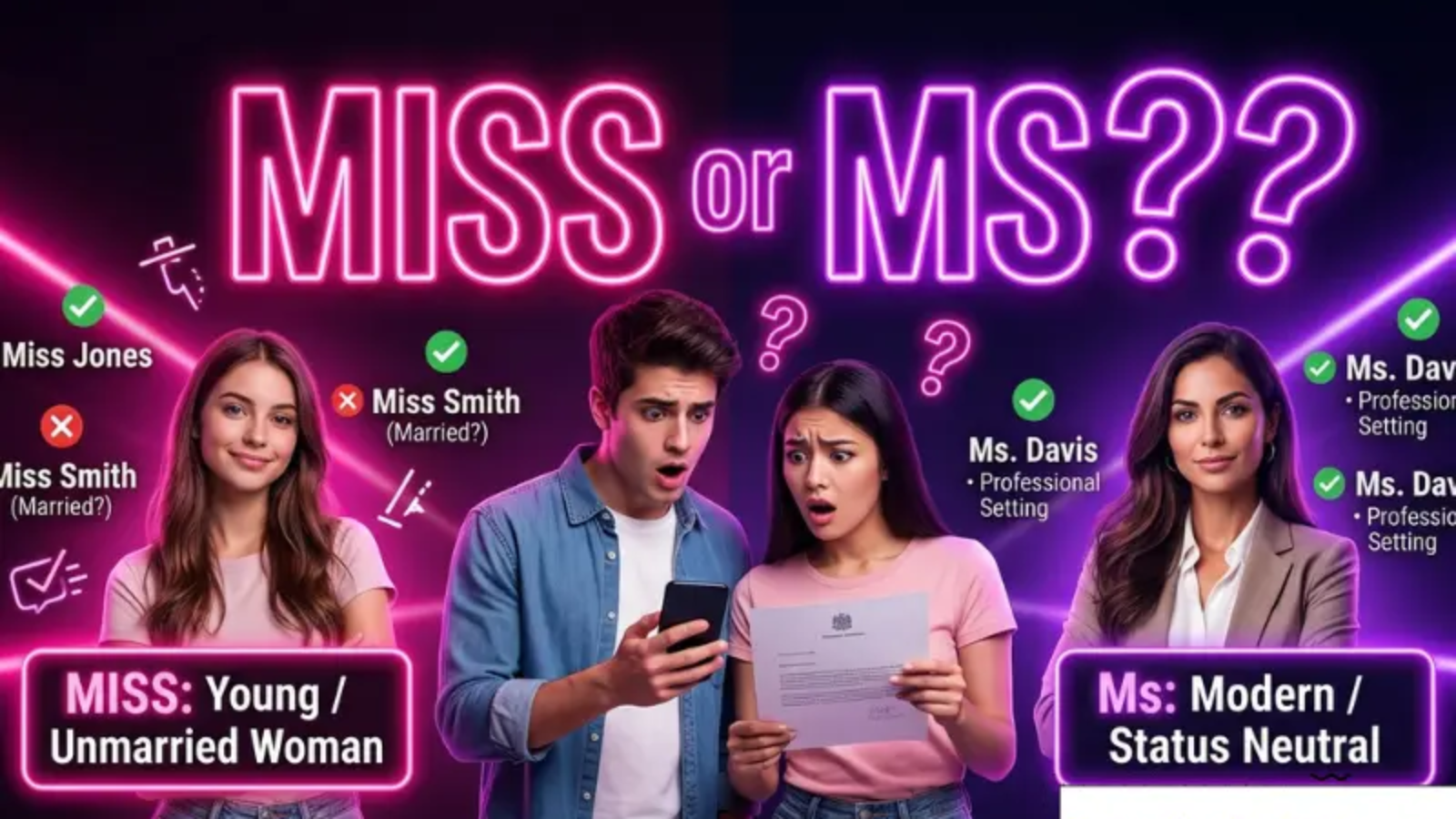
Miss or Ms

Miss or Ms:Meaning, Difference, Usage & Correct Title Explained

Miss and Ms are titles used before a woman’s name, but they have different uses.

✔ Miss = usually used for an unmarried woman or young girl
✔ Ms = used for a woman without showing marital status

Today, Ms is often preferred in professional and formal situations because it does not reveal whether someone is married or unmarried

Choosing the correct title before someone’s name can sometimes feel confusing, especially when deciding between miss or ms. These two words look similar, sound related, and are both used before a woman’s name, but their meanings and social uses are different.

In everyday conversations, emails, invitations, school settings, and professional communication, people often wonder whether they should write Miss or Ms. The confusion becomes stronger because both titles are respectful and acceptable in many situations.

The difference between miss vs ms mainly depends on whether you want to mention a woman’s marital status. While Miss traditionally refers to an unmarried woman, Ms is a neutral title that works for women regardless of whether they are married or single.

This guide explains the difference between Miss and Ms, shows examples, explains common mistakes, and helps you choose the right title in different situations.

Miss vs Ms Main Difference Table

TitleMeaningUsed ForShows Marital Status
MissTraditional title for unmarried womenYoung women, girlsUsually yes
MsNeutral title for womenAny adult womanNo
MrsTitle for married womenMarried womenYes
MrTitle for menAny manNo

What Does Miss Mean?

Miss is a traditional title used before a woman’s name. It has historically been used for unmarried women and younger females.

Examples:

  • Miss Sarah Johnson
  • Miss Emily Brown
  • Miss Anna Smith

In schools, children may call female teachers “Miss” as a respectful way to address them.

For example:

  • Good morning, Miss.
  • Can you help me, Miss?

In some cultures, Miss is still commonly used even without mentioning a person’s full name.

What Does Ms Mean?

Ms is a modern, neutral title used before a woman’s name without referring to her marital status.

It can be used for:

  • Single women
  • Married women
  • Divorced women
  • Women who prefer privacy about personal details

Examples:

  • Ms Taylor
  • Ms Johnson
  • Ms Williams

The title became popular because it treats women similarly to how “Mr” works for men. A man’s title does not reveal whether he is married, and Ms provides a similar option for women.

Miss or Ms Which One Should You Use?

The choice between miss or ms depends on the situation.

Use Miss when:

  • Talking about a young girl
  • Referring to an unmarried woman who prefers the title
  • Using a traditional style

Use Ms when:

  • Writing professional emails
  • Addressing someone you do not know personally
  • Avoiding assumptions about marriage

Examples:

Professional email:

✔ Dear Ms Anderson
❌ Dear Miss Anderson (unless you know she prefers it)

School situation:

✔ Miss, can you explain this lesson?

Its It Miss or Ms Correct Usage Explained

Many people search for its it miss or ms because they are unsure which title fits in a sentence.

The correct question form is:

✔ Is it Miss or Ms?

Not:

❌ Its it Miss or Ms?

The phrase “is it” creates a question, while “its” shows possession.

Examples:

  • Is it Miss Brown or Ms Brown?
  • Should I write Miss or Ms on the invitation?

Miss vs Ms in Formal Writing

Formal writing often requires choosing a respectful title. In business communication, Ms is generally a safe option because it does not make assumptions.

Examples:

Email:

Dear Ms Carter,

Thank you for your response.

Letter:

Ms Rebecca Lee
Marketing Department

Using Ms creates a professional tone while keeping personal information private.

History Behind Miss and Ms

The titles Miss and Ms developed from older English forms of address.

“Miss” became associated with unmarried women, while “Mrs” became connected with married women. Over time, people wanted a title that worked like “Mr” without showing marital status.

This led to wider use of “Ms.”

Today, both titles continue to exist, but they serve different purposes.

Miss vs Ms Usage Comparison

SituationBest ChoiceReason
Business emailMsNeutral and professional
Talking to a childMissCommon respectful term
Unknown adult womanMsAvoid assumptions
Traditional invitationMissMay follow style preference

Why People Confuse Miss and Ms

The confusion happens because:

Similar Appearance

Both words start with “M” and are placed before names.

Example:

Miss Laura
Ms Laura

They look almost identical.

Similar Pronunciation

In many accents, Miss and Ms sound very close, making spelling confusion common.

Changing Social Usage

Modern communication has shifted toward neutral titles, making Ms more common.

Pronunciation Difference Between Miss and Ms

Although they look different, pronunciation can be tricky.

Miss

Pronounced:

“mis”

Example:

Miss Brown

Ms

Usually pronounced:

“miz”

Example:

Ms Brown

The difference is small but noticeable.

Common Mistakes People Make

Mistake 1

Using Miss for Every Woman

Incorrect:

Dear Miss Johnson

(for every adult woman)

Better:

Dear Ms Johnson

unless you know she prefers Miss.

Mistake 2

Assuming Marriage Status

Using Mrs without knowing someone’s preference can create an incorrect assumption.

Mistake 3

Mixing Titles

Incorrect:

Ms Miss Sarah

Correct:

Ms Sarah
or
Miss Sarah

Mistake 4

Writing Wrong Forms

Incorrect:

Ms. Miss Brown

Correct:

Ms Brown

Miss or Ms in Different Countries

Usage can vary depending on culture and region.

Country/RegionCommon Usage
United StatesMs widely used
United KingdomMiss and Ms both common
CanadaMs common in professional settings
AustraliaMs frequently used
Schools worldwideMiss often used

Ms or Miss Does Order Matter?

People often search ms or miss because they see both titles and want to know which is better.

The answer depends on context.

Neither is universally wrong.

However:

  • Ms is more neutral
  • Miss is more traditional

For unknown adults, Ms is usually the safer choice.

Examples of Correct Sentences

Using Miss:

  • Miss Emma is our new teacher.
  • I spoke with Miss Brown yesterday.
  • Miss, could you repeat that?

Using Ms:

  • I sent the report to Ms Green.
  • Ms Wilson will attend the meeting.
  • Please contact Ms Adams.

Miss vs Ms vs Mrs Complete Comparison

TitleMeaningBest Used When
MissUnmarried womanTraditional or younger women
MsNeutral woman titleProfessional communication
MrsMarried womanWhen known/preferred
MrMale titleAny man

How to Choose the Right Title

When choosing between Miss and Ms, consider:

Relationship

If you know the person personally, use their preferred title.

Setting

Professional environments usually favor Ms.

Age

Younger girls are commonly called Miss.

Preference

A person’s preferred title should always be respected.

Miss or Ms in Emails

Email communication is one of the most common places where people make title mistakes.

Good examples:

✔ Dear Ms Parker,
✔ Hello Ms Wilson,

Avoid:

❌ Dear Miss/Mrs Parker (when unsure)

Using Ms keeps communication polite and professional.

Modern Use of Ms

Today, Ms is widely accepted because it focuses on respect rather than relationship status.

It is commonly used in:

  • Workplace communication
  • Academic writing
  • Official documents
  • Customer service
  • Invitations

Many women choose Ms because it gives them a simple title that matches the way Mr is used.

See Also:

FAQs

What is the difference between Miss and Ms?

Miss traditionally refers to unmarried women, while Ms is a neutral title for women.

Which is better, Miss or Ms?

For professional communication, Ms is usually preferred.

Can a married woman use Ms?

Yes. Ms can be used regardless of marital status.

Is Ms the same as Miss?

No. They are different titles with different meanings.

Is it miss or ms in an email?

Usually use Ms when writing to an adult woman you do not know personally.

What does Ms stand for?

Ms does not officially stand for a specific word; it is a title created as a neutral alternative.

Conclusion

The difference between miss or ms is mainly about tradition and neutrality. Miss is a traditional title often connected with unmarried women, while Ms is a modern title that can be used for any woman without mentioning marital status.

When choosing between miss vs ms, think about the situation, formality, and personal preference. For professional communication, Ms is usually the most suitable option because it remains respectful without making assumptions.

Complement vs Compliment

Complement vs Compliment: Meaning, Difference & Usage 

Complement and compliment are two different words with different meanings.

✔ Compliment = a nice comment, praise, or expression of admiration
✔ Complement = something that completes, improves, or matches something else

In simple words:

  • You compliment someone when you say something nice.
  • Something complements another thing when it goes well with it.

The confusion between complement or compliment is one of the most common spelling and vocabulary mistakes in English. These two words sound almost identical, but their meanings are completely different. Because they have only one extra letter difference, many people use them incorrectly in writing, conversations, and online messages.

The words often appear in similar situations, which makes the difference even harder to notice. For example, you might want to talk about a nice comment someone gave you, or you may want to describe how one thing matches another. In both cases, people often pause and wonder whether they should use complement vs compliment.

Knowing the difference helps you communicate clearly. A person can receive a compliment, while a shirt, color, or design can complement another item. These small differences completely change the meaning of a sentence.

This guide explains both words with examples, comparisons, common mistakes, and practical usage so you can choose the right word every time.

Complement vs Compliment  Main Difference Table

WordMeaningPart of SpeechExample
ComplimentPraise or positive commentNoun / VerbShe gave me a compliment
ComplementSomething that completes or matchesNoun / VerbThis sauce complements the meal
Compliment someoneSay something niceActionI complimented his work
Complement somethingAdd value or improveActionThe shoes complement the outfit

What Does Compliment Mean?

The word compliment means a positive remark, praise, or expression of approval toward someone or something.

When you tell someone they look great, did a good job, or have a nice quality, you are giving them a compliment.

A compliment usually makes someone feel appreciated or valued.

Examples of Compliment:

  • She gave me a nice compliment about my presentation.
  • His teacher complimented him on his hard work.
  • I received many compliments on my new hairstyle.
  • Your writing style deserves a compliment.

In everyday communication, compliments are commonly used to show kindness, respect, and encouragement.

What Does Complement Mean?

The word complement means something that completes, improves, balances, or matches another thing.

It can describe how two things work well together.

For example:

  • A jacket complements your outfit.
  • A sauce complements the flavor of food.
  • A color complements another color.

The idea behind complement is that one thing adds something valuable to another.

Examples of Complement:

  • This necklace complements your dress.
  • The music perfectly complements the scene.
  • These curtains complement the room design.
  • The flavors complement each other.

Compliment or Complement How to Choose the Right Word?

When deciding between compliment or complement, ask yourself one simple question:

Am I talking about praise or matching?

If you mean praise:

Use compliment.

Example:

“Your idea is amazing.”

That is a compliment.

If you mean something that fits or completes:

Use complement.

Example:

“This color matches your room.”

That is a complement.

Complement or Compliment Examples in Daily Life

Many situations can help show the difference.

Example 1

People

Correct:

  • Sarah gave me a compliment.

Meaning: Sarah praised me.

Incorrect:

  • Sarah gave me a complement.

Meaning changes.

Example 2

Clothing

Correct:

  • These shoes complement your outfit.

Meaning: The shoes match the outfit.

Incorrect:

  • These shoes compliment your outfit.

This would suggest the shoes are praising your outfit.

Compliment vs Complement in Sentences

SentenceCorrect WordReason
She praised my workComplimentPraise
The colors match wellComplementMatch
He said my presentation was greatComplimentPositive comment
The design improves the roomComplementAdds value
They liked my new haircutComplimentAdmiration

Why Are Compliment and Complement Confusing?

These words are confusing because:

Similar Pronunciation

Both words sound almost identical when spoken.

Similar Spelling

Only one letter separates them.

Related Ideas

Both words involve something positive.

A compliment makes someone feel good.

A complement makes something better.

Because both have a positive connection, people mix them up.

Is It Complement or Compliment? Correct Question Form

Many people search for its it complement or compliment because they are unsure how to write the phrase.

The correct question is:

✔ Is it complement or compliment?

Not:

❌ Its it complement or compliment?

The word “is” begins a question, while “its” shows possession.

Correct Examples:

  • Is it a compliment or a complement?
  • Is this color a complement to the design?
  • Was that a compliment?

Complement as a Verb

The word complement can be used as a verb when one thing improves another.

Examples:

  • The flowers complement the decoration.
  • The jacket complements his style.
  • The ingredients complement each other.

Here, complement means “to go well with.”

Compliment as a Verb

The word compliment can also be a verb.

It means giving praise.

Examples:

  • She complimented my cooking.
  • He complimented her presentation.
  • They complimented the artist.

Here, the action is expressing admiration.

Common Mistakes People Make

Mistake 1

Using Compliment for Matching

Wrong:

“This bag compliments my shoes.”

Correct:

“This bag complements my shoes.”

The bag does not praise the shoes. It matches them.

Mistake 2

Using Complement for Praise

Wrong:

“He gave me a complement.”

Correct:

“He gave me a compliment.”

He praised you.

Mistake 3

Mixing Them in Writing

Many people write quickly and choose the wrong spelling because the words sound the same.

Checking the meaning before writing avoids the mistake.

Memory Trick to Remember the Difference

A simple trick:

Compliment = Comment

Both start with “com.”

Think:

A compliment is a nice comment.

Complement = Complete

Both connect with the idea of making something whole.

Think:

A complement completes something.

Complement and Compliment in Food

These words are commonly used when discussing food.

Compliment:

“The chef received compliments.”

People praised the chef.

Complement:

“The herbs complement the dish.”

The herbs improve the flavor.

Food writing often uses both words, but they have different roles.

Complement and Compliment in Fashion

Fashion is another area where these words appear frequently.

Examples:

  • Your shoes complement your outfit.
  • She received compliments on her dress.

The outfit is matched, but the person receives praise.

Complement or Compliment in Professional Communication

In workplaces, both words appear often.

Compliment Examples:

  • Your manager complimented your performance.
  • The client gave a compliment.

Complement Examples:

  • This tool complements our workflow.
  • The new system complements existing processes.

Using the correct word makes your message clearer.

Complement vs Compliment Detailed Comparison

FeatureComplimentComplement
Main meaningPraiseComplete or match
Used forPeople, actions, achievementsObjects, ideas, designs
FeelingAppreciationCompatibility
ExampleNice job!Looks great together
Common questionWho praised?What matches?

Similar Words Related to Compliment

Words with similar meanings:

  • Praise
  • Admiration
  • Appreciation
  • Approval
  • Flattery
  • Encouragement

Examples:

“She received praise for her work.”

Similar Words Related to Complement

Words with similar meanings:

  • Complete
  • Improve
  • Match
  • Enhance
  • Balance
  • Support

Examples:

“The colors enhance the room.”

Complement vs Compliment in Modern Communication

Online conversations often contain both words.

People may write:

“Your outfit deserves a compliment.”

This means praise.

Or:

“That jacket complements your style.”

This means it matches.

Social media captions, reviews, and messages often require choosing the correct spelling.

See Also:

FAQs

What is the difference between complement and compliment?

Compliment means praise, while complement means something that completes or matches.

Which is correct: compliment or complement?

Both are correct words, but they have different meanings.

Is it a compliment or complement to someone?

For a person, it is usually a compliment because you praise them.

Can complement be used for people?

Yes, but it usually means adding value or completing something.

Example:

“Her skills complement the team.”

What does “you complement me” mean?

It means someone adds balance or completes something, not that they praise you.

Is it “its it complement or compliment”?

No. The correct phrase is “Is it complement or compliment?”

Conclusion

The difference between complement or compliment becomes simple once you focus on the meaning. A compliment is a kind word, praise, or positive comment given to someone. A complement is something that completes, improves, or matches another thing.

Remember the easy trick:

Compliment = Comment (praise)
Complement = Complete (make whole)

Whether you are writing a message, describing an outfit, or talking about someone’s achievements, choosing the right word helps your sentence say exactly what you mean.

Worse or Worst

Worse or Worst: Meaning, Difference, Usage & Examples Explained

“Worse” and “worst” both describe something negative, but they are used differently.

✔ Worse = a comparison between two things
✔ Worst = the highest level of something bad

Examples:

  • This movie is worse than the last one.
  • This is the worst movie I have ever watched.

In simple words, worse vs worst depends on whether you are comparing two things or describing the most negative situation.

The words worse and worst are among the most commonly confused words in English. Many people use them interchangeably because they both relate to something bad, negative, or unpleasant. However, they have different roles in grammar and communicate different levels of comparison.

When someone says something is worse, they are comparing one thing with another. It means the situation has become more negative than before or another option. When someone says something is the worst, they mean it is at the lowest level compared with everything else.

The confusion between worst or worse happens because both words come from the same base word “bad.” Their meanings are connected, but their usage changes depending on the sentence.

This guide explains the difference clearly, covers common mistakes, gives examples, and shows how to use each word correctly in everyday communication.

Worse vs Worst Main Difference 

WordMeaningGrammar RoleExample
WorseMore bad than something elseComparative formToday is worse than yesterday
WorstThe most bad among allSuperlative formThis is the worst day ever
BadNegative conditionBase formThis is a bad idea
BetterOpposite of worseComparative positiveThis option is better

What Does Worse Mean?

The word worse means something is more unpleasant, harmful, difficult, or negative compared to another thing.

It is the comparative form of “bad.”

You use worse when comparing:

  • Two situations
  • Two objects
  • Two experiences
  • Two choices
  • Two conditions

Examples of Worse:

  • This weather is worse than yesterday.
  • My headache feels worse today.
  • The second episode was worse than the first one.
  • This problem became worse after the delay.

In each example, two things are being compared.

What Does Worst Mean?

The word worst means something is at the highest level of negativity. It describes the most unpleasant, difficult, or unacceptable thing among many options.

It is the superlative form of “bad.”

You use worst when talking about:

  • The lowest quality
  • The biggest problem
  • The most negative experience

Examples of Worst:

  • This is the worst restaurant I have visited.
  • That was the worst mistake of my life.
  • Monday was the worst day of the week.
  • This is the worst weather we have had.

Here, the speaker is comparing one thing against a larger group.

Worse or Worst Simple Rule to Remember

A quick trick:

Use worse when there are only two things being compared.

Use worst when something is number one in a negative way.

Examples:

Two options:

  • Option A is bad.
  • Option B is worse.

Many options:

  • Option C is the worst choice of all.

Is It Worse or Worst? Correct Usage Explained

Many people search for its it worse or worst because they are confused about the correct phrase.

The correct question is:

✔ Is it worse or worst?

However, the answer depends on the situation.

Examples:

  • Is your pain worse today? ✔
    (Comparing today with before)
  • Is this the worst pain you have felt? ✔
    (Comparing with all experiences)

The phrase “its it worse or worst” is incorrect because “its” and “is it” are different.

Worse vs Worst in Daily Conversations

People use these words constantly in normal conversations.

Example Conversation:

Person A:
“My phone battery is bad.”

Person B:
“Mine is worse.”

Person C:
“My battery is the worst.”

Here:

  • Bad = negative
  • Worse = more negative than another
  • Worst = most negative

Grammar Difference Between Worse and Worst

Both words are forms of the adjective “bad.”

The pattern is:

FormWord
PositiveBad
ComparativeWorse
SuperlativeWorst

This pattern is irregular because English does not use “badder” or “baddest” in standard grammar.

Incorrect:

  • This is badder ❌
  • This is the baddest ❌

Correct:

  • This is worse ✔
  • This is the worst ✔

Worst or Worse Which One Should You Use?

The choice depends on the sentence.

Ask yourself:

Am I comparing two things?

Use:

➡ Worse

Example:
“This laptop is worse than my old one.”

Am I talking about the lowest point?

Use:

➡ Worst

Example:
“This is the worst laptop I have ever owned.”

Common Mistakes People Make

Mistake 1

Using Worst for Two Things

Incorrect:

“My new phone is the worst than my old phone.” ❌

Correct:

“My new phone is worse than my old phone.” ✔

Mistake 2

Using Worse for the Top Negative Choice

Incorrect:

“This is the worse day of my life.” ❌

Correct:

“This is the worst day of my life.” ✔

Mistake 3

Writing Baddest Instead of Worst

Although people sometimes say “baddest” informally, the standard form is:

Worst ✔

Worse vs Worst Examples Table

SentenceCorrect WordReason
This test is ___ than the last oneWorseComparing two tests
This is the ___ test everWorstComparing many tests
My cold feels ___ todayWorseCompared with before
That was the ___ mistakeWorstHighest level

Worse and Worst in Texting

In online conversations, people often use these words quickly without checking grammar.

Examples:

  • “This update is worse 😭”
  • “That was the worst 😂”
  • “My internet is getting worse”

Texting usually uses shorter sentences, but the difference between worse and worst remains the same.

How Worse and Worst Appear in Real Life

These words are useful in many situations.

Food

  • This pizza tastes worse than yesterday.
  • This is the worst restaurant experience.

Weather

  • The storm is getting worse.
  • This is the worst storm this year.

Work

  • The situation became worse.
  • This is the worst mistake at work.

Entertainment

  • The sequel was worse.
  • That was the worst movie ending.

Worse vs Worst vs Worst Case Scenario

The phrase “worst case scenario” is very common.

It means the most negative possible outcome.

Example:

“The worst case scenario is losing all the data.”

Not:

“The worse case scenario” ❌

Because it refers to the most extreme possibility.

Why People Confuse Worse and Worst

The confusion happens because:

Similar Spelling

The words look almost identical.

Same Root

Both come from “bad.”

SimilarMeaning

Both describe negative situations.

Fast Communication

People often write quickly and choose the wrong word.

The easiest way to avoid mistakes is to check whether you are comparing or choosing the lowest level.

Worse or Worst in Formal Writing

In professional writing, correct word choice matters because these words change the meaning of a sentence.

Compare:

“The second option is worse.”

Means:

The second option is not as good as another.

“The second option is the worst.”

Means:

The second option is the lowest quality among all choices.

A single letter changes the meaning completely.

More Examples With Explanations

Example 1

“My new job is worse than my old job.”

Meaning:
Two jobs are compared.

Example 2

“My old job was the worst experience.”

Meaning:
It was the most negative experience.

Example 3

“The traffic is getting worse.”

Meaning:
The traffic condition is becoming more difficult.

Example 4

“This is the worst traffic I have seen.”

Meaning:
No other traffic situation was as bad.

Similar Words Related to Worse and Worst

WordMeaning
PoorLow quality
TerribleVery bad
AwfulExtremely unpleasant
HorribleVery negative
UnpleasantNot enjoyable

These words can describe negative situations but do not replace the grammar difference between worse and worst.

Quick Memory Trick

Remember:

Worse has “-er” like bigger or faster.

Comparative words often compare two things.

Worst has “-st” like first or last.

Superlative words describe the extreme level.

This simple connection helps you choose the right word quickly.

See Also:

FAQs

What is the difference between worse and worst?

Worse compares two things, while worst describes the most negative thing among many.

Is worse or worst correct?

Both are correct words, but they are used in different situations.

Is “worst or worse” the same thing?

No. The order does not matter in the phrase, but the meanings are different.

Is it “its it worse or worst”?

No. The correct phrase is “Is it worse or worst?”

Can I use worse for more than two things?

Usually, worse compares two situations, while worst is used for the highest negative level.

Is “baddest” correct?

In standard English, use “worst” instead of “baddest.”

Conclusion

The difference between worse and worst is simple once you know the comparison rule. Use worse when one thing is more negative than another, and use worst when something is the most negative among all choices.

The confusion around worse vs worst happens because both words describe bad situations, but their grammar roles are different. Remembering this small difference will help you write clearer sentences and avoid common mistakes.

Whenever you are deciding between worst or worse, ask yourself one question: am I comparing two things, or am I describing the lowest level? The answer will guide you to the correct word.

Truely or Truly

Truely or Truly: Spelling, Meaning, & Examples

The correct spelling is “truly”.
“Truely” is incorrect in standard English writing.

✔ Correct → Truly
❌ Incorrect → Truely

The word truly means genuinely, honestly, really, or in a sincere way. It is used to describe something that is real, honest, or deeply felt.

The confusion between truely or truly is one of the most common spelling mistakes in English writing. Many people add an extra “e” because the word comes from “true,” and they assume the spelling should stay the same when changing it into an adverb. However, English spelling rules work differently in this case.

The correct word is truly, not truely. Even though “truely” may look natural because of the original word “true,” it is not accepted as the standard spelling in modern English.

People often search for truely vs truly because both forms appear online, in messages, and in casual writing. The mistake happens because many words keep their original spelling when adding endings, but words ending in “-e” often change when forming new versions.

This article explains the difference between truly or truely, the correct usage, examples, common mistakes, and simple rules that help you remember the right spelling.

Truly vs Truely – Main Difference

FeatureTrulyTruely
Correct spellingYesNo
Dictionary acceptedYesNo
MeaningHonestly, really, genuinelyIncorrect spelling
Used in formal writingYesNo
Common mistakeNoYes
Recommended usageAlways useAvoid

What Does Truly Mean?

The word truly is an adverb that means something is real, honest, sincere, or accurate. It is used when someone wants to show that a statement, feeling, or situation is genuine.

It can express:

  • Honesty
  • Sincerity
  • Reality
  • Strong emotion
  • Accuracy

For example:

  • I truly appreciate your help.
  • She is truly talented.
  • This is truly an amazing experience.

In these sentences, truly adds emphasis and shows that something is genuine.

What Does Truely Mean?

The word truely is considered an incorrect spelling of “truly.” It is often created by people who follow the spelling pattern of the original word “true.”

Since “true” ends with an “e,” many writers think adding “ly” creates “truely.” However, English spelling removes the final “e” in this situation.

Incorrect examples:

  • I truely believe you. ❌
  • This is truely beautiful. ❌
  • She is truely kind. ❌

Correct versions:

  • I truly believe you. ✔
  • This is truly beautiful. ✔
  • She is truly kind. ✔

Truly or Truely – Why Is the Confusion Common?

The confusion between truly or truely happens because English has many words where the final “e” stays before adding an ending.

For example:

  • safe → safely
  • nice → nicely

Because of these examples, people often assume:

  • true → truely

But this is not correct.

The correct transformation is:

  • true → truly

The final “e” is removed before adding “-ly.”

The Spelling Rule Behind Truly

The word truly comes from:

True + ly = Truly

When an adjective ends with “e” and changes into an adverb with “-ly,” the “e” is often removed.

Examples:

Original WordCorrect Form
truetruly
dueduly
wholewholly
gentlegently

This spelling pattern helps explain why “truely” is not correct.

Truly vs Truely in Everyday Writing

The word truly appears in many types of communication:

  • Emails
  • Messages
  • Essays
  • Stories
  • Reviews
  • Conversations

People use it to show strong feelings or honesty.

Examples:

  • I truly enjoyed the movie.
  • You are truly special.
  • This place is truly peaceful.
  • I truly respect your opinion.

The incorrect form “truely” may appear in casual writing, but it should be avoided when writing clearly.

Is It Truely or Truly? Correct Question Explained

Many people search for its it truely or truly because they are unsure about the correct phrase.

The correct sentence is:

✔ Is it truly correct?
✔ Is it truly important?

Not:

❌ Is it truely correct?

The correct spelling remains truly in every sentence.

Examples:

  • Is it truly possible?
  • Is this truly your decision?
  • Is she truly happy?

Truly Used in Different Contexts

The word truly can appear in different situations.

Showing Honesty

Example:

  • I truly mean what I said.

Meaning: The speaker is being sincere.

Showing Strong Feelings

Example:

  • I truly love this song.

Meaning: The feeling is deep and genuine.

Showing Reality

Example:

  • This is truly happening.

Meaning: It is real.

Showing Appreciation

Example:

  • I truly appreciate your support.

Meaning: Genuine gratitude.

Common Mistakes People Make

Even experienced writers sometimes make spelling mistakes with truly.

Mistake 1: Adding Extra “e”

Wrong:

  • truely ❌

Right:

  • truly ✔

Mistake 2: Following the “True” Pattern

Some people think:

true + ly = truely

But the correct spelling removes the final “e.”

Mistake 3: Mixing Both Spellings

Wrong:

  • I truly and truely believe this. ❌

Right:

  • I truly believe this. ✔

Mistake 4: Using Truly Incorrectly

Truly should describe sincerity or reality.

Incorrect:

  • He truly runs fastly.

Better:

  • He runs very fast.

Examples of Truly in Sentences

Here are some practical examples:

Personal Conversations

  • I truly miss my old friends.
  • I truly value your advice.

Professional Writing

  • We truly appreciate your cooperation.
  • This result is truly impressive.

Emotional Statements

  • She truly cares about others.
  • He truly wants to improve.

Daily Communication

  • This food is truly delicious.
  • That was truly unexpected.

Truly vs Truely Usage Comparison

SentenceStatus
I truly trust you.Correct
She is truly happy.Correct
This is truely amazing.Incorrect
He truely helped me.Incorrect
They truly succeeded.Correct

Why People Write Truely Online

Although “truely” is wrong, it appears often online because:

Typing Habits

People write quickly and do not check spelling.

Pronunciation Influence

Some people write words based on how they sound.

Similar Word Patterns

Many English words keep “e,” causing confusion.

Autocorrect Issues

Sometimes incorrect suggestions become habits.

Truly in Formal and Informal Communication

The word truly works in both formal and casual writing.

Formal Examples:

  • We truly appreciate your effort.
  • The team is truly grateful.

Casual Examples:

  • That was truly funny.
  • I truly love this.

The word sounds natural in almost every situation.

Similar Words to Truly

Several words have similar meanings:

WordMeaning
ReallyActually
HonestlySincerely
GenuinelyTruly
SincerelyWith honesty
ActuallyIn reality

Examples:

  • I truly like it.
  • I really like it.
  • I genuinely like it.

Truly or Truely in Search and Communication

People continue to confuse these spellings because both versions look similar. The difference is only one letter, but that small change decides whether the word is correct.

Remember:

True loses the “e” → Truly

This simple pattern prevents the mistake.

How to Remember the Correct Spelling

A simple trick:

Think of:

True + ly = Truly

Remove the extra “e.”

You can also remember:

“Truly is true without the extra e.”

This makes it easier to write correctly every time.

See Also:

FAQs

Is truely a word?

No, “truely” is not the standard spelling. The correct word is “truly.”

Which is correct: truly or truely?

The correct spelling is truly.

Why is truly spelled without e?

Because the final “e” in “true” is removed before adding “-ly.”

Can I use truely in casual messages?

It may be understood, but truly is the correct spelling to use everywhere.

What does truly mean?

Truly means honestly, genuinely, or in a real way.

Is it truely vs truly or truly vs truely?

Both phrases refer to the same spelling comparison, but truly is always the correct form.

Conclusion

The difference between truely or truly is simple: truly is correct, while truely is a spelling mistake. The word truly is used to express honesty, reality, sincerity, and strong feelings.

Although “truely” looks logical because it comes from “true,” English spelling rules remove the final “e” before adding “-ly.” Remembering this small rule will help you avoid one of the most common spelling errors.

Whenever you need to choose between truly or truely, always choose truly.

Afterward vs Afterwards

Afterward vs Afterwards: Meaning, Difference, Usage?

Afterward and afterwards both mean “later” or “after something happens.”

The main difference is that afterward is more common in American English, while afterwards is more common in British English.

Both words are correct, and they can usually be used interchangeably.

Examples:

✔ I finished my work and went home afterward.
✔ I finished my work and went home afterwards.

The difference between afterward vs afterwards is a common source of confusion for English learners and writers. Both words look almost identical, sound similar, and are often used in the same situations. Because of this, many people wonder whether one spelling is correct and the other is wrong.

The truth is that both afterward and afterwards are accepted English words. They both work as adverbs and describe something that happens later in time. The only noticeable difference is their usage preference across different varieties of English.

In everyday conversations, writing, books, and online communication, you may see both forms. American speakers often prefer afterward, while British speakers commonly use afterwards. However, the meaning stays the same.

This guide explains the difference between afterward or afterwards, how to use each word correctly, examples in real sentences, common mistakes, and how these words fit into everyday communication.

Afterward vs Afterwards – Main Difference

FeatureAfterwardAfterwards
MeaningLater, after somethingLater, after something
Word typeAdverbAdverb
Common usageAmerican EnglishBritish English
Correct spellingYesYes
Meaning differenceNoneNone
ExampleI called him afterwardI called him afterwards

What Does Afterward Mean?

The word afterward means at a later time or after an event has happened.

It is used when talking about something that happens after another action or situation.

Examples:

  • We went shopping and ate dinner afterward.
  • She apologized afterward.
  • I will explain everything afterward.

In these sentences, afterward refers to something happening later than the first event.

The word is especially common in American English, where many writers and speakers choose the shorter form.

What Does Afterwards Mean?

Afterwards has the same meaning as afterward. It also means later or after something else.

The extra “s” does not change the meaning.

Examples:

  • We watched a movie and talked afterwards.
  • He felt tired afterwards.
  • They cleaned the room afterwards.

The word is widely used in British English and appears frequently in everyday conversations and formal writing.

Afterwards vs Afterward – Are They Different?

Many people search for afterwards vs afterward because they expect a major difference between these two words.

However, the difference is mainly based on regional preference, not meaning.

Both words answer the question:

“When did something happen?”

Example:

Question:
When did you call her?

Answer:

  • I called her afterward.
  • I called her afterwards.

Both answers are correct.

Afterward or Afterwards – Which One Should You Use?

Choosing between afterward or afterwards depends mostly on the style of English you are following.

American English:

Afterward is more common.

Example:

  • I will check the details afterward.

British English:

Afterwards is more common.

Example:

  • I will check the details afterwards.

Neither choice is incorrect.

Is It Afterward vs Afterwards? Correct Usage Explained

Many people search for its it afterward vs afterwards because they are unsure about the correct sentence structure.

The correct form is:

✔ Is it afterward or afterwards?
✔ Should I use afterward or afterwards?

Incorrect:

❌ Its it afterward vs afterwards?

The word “its” shows possession, while “is it” creates a question.

Examples:

  • Is it better to call now or afterward?
  • Should we meet before or afterwards?

How Afterward and Afterwards Are Used in Sentences

Both words usually appear after the main action or at the end of a sentence.

Examples:

  • I completed my assignment and relaxed afterward.
  • She visited her friend afterwards.
  • We can discuss this afterward.
  • They went for coffee afterwards.

They connect two events and show the order in which things happen.

Afterward vs Afterwards in Daily Conversation

People use these words naturally when describing routines, plans, and experiences.

Examples:

  • I have a meeting now, but I’ll call you afterward.
  • Let’s go shopping and grab food afterwards.
  • We can decide afterward.
  • I felt better afterwards.

They are useful because they make the timeline of events clearer.

Historical Background of Afterward and Afterwards

The word comes from the combination of:

  • After = later than something
  • Ward = direction or movement

Originally, “afterward” meant moving or going toward what comes later.

Over time, English speakers began adding “s” to create “afterwards,” following a common pattern found in other words.

Both forms developed naturally and became accepted.

Similar Words Related to Afterward

Several words have a similar meaning:

WordMeaning
LaterAfter some time
SubsequentlyAfter that
EventuallyIn the end
NextFollowing something
ThenAt that time

Examples:

  • I finished dinner, then watched TV.
  • She arrived later.
  • We discussed it subsequently.

Afterward vs Afterwards Usage Examples

SituationAfterwardAfterwards
Talking about plansI’ll call afterwardI’ll call afterwards
Describing past eventsHe left afterwardHe left afterwards
Formal writingAcceptableAcceptable
ConversationCommonCommon
MeaningLaterLater

Common Mistakes With Afterward and Afterwards

Although both words are easy, people often make mistakes.

Mistake 1: Thinking One Word Is Wrong

Some people believe afterward is always correct and afterwards is incorrect.

That is false.

Both forms are accepted.

Mistake 2: Mixing Them Incorrectly

Example:

❌ I went home afterward afterwards.

Correct:

✔ I went home afterward.

✔ I went home afterwards.

Use only one form at a time.

Mistake 3: Confusing After With Afterward

“After” and “afterward” are related but used differently.

Example:

After:

  • After dinner, I walked outside.

Afterward:

  • I ate dinner and walked outside afterward.

After vs Afterward vs Afterwards

These words are closely connected but have different roles.

WordTypeExample
AfterPreposition/conjunctionAfter lunch, I left
AfterwardAdverbI left afterward
AfterwardsAdverbI left afterwards

“After” connects events, while afterward and afterwards describe what happens later.

Formal and Informal Usage

Both afterward and afterwards can appear in casual and formal writing.

Examples:

Formal:

  • The report was reviewed afterward.
  • The results were analyzed afterwards.

Informal:

  • Let’s talk afterward.
  • We can fix it afterwards.

Neither word is limited to only one type of writing.

Why People Confuse These Words

The confusion happens because:

Similar Appearance

The extra “s” makes people think there must be a different meaning.

Regional Differences

American and British English often choose different versions.

Online Content

People see both forms used by different writers.

Pronunciation

They sound almost identical when spoken.

Afterward vs Afterwards in Different English Varieties

English TypePreferred Form
American EnglishAfterward
British EnglishAfterwards
Canadian EnglishBoth
Australian EnglishAfterwards often used
International EnglishBoth accepted

Examples From Real-Life Situations

Work

  • I will send the email afterward.
  • We can discuss the project afterwards.

School

  • Finish your homework first and relax afterward.
  • The teacher explained the topic afterwards.

Social Life

  • Let’s meet afterward.
  • We went for coffee afterwards.

Travel

  • We visited the museum and ate afterward.
  • They explored the city afterwards.

See Also:

FAQs

Is afterward or afterwards correct?

Both are correct. They have the same meaning.

What is the difference between afterward vs afterwards?

There is no meaning difference. The main difference is regional preference.

Is afterward American English?

Yes, afterward is more common in American English.

Is afterwards British English?

Yes, afterwards is commonly preferred in British English.

Can I use both in writing?

Yes, both forms are acceptable.

Is it “its it afterward vs afterwards”?

No. The correct question is “Is it afterward or afterwards?”

Which one should I choose?

Choose based on the type of English you normally write or speak.

Conclusion

The difference between afterward vs afterwards is simple: both words mean the same thing and refer to something happening later. The only noticeable difference is that afterward is preferred more in American English, while afterwards is more common in British English.

Whether you choose afterward or afterwards, your sentence will still be correct. Both words are widely accepted and useful for describing the order of events in conversations, writing, and everyday communication.

Organizing vs Organising

Organizing vs Organising – Meaning, Difference, Correct Spelling Explained

Organizing and organising both mean the same thing: arranging, planning, or putting things in order.

The main difference is spelling:

✔ Organizing → American English spelling
✔ Organising → British English spelling

Both forms are correct, but the preferred spelling depends on the type of English being used.

The difference between organizing vs organising is a common spelling question among English learners, writers, and people who communicate internationally. Both words look almost identical, and their meanings are exactly the same, but they follow different spelling styles.

The word refers to arranging things properly, creating a plan, managing activities, or putting information into a clear structure. Whether someone is arranging a room, planning an event, managing a project, or sorting files, the word “organizing” or “organising” can describe the action.

The confusion usually appears because English has different spelling traditions around the world. American English often removes the letter “s” and uses “z” in words like organizing, while British English commonly keeps the “s” and writes organising.

This guide explains the complete difference between organizing or organising, their history, examples, regional preferences, and the correct situations to use each spelling.

Organizing vs Organising – Main Difference

FeatureOrganizingOrganising
English styleAmerican EnglishBritish English
SpellingWith “z”With “s”
MeaningArranging or planningArranging or planning
PronunciationSameSame
Grammar correctnessCorrectCorrect
Used inUSA, Canada (often)UK, Australia, many countries

What Does Organizing Mean?

Organizing means arranging, planning, or managing something in a structured way.

It comes from the verb organize, which means to create order from things that may be scattered or unplanned.

People use organizing in many situations, such as:

  • Organizing a meeting
  • Organizing documents
  • Organizing a schedule
  • Organizing a party
  • Organizing a workspace

Examples:

  • I am organizing my room before guests arrive.
  • She is organizing a business event next week.
  • He enjoys organizing his daily tasks.

The spelling with “z” is the standard form in American English.

What Does Organising Mean?

Organising has exactly the same meaning as organizing. The only difference is the spelling style.

This version is mainly used in British English.

Examples:

  • They are organising a charity event.
  • I am organising my notes for the exam.
  • She is organising the office files.

The pronunciation and meaning remain unchanged.

Organising vs Organizing – Why Are There Two Spellings?

The difference exists because English developed different spelling systems in different countries.

American English and British English share many words but sometimes use different letters.

Examples:

American EnglishBritish English
organizeorganise
organizingorganising
colorcolour
favoritefavourite
realizerealise

Neither spelling is considered wrong. The choice depends on the audience and writing style

Organizing or Organising – Which One Should You Use?

Choosing between organizing or organising depends on the English style you follow.

Use organizing when writing for:

  • American readers
  • US companies
  • American schools
  • American publications

Use organising when writing for:

  • British readers
  • UK organizations
  • Australian audiences
  • Many international English users

The important thing is consistency. Switching between both styles in the same piece of writing can look unusual.

Is It Organizing or Organising? Common Question Explained

Many people search for its it organizing vs organising because they are unsure about the correct phrase.

The correct sentence structure is:

✔ Is it organizing or organising?
✔ Which spelling is correct, organizing or organising?

The phrase:

❌ Its it organizing vs organising

is incorrect because “its” and “is it” have different uses.

Examples:

  • Is it organizing a file or organising a file?
  • Which spelling should I use?

Meaning of Organize in Everyday Life

The word organize is connected to creating order and improving structure.

People organize:

1. Physical Things

  • Clothes
  • Books
  • Rooms
  • Documents

Example:

“I am organizing my closet.”

2. Plans

  • Trips
  • Events
  • Meetings

Example:

“She is organizing a birthday party.”

3. Information

  • Notes
  • Data
  • Lists

Example:

“He is organizing his research notes.”

Organizing vs Organising Usage Examples

SituationAmerican StyleBritish Style
Planning eventorganizing an eventorganising an event
Sorting filesorganizing filesorganising files
Managing tasksorganizing tasksorganising tasks
Preparing scheduleorganizing scheduleorganising schedule

Both sentences communicate the same idea.

The Grammar Behind Organizing and Organising

The word comes from:

Organize + ing = Organizing

or

Organise + ing = Organising

The spelling changes because of regional English rules.

In American English, words ending with “ize” usually keep the “z” sound.

In British English, many words keep “s” instead.

Examples:

  • recognize / recognise
  • apologize / apologise
  • organize / organise

Common Mistakes People Make

Mistake 1: Mixing Both Spellings

Incorrect:

“I am organising my files and organizing my notes.”

Better:

“I am organising my files and notes.”

or

“I am organizing my files and notes.”

Choose one style.

Mistake 2: Thinking One Form Is Wrong

Some people believe organizing is wrong because they learned British English, while others think organising is incorrect because they learned American English.

Both are accepted forms.

Mistake 3: Changing Spelling Randomly

A sentence should follow one spelling system.

Incorrect:

“The company is organising and organizing events.”

Better:

“The company is organizing events.”

Add these 3 new sections in the article:

Organizing and Organising in Education and Learning

The words organizing and organising are frequently used in education because students and teachers often need to arrange information, manage schedules, and create better study systems. Whether someone is preparing notes, planning assignments, or arranging classroom activities, both spellings describe the same process of creating order.

Students may use organizing skills to manage their homework, divide subjects, prepare study plans, and keep important materials in one place. In British English environments, the same activities are described with the spelling organising.

Examples:

  • I am organizing my study timetable for exams.
  • The teacher is organising classroom activities.
  • She is organizing her notes by subject.

The spelling depends on the educational system or region, but the meaning remains unchanged.

Organizing vs Organising in Business and Workplace Communication

In professional environments, organization plays an important role in completing tasks efficiently. Companies use the word when talking about meetings, projects, teams, schedules, and workplace systems.

A manager may be organizing a team meeting, while a British company may write organising a team meeting. Both sentences describe planning and arranging activities.

Examples:

  • The department is organizing a training session.
  • The company is organising a conference.
  • Employees are organizing their daily responsibilities.

In business writing, choosing one spelling style and keeping it consistent helps maintain a professional appearance. American companies usually prefer organizing, while British companies commonly use organising.

Organizing vs Organising in Technology and Digital Tools

Digital technology has changed the way people organize information. Today, people manage thousands of digital items, including files, photos, emails, and online documents.

The action of putting digital content into categories is also described with both spellings. A person using American English may say they are organizing their files, while someone using British English may write they are organising files.

Examples:

  • I am organizing my computer folders.
  • She is organising her online documents.
  • They are organizing digital records.

Whether it involves physical objects or digital information, the meaning of the word stays the same: creating a clear and structured system.

Organizing vs Organising in Different Countries

English usage changes depending on location.

Country/RegionCommon Preference
United StatesOrganizing
United KingdomOrganising
AustraliaOrganising
CanadaBoth used
International writingDepends on audience

Why American English Uses Organizing

American English adopted many simplified spelling patterns over time.

Words ending in “-ize” became common in American writing because they followed a consistent pattern.

Examples:

  • organize
  • analyze
  • recognize

These forms became standard in American dictionaries and education.

Why British English Uses Organising

British English traditionally uses many “-ise” spellings.

Examples:

  • organise
  • recognise
  • apologise

This spelling remains common in the UK and countries influenced by British English education.

Organizing in Professional Communication

In workplaces, organizing is an important skill.

It can refer to:

  • Managing projects
  • Planning meetings
  • Creating systems
  • Arranging information

Examples:

  • Organizing team meetings improves productivity.
  • Organising tasks helps complete work on time.

The spelling depends on the workplace location.

Organizing in Digital Life

Modern life involves a lot of digital organization.

People organize:

  • Emails
  • Photos
  • Passwords
  • Files
  • Calendars

Examples:

  • I am organizing my email inbox.
  • She is organising her digital photos.

The meaning stays the same in both spellings.

Organizing vs Organising in Writing Style

Writers often choose one spelling style and keep it throughout their work.

For example:

American style:

“I am organizing my notes.”

British style:

“I am organising my notes.”

Both look natural to readers familiar with that version of English.

Similar Words Related to Organizing

Some related words include:

  • arranging
  • planning
  • managing
  • sorting
  • preparing
  • coordinating
  • scheduling

Examples:

“Organizing a meeting” is similar to “planning a meeting.”

“Organizing files” is similar to “sorting files.”

See Also:

FAQs

Is organizing or organising correct?

Both are correct. Organizing is American English, while organising is British English.

What is the difference between organizing and organising?

There is no difference in meaning. Only spelling changes.

Which spelling is used in the USA?

The USA usually uses organizing.

Which spelling is used in the UK?

The UK usually uses organising.

Can I use both spellings?

Yes, but avoid mixing them in the same writing.

Is organizing a verb?

Yes. Organizing is the -ing form of the verb organize.

Conclusion

The difference between organizing vs organising is only a matter of spelling style, not meaning. Both words describe the same action: arranging, planning, or creating order.

American English prefers organizing, while British English prefers organising. Neither form is incorrect, and both are widely accepted around the world.

When choosing between organising vs organizing, consider the type of English you are using and stay consistent throughout your writing.

Kill or Be Killed

Kill or Be Killed – Meaning, Difference, Usage Explained

“Kill or be killed” means a situation where someone must fight, compete, or act strongly to survive or avoid defeat.

It describes a condition where only two choices seem possible:

  • Take action and overcome the challenge
  • Fail or lose because someone else wins

The phrase is often used in survival situations, competition, business, sports, stories, and everyday conversations.

In simple words:

✔ Kill or be killed = Fight to survive
✔ Kill vs be killed = Choosing between taking control or facing defeat

The phrase kill or be killed is a powerful expression that has been used for centuries to describe intense situations where survival, success, or victory depends on taking action. While the words sound extreme, the phrase is not always about physical violence. In modern communication, people often use it as a metaphor for competition, pressure, challenges, and difficult decisions.

When someone says a situation is kill or be killed, they usually mean that there is little room for weakness. A person must protect their position, make a strong move, or risk losing against an opponent or difficult circumstances.

The phrase appears in movies, books, sports discussions, business conversations, and online debates. People also search for kill vs be killed because they want to know the difference between the two sides of this expression and what it really means.

This guide explains the meaning, origin, examples, common uses, and differences between kill or be killed and similar expressions.

Kill or Be Killed Meaning

Kill or be killed means being in a situation where survival depends on defeating a challenge, competitor, or threat.

The phrase creates a contrast between two outcomes:

  • You act first and succeed
  • You fail because someone else overcomes you

The meaning changes depending on the context.

Examples:

  • In a difficult business market, some companies feel it is kill or be killed.
  • The final match was a kill or be killed situation.
  • The character had a survival mindset because it was kill or be killed.

The phrase often represents determination, urgency, and pressure.

Kill vs Be Killed – Main Difference

PhraseMeaningFocusExample
KillTake action to defeat somethingWinning or overcomingI must defeat my competition
Be killedExperience defeat or lossAvoiding failureI cannot let my opponent win
Kill or be killedSurvival situationBoth outcomesFight or lose
Kill vs be killedComparison of choicesDecision-makingAct or face consequences

What Does “Kill” Mean in This Phrase?

The word kill in this expression does not always have a literal meaning. In many situations, it means defeating, overcoming, removing an obstacle, or gaining an advantage.

For example:

  • A company may “kill” its competition by creating better products.
  • An athlete may “kill” the competition by performing better.
  • A student may “kill” an exam by preparing extremely well.

In these cases, the word represents victory rather than physical harm.

Examples:

  • She killed the presentation with confidence.
  • The team killed the competition.
  • This strategy could kill their chances of losing.

Modern language often uses “kill” as an expression for doing something extremely well.

What Does “Be Killed” Mean?

The phrase be killed represents the opposite side of the situation. It means losing, failing, being defeated, or being overcome by someone or something else.

It can describe:

  • Losing a competition
  • Missing an opportunity
  • Being replaced
  • Facing a major setback

Examples:

  • A weak strategy can cause a business to be killed by competitors.
  • A team can be killed by mistakes during a match.
  • Poor preparation can kill your chances of success.

The meaning depends on the situation where the phrase is used.

Kill or Be Killed in Everyday Conversations

People commonly use this phrase when talking about difficult situations.

It can describe moments where someone feels they must give their best effort.

Daily Examples:

  • “This job market feels like kill or be killed.”
  • “The competition is intense; it’s kill or be killed.”
  • “The tournament is basically kill or be killed.”

These examples are usually about pressure and determination, not actual violence.

Is It Kill or Be Killed? Correct Usage Explained

Many people search for its it kill or be killed because they are unsure about the correct phrase structure.

The correct phrase is:

✔ Is it kill or be killed?
✔ It’s a kill or be killed situation.

Incorrect:

❌ Its it kill or be killed?

The difference:

  • “It’s” means “it is”
  • “Its” shows ownership

Correct Examples:

  • It’s a kill or be killed competition.
  • Is it really kill or be killed?
  • The situation became kill or be killed.

Kill or Be Killed in Competition

Competition is one of the most common areas where this phrase appears.

Whether it is sports, business, or personal goals, people use it to describe intense rivalry.

In competitive environments, people often need:

  • Strong preparation
  • Confidence
  • Quick decisions
  • Adaptability

Examples:

Sports:

  • The championship game was kill or be killed.

Business:

  • The market became kill or be killed for small companies.

Personal goals:

  • The exam preparation felt kill or be killed.

Be Killed or Kill – Which Comes First?

People sometimes ask about be killed or kill because they see the phrase written in different ways.

The standard expression is:

✔ Kill or be killed

However, be killed or kill can also appear when someone changes the sentence structure.

The meaning remains similar, but the emphasis changes.

Comparison:

ExpressionMeaningFeeling
Kill or be killedAct first or loseStrong and active
Be killed or killAvoid defeat or fight backMore defensive

The common and natural form is “kill or be killed.”

Origin and History of Kill or Be Killed

The exact origin of the phrase is difficult to trace because similar ideas have existed throughout human history. The concept appears in ancient stories, survival situations, and military language.

Humans have long used expressions about survival, victory, and defeat. The phrase became popular because it clearly describes a high-pressure moment where someone believes there are only two possible outcomes.

Over time, the expression moved from literal situations into figurative language.

Today, it is commonly used to describe:

  • Career competition
  • Sports battles
  • Personal challenges
  • Strategic decisions

Kill or Be Killed in Movies and Stories

Writers often use this phrase to create tension and drama.

Characters in action, adventure, and survival stories may face situations where they must make difficult choices.

Examples of themes:

  • Survival against enemies
  • Fighting against obstacles
  • Protecting goals
  • Overcoming fear

The phrase helps show that a character is under extreme pressure.

Kill or Be Killed Examples

SituationExample Sentence
SportsThe final match was kill or be killed
BusinessThe market became a kill or be killed environment
SurvivalThe story showed a kill or be killed struggle
CompetitionEvery player fought like it was kill or be killed

Common Mistakes People Make

Even though the phrase is popular, some mistakes happen.

Mistake 1: Taking It Only Literally

Some people think the phrase always refers to violence.

However, most modern uses are metaphorical.

Mistake 2: Changing the Word Order

Incorrect:

  • Be killed or kill ❌ (when trying to use the common phrase)

Correct:

  • Kill or be killed ✔

Mistake 3: Using Wrong Grammar

Incorrect:

  • Its a kill or be killed situation ❌

Correct:

  • It’s a kill or be killed situation ✔

Mistake 4: Using It in a Relaxed Situation

The phrase suggests intensity, so it may sound too dramatic for simple choices.

Similar Expressions to Kill or Be Killed

Several phrases have a similar meaning.

ExpressionMeaning
Survival of the fittestStrongest succeed
Fight to surviveContinue despite difficulty
Win or loseTwo possible outcomes
Sink or swimSucceed or fail
Do or dieExtreme determination

Each phrase describes pressure or an important challenge.

Kill or Be Killed Mindset Explained

A kill or be killed mindset refers to a highly competitive attitude where someone focuses on winning and avoiding failure.

It may involve:

  • Discipline
  • Focus
  • Confidence
  • Persistence

People use this phrase to describe individuals who refuse to give up during difficult moments.

However, in real life, many situations have more than two choices. Challenges can often be solved through cooperation, creativity, and patience.

Modern Usage of Kill or Be Killed

Today, the phrase appears in many areas:

Business

Companies may describe competition as kill or be killed.

Sports

Athletes use it to describe intense matches.

Entertainment

Movies use it to create dramatic moments.

Personal Development

People use it to describe pushing through challenges.

Why This Phrase Is Powerful

The expression is memorable because it creates a clear image of urgency. It suggests that someone must make a decision instead of remaining passive.

The phrase communicates:

  • Pressure
  • Competition
  • Survival
  • Determination

That is why it remains common in conversations and media.

See Also:

FAQs

What does kill or be killed mean?

It means a situation where someone must fight, compete, or act strongly to avoid defeat.

Is kill or be killed always about violence?

No. It is often used as a metaphor for competition and challenges.

What is the difference between kill vs be killed?

Kill means defeating or overcoming, while be killed means losing or being defeated.

Is it kill or be killed or be killed or kill?

The common phrase is kill or be killed.

What does its it kill or be killed mean?

The correct question is “Is it kill or be killed?” not “Its it kill or be killed?”

Conclusion

The phrase kill or be killed describes situations where someone feels they must act strongly to succeed or avoid defeat. Although the words sound extreme, modern usage often focuses on competition, pressure, and difficult choices rather than literal meanings.

The difference between kill vs be killed is simple: one side represents taking action, while the other represents facing loss. Whether used in sports, business, stories, or everyday conversations, this phrase expresses determination and the struggle to overcome challenges.