
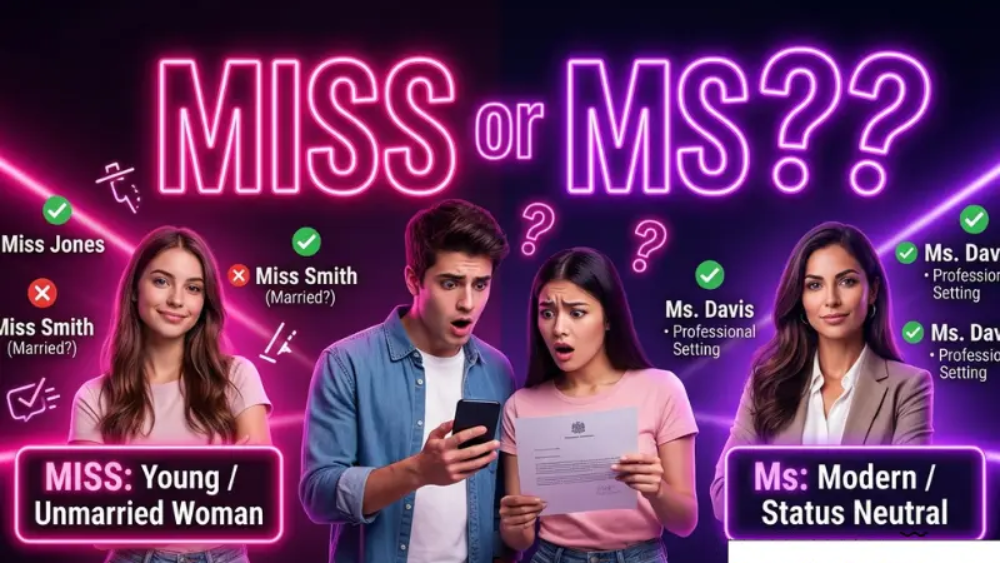
Miss and Ms are titles used before a woman’s name, but they have different uses.
✔ Miss = usually used for an unmarried woman or young girl
✔ Ms = used for a woman without showing marital status
Today, Ms is often preferred in professional and formal situations because it does not reveal whether someone is married or unmarried
Choosing the correct title before someone’s name can sometimes feel confusing, especially when deciding between miss or ms. These two words look similar, sound related, and are both used before a woman’s name, but their meanings and social uses are different.
In everyday conversations, emails, invitations, school settings, and professional communication, people often wonder whether they should write Miss or Ms. The confusion becomes stronger because both titles are respectful and acceptable in many situations.
The difference between miss vs ms mainly depends on whether you want to mention a woman’s marital status. While Miss traditionally refers to an unmarried woman, Ms is a neutral title that works for women regardless of whether they are married or single.
This guide explains the difference between Miss and Ms, shows examples, explains common mistakes, and helps you choose the right title in different situations.
Miss vs Ms Main Difference Table
| Title | Meaning | Used For | Shows Marital Status |
| Miss | Traditional title for unmarried women | Young women, girls | Usually yes |
| Ms | Neutral title for women | Any adult woman | No |
| Mrs | Title for married women | Married women | Yes |
| Mr | Title for men | Any man | No |
What Does Miss Mean?
Miss is a traditional title used before a woman’s name. It has historically been used for unmarried women and younger females.
Examples:
- Miss Sarah Johnson
- Miss Emily Brown
- Miss Anna Smith
In schools, children may call female teachers “Miss” as a respectful way to address them.
For example:
- Good morning, Miss.
- Can you help me, Miss?
In some cultures, Miss is still commonly used even without mentioning a person’s full name.
What Does Ms Mean?
Ms is a modern, neutral title used before a woman’s name without referring to her marital status.
It can be used for:
- Single women
- Married women
- Divorced women
- Women who prefer privacy about personal details
Examples:
- Ms Taylor
- Ms Johnson
- Ms Williams
The title became popular because it treats women similarly to how “Mr” works for men. A man’s title does not reveal whether he is married, and Ms provides a similar option for women.
Miss or Ms Which One Should You Use?
The choice between miss or ms depends on the situation.
Use Miss when:
- Talking about a young girl
- Referring to an unmarried woman who prefers the title
- Using a traditional style
Use Ms when:
- Writing professional emails
- Addressing someone you do not know personally
- Avoiding assumptions about marriage
Examples:
Professional email:
✔ Dear Ms Anderson
❌ Dear Miss Anderson (unless you know she prefers it)
School situation:
✔ Miss, can you explain this lesson?
Its It Miss or Ms Correct Usage Explained
Many people search for its it miss or ms because they are unsure which title fits in a sentence.
The correct question form is:
✔ Is it Miss or Ms?
Not:
❌ Its it Miss or Ms?
The phrase “is it” creates a question, while “its” shows possession.
Examples:
- Is it Miss Brown or Ms Brown?
- Should I write Miss or Ms on the invitation?
Miss vs Ms in Formal Writing
Formal writing often requires choosing a respectful title. In business communication, Ms is generally a safe option because it does not make assumptions.
Examples:
Email:
Dear Ms Carter,
Thank you for your response.
Letter:
Ms Rebecca Lee
Marketing Department
Using Ms creates a professional tone while keeping personal information private.
History Behind Miss and Ms
The titles Miss and Ms developed from older English forms of address.
“Miss” became associated with unmarried women, while “Mrs” became connected with married women. Over time, people wanted a title that worked like “Mr” without showing marital status.
This led to wider use of “Ms.”
Today, both titles continue to exist, but they serve different purposes.
Miss vs Ms Usage Comparison
| Situation | Best Choice | Reason |
| Business email | Ms | Neutral and professional |
| Talking to a child | Miss | Common respectful term |
| Unknown adult woman | Ms | Avoid assumptions |
| Traditional invitation | Miss | May follow style preference |
Why People Confuse Miss and Ms
The confusion happens because:
Similar Appearance
Both words start with “M” and are placed before names.
Example:
Miss Laura
Ms Laura
They look almost identical.
Similar Pronunciation
In many accents, Miss and Ms sound very close, making spelling confusion common.
Changing Social Usage
Modern communication has shifted toward neutral titles, making Ms more common.
Pronunciation Difference Between Miss and Ms
Although they look different, pronunciation can be tricky.
Miss
Pronounced:
“mis”
Example:
Miss Brown
Ms
Usually pronounced:
“miz”
Example:
Ms Brown
The difference is small but noticeable.
Common Mistakes People Make
Mistake 1
Using Miss for Every Woman
Incorrect:
Dear Miss Johnson
(for every adult woman)
Better:
Dear Ms Johnson
unless you know she prefers Miss.
Mistake 2
Assuming Marriage Status
Using Mrs without knowing someone’s preference can create an incorrect assumption.
Mistake 3
Mixing Titles
Incorrect:
Ms Miss Sarah
Correct:
Ms Sarah
or
Miss Sarah
Mistake 4
Writing Wrong Forms
Incorrect:
Ms. Miss Brown
Correct:
Ms Brown
Miss or Ms in Different Countries
Usage can vary depending on culture and region.
| Country/Region | Common Usage |
| United States | Ms widely used |
| United Kingdom | Miss and Ms both common |
| Canada | Ms common in professional settings |
| Australia | Ms frequently used |
| Schools worldwide | Miss often used |
Ms or Miss Does Order Matter?
People often search ms or miss because they see both titles and want to know which is better.
The answer depends on context.
Neither is universally wrong.
However:
- Ms is more neutral
- Miss is more traditional
For unknown adults, Ms is usually the safer choice.
Examples of Correct Sentences
Using Miss:
- Miss Emma is our new teacher.
- I spoke with Miss Brown yesterday.
- Miss, could you repeat that?
Using Ms:
- I sent the report to Ms Green.
- Ms Wilson will attend the meeting.
- Please contact Ms Adams.
Miss vs Ms vs Mrs Complete Comparison
| Title | Meaning | Best Used When |
| Miss | Unmarried woman | Traditional or younger women |
| Ms | Neutral woman title | Professional communication |
| Mrs | Married woman | When known/preferred |
| Mr | Male title | Any man |
How to Choose the Right Title
When choosing between Miss and Ms, consider:
Relationship
If you know the person personally, use their preferred title.
Setting
Professional environments usually favor Ms.
Age
Younger girls are commonly called Miss.
Preference
A person’s preferred title should always be respected.
Miss or Ms in Emails
Email communication is one of the most common places where people make title mistakes.
Good examples:
✔ Dear Ms Parker,
✔ Hello Ms Wilson,
Avoid:
❌ Dear Miss/Mrs Parker (when unsure)
Using Ms keeps communication polite and professional.
Modern Use of Ms
Today, Ms is widely accepted because it focuses on respect rather than relationship status.
It is commonly used in:
- Workplace communication
- Academic writing
- Official documents
- Customer service
- Invitations
Many women choose Ms because it gives them a simple title that matches the way Mr is used.
See Also:
- Complement vs Compliment
- Worse or Worst
- Truely or Truly
- Afterward vs Afterwards
- Organizing vs Organising
FAQs
What is the difference between Miss and Ms?
Miss traditionally refers to unmarried women, while Ms is a neutral title for women.
Which is better, Miss or Ms?
For professional communication, Ms is usually preferred.
Can a married woman use Ms?
Yes. Ms can be used regardless of marital status.
Is Ms the same as Miss?
No. They are different titles with different meanings.
Is it miss or ms in an email?
Usually use Ms when writing to an adult woman you do not know personally.
What does Ms stand for?
Ms does not officially stand for a specific word; it is a title created as a neutral alternative.
Conclusion
The difference between miss or ms is mainly about tradition and neutrality. Miss is a traditional title often connected with unmarried women, while Ms is a modern title that can be used for any woman without mentioning marital status.
When choosing between miss vs ms, think about the situation, formality, and personal preference. For professional communication, Ms is usually the most suitable option because it remains respectful without making assumptions.
