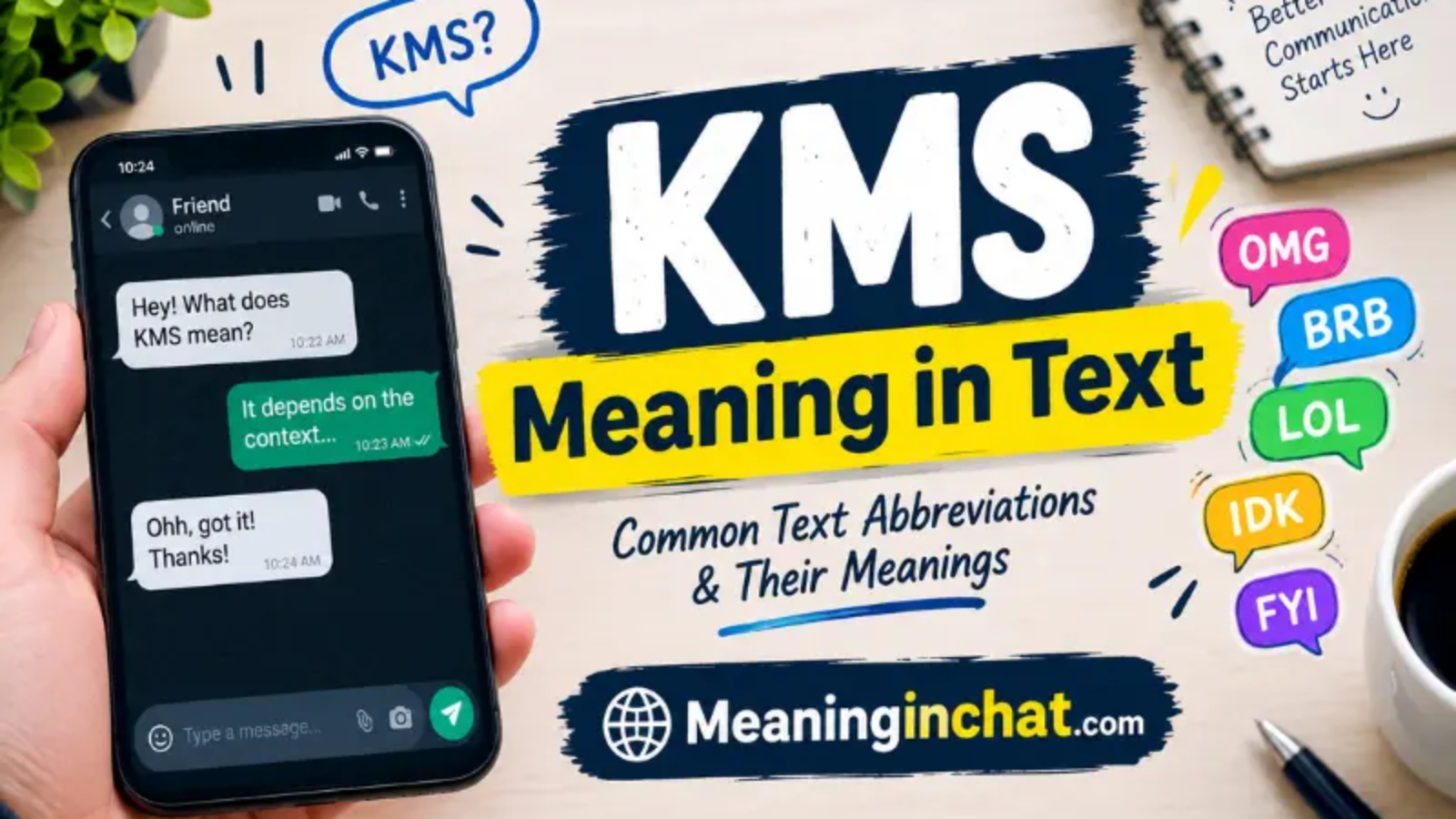
KMS usually means “kill myself” in texting and online slang. People often use it as an exaggerated reaction to embarrassment, frustration, stress, disappointment, or an awkward situation. However, the meaning depends on the conversation and tone. If someone uses KMS in a serious or distressed context, it should not automatically be treated as a joke.
If you’ve seen “KMS” in a text, Snapchat message, comment, or group chat, you may be wondering what those three letters mean. The abbreviation can look confusing because its literal meaning is quite serious, while people sometimes use it casually as internet slang.
What Is the KMS Meaning in Text?
The most common KMS meaning in text is “kill myself.”
It is an informal abbreviation commonly seen in private messages, group chats, comments, gaming conversations, and social media. In casual conversations, someone may use it to dramatically react to something embarrassing or frustrating.
For example:
“I just sent that screenshot to the wrong person. KMS 😭”
In this situation, the sender may simply be expressing extreme embarrassment.
Another example is:
“I studied for hours and the test was nothing like the practice questions. kms”
Here, KMS may be used as exaggerated frustration.
Because the abbreviation refers to self-harm when read literally, context is especially important. The same three letters can have a very different meaning depending on what the person says before or after them.
What Is KMS in Texting Slang?
When people search “kms meaning slang,” they are generally looking for the internet-slang definition rather than a technical meaning.
In casual online communication, KMS can act as an exaggerated emotional reaction. It may communicate feelings such as:
“I’m extremely embarrassed.”
“That was so awkward.”
“I can’t believe I did that.”
“This is so frustrating.”
“I’m completely done with this situation.”
For example:
Friend: “I accidentally liked their post from 2019.”
You: “KMS 😭”
The phrase may be intended as dramatic humor about the embarrassing situation.
That said, it is better to look at the complete conversation rather than assuming that every use is harmless slang.
What Does KMS Mean on Snapchat?
If you’re searching “what does KMS mean on Snapchat,” the meaning is generally the same: “kill myself.”
Snapchat users may use KMS when reacting to embarrassing snaps, awkward conversations, failed plans, or frustrating situations.
For example:
“I sent the snap to the wrong person kms 💀”
The surrounding context suggests embarrassment and exaggerated humor.
You might also see KMS in a Snapchat group conversation after someone tells an awkward story:
“I called my teacher Mom in front of everyone. KMS.”
Here, the sender is likely emphasizing how embarrassing the moment felt.
The platform itself does not create a different definition. Whether you see KMS on Snapchat, in a regular text, or in a social media comment, the surrounding conversation is what helps determine the intended tone.
How People Commonly Use KMS
KMS can appear in several different situations. Here are some common examples:
After an Embarrassing Mistake
“I waved back at someone who wasn’t waving at me. KMS.”
The sender is expressing embarrassment in an exaggerated way.
After Something Goes Wrong
“My phone died right before I saved my work. kms.”
This can be a dramatic way of expressing frustration.
After a Bad Gaming Moment
“I missed the easiest shot of the game. KMS.”
In gaming chats, slang like this can be used as an exaggerated reaction to losing or making a mistake.
When Something Feels Overwhelming
“Three assignments due tomorrow. kms.”
Here, the abbreviation may be expressing stress or feeling overwhelmed.
The important point is that KMS does not always have the same emotional intensity. The words around it provide important clues.
Is KMS Always a Joke?
No. This is one of the most important things to remember about the term.
KMS is frequently used as dark or exaggerated internet humor, but the phrase can also be used seriously. You should pay attention to the overall message, the person’s tone, and whether they appear to be experiencing genuine emotional distress.
Compare these two examples:
“I accidentally wore two different shoes today. KMS 😭”
This sounds like exaggerated embarrassment.
Now compare:
“I can’t deal with anything anymore. KMS.”
That second message has a very different tone and may indicate that the person is genuinely struggling.
If a message sounds serious, avoid laughing it off or assuming it is simply slang. A supportive check-in is more appropriate.
KMS Meaning Can Change With Context
One reason KMS meaning in text can be confusing is that abbreviations don’t contain tone on their own.
Consider:
“I failed my driving test again, kms.”
This may be an exaggerated expression of disappointment.
But:
“I don’t want to be here anymore. KMS.”
The surrounding wording makes the message much more concerning.
So when interpreting KMS, look at:
What happened immediately before the message
The person’s overall tone
Whether they are joking or distressed
Whether they have made similar comments repeatedly
Whether other messages suggest they may be in danger
The abbreviation alone cannot tell you exactly what someone means.
Other Meanings of KMS
Although “kill myself” is the common meaning in texting slang, KMS can stand for other things in completely different contexts.
For example, in technology and business, KMS can refer to Key Management Service or other technical terms. These meanings have nothing to do with texting slang.
Context makes the difference.
If someone sends:
“I can’t believe I did that, kms”
they are almost certainly using internet slang.
But if you see KMS in a technical document discussing encryption or cloud services, it may refer to a completely different concept.
KMS vs. KYS
KMS and KYS can look similar because both are associated with the same type of phrase, but they are not identical abbreviations.
KMS commonly means “kill myself.”
KYS commonly means “kill yourself.”
Because both expressions involve self-harm-related language, they can be offensive, upsetting, or serious depending on how they are used.
If you’re simply trying to understand a message, always consider the surrounding conversation rather than interpreting the abbreviation in isolation.
What Should You Reply When Someone Says KMS?
Your response should depend on the context.
If it is clearly a casual reaction to something minor, you can continue the conversation normally without repeating the phrase.
If the person sounds genuinely upset, a simple check-in can be better:
“Hey, are you okay?”
or:
“Do you want to talk about what happened?”
If you believe someone may be in immediate danger, encourage them to contact a trusted person or appropriate emergency/crisis support rather than trying to handle the situation entirely through slang or jokes.
KMS most commonly means “kill myself” in texting and internet slang. It is often used dramatically to express embarrassment, frustration, or stress, but the context can make the meaning more serious.
What does KMS mean on Snapchat?
On Snapchat, KMS usually has the same slang meaning: “kill myself.” People may use it as an exaggerated reaction to an embarrassing, frustrating, or awkward situation.
What is KMS in text slang?
KMS is an informal abbreviation for “kill myself.” In casual online conversations, it may be used as dark humor or exaggeration, although it can also be a serious statement depending on the context.
Is KMS a bad word?
KMS is not a traditional swear word, but it refers to a serious subject involving self-harm. Because of that, it can be inappropriate, upsetting, or concerning in some conversations.
Does KMS always mean something serious?
No. Many people use KMS casually to exaggerate embarrassment, frustration, or disappointment. However, you should not automatically assume it is a joke when the surrounding conversation suggests genuine distress.
What is the difference between KMS and KYS?
KMS commonly means “kill myself,” while KYS commonly means “kill yourself.” Both can be sensitive expressions, so context and tone matter when interpreting them.
Conclusion
The most common KMS meaning in text is “kill myself.” On Snapchat and other social platforms, people often use it as exaggerated slang after something embarrassing, frustrating, or stressful happens.
However, KMS is different from many harmless texting abbreviations because its literal meaning is serious. A message such as “KMS 😭” after a small mistake may be casual slang, while a message surrounded by hopeless or distressed statements deserves a more serious response.
So, if you see KMS in a message, don’t look at the three letters alone. Read the context, consider the tone, and pay attention to what the person is actually communicating.
If you’re searching for Valan SLAP845 on Mac, you’re likely looking for information about its compatibility, installation, and overall functionality on macOS. While the term has gained attention online, users should verify compatibility and download sources before installing any software on their Mac to ensure security and reliable performance.
Mac users often look for software and tools that improve productivity, performance, or specialized workflows. Before installing any application, it’s important to confirm that it supports the latest versions of macOS and comes from a trusted source. This is especially true for software that has limited publicly available documentation.
Interest in Valan SLAP845 on Mac has increased as more users search for installation guides, compatibility information, and setup instructions. Questions about system requirements, supported macOS versions, and installation methods are among the most common topics associated with this search.
This guide explains what is currently known about Valan SLAP845 on Mac, discusses compatibility considerations, outlines a general installation process, highlights key features often associated with the software, and provides practical tips for Mac users before downloading or installing any application.
What Is Valan SLAP845 on Mac?
Valan SLAP845 is a term that appears across several online technology articles, where it is commonly associated with software intended for desktop users. However, there is currently no widely recognized official product documentation that clearly defines the software, its developer, or its complete feature set.
For Mac users, the primary concern is whether the software is compatible with macOS and whether it can be installed safely. Before downloading any application, users should verify that the software supports their version of macOS and obtain it from an official or trusted distribution source whenever possible.
Because information about Valan SLAP845 is limited, reviewing installation requirements and security recommendations is an important first step before proceeding.
macOS Compatibility
Compatibility is one of the most important factors when installing third-party software on a Mac. Different versions of macOS may have varying security requirements, hardware support, and installation procedures.
Before attempting installation, users should check:
Supported macOS version
Apple Silicon or Intel processor compatibility
Available storage space
Required RAM
Internet connection requirements
Software permissions requested during installation
Ensuring your Mac meets these requirements can help reduce installation issues and improve overall performance.
Potential Features
Although detailed official specifications are not widely available, online discussions commonly associate Valan SLAP845 with features such as:
Desktop-friendly interface
Performance optimization
Simple navigation
macOS compatibility
Efficient resource usage
Regular software improvements (where applicable)
Because these descriptions are based on publicly available discussions rather than comprehensive official documentation, users should confirm the latest feature list from the software provider before installation.
System Requirements Overview
Requirement
Recommendation
Operating System
Recent version of macOS
Processor
Apple Silicon or Intel (if supported)
RAM
4 GB or more
Storage
Sufficient free disk space
Internet
Required for download and updates
Permissions
Administrator access may be needed
How to Install Valan SLAP845 on Mac
If an official installer is available, installing the software on macOS is generally a straightforward process. Before beginning, ensure your Mac is updated to the latest compatible version of macOS and that you have sufficient storage space.
A typical installation process includes:
Download the Installer
Obtain the installation file from the official website or another trusted source. Avoid downloading software from unknown websites that may distribute modified or outdated files.
Open the Installation File
Locate the downloaded file in your Downloads folder and double-click it to begin the installation.
Follow the Setup Instructions
Complete the installation by following the on-screen instructions. Depending on the application, you may be asked to grant certain permissions or choose an installation location.
Launch the Software
After installation finishes, open the application from the Applications folder or Launchpad and complete any initial setup if required.
Tips for Better Performance on Mac
To get the best possible experience, it’s helpful to keep your Mac optimized before installing new software.
Some recommended practices include:
Keep macOS updated.
Ensure enough free storage is available.
Close unnecessary background applications.
Restart your Mac before installing large programs.
Use a reliable internet connection for downloads and updates.
Install software only from trusted sources.
These simple steps can improve both installation reliability and everyday performance.
Benefits of Using Software on macOS
Many users prefer macOS because of its stability, security, and efficient resource management. Running compatible applications on a Mac often provides several advantages.
Some benefits include:
Smooth system performance
Strong built-in security features
Excellent hardware and software integration
Reliable multitasking
Efficient power management on MacBook devices
Regular operating system updates from Apple
These features make macOS a popular choice for both professional and personal use.
Pros and Cons
Pros
Cons
Large desktop workspace
Limited official information about the software
Easy navigation with keyboard and trackpad
Compatibility should be verified before installation
Stable macOS environment
Official support details are not widely available
Better multitasking than mobile devices
Some features may vary between macOS versions
Secure operating system
Requires downloading from a trusted source
Common Installation Issues
Some users may experience problems when installing third-party software on macOS. The following table outlines common issues and possible solutions.
Issue
Possible Solution
Installer won’t open
Verify the download completed successfully and try opening it again
macOS blocks the app
Review your Mac’s security settings and only allow trusted applications if appropriate
Installation stops unexpectedly
Restart your Mac and ensure sufficient storage space is available
Application won’t launch
Check that your macOS version is compatible and reinstall the software if necessary
Slow performance
Close background applications and update macOS to the latest supported version
Most installation problems can be resolved by ensuring the software is compatible with your Mac and using the latest available version from a trusted source.
Valan SLAP845 on Mac vs Windows
Feature
Mac
Windows
User Interface
Clean and optimized for macOS
Depends on Windows version
Security
Strong built-in protections
Varies by configuration
Performance
Optimized for Apple hardware
Depends on PC specifications
Software Installation
Controlled installation process
Greater software flexibility
System Stability
Consistent across supported Macs
Varies by hardware configuration
For users who already work within Apple’s ecosystem, running compatible desktop software on macOS can provide a smooth and integrated experience. However, confirming compatibility before installation remains an essential step.
Valan SLAP845 on Mac generally refers to using or installing software identified as Valan SLAP845 on a macOS computer. Because official product documentation is limited, users should verify the software’s purpose and compatibility before downloading it.
Is Valan SLAP845 compatible with macOS?
Compatibility depends on the software version and the version of macOS installed on your computer. Before installation, check the official download source or documentation for the latest compatibility information.
Is Valan SLAP845 free to download?
The availability of free or paid versions depends on the software provider. Users should confirm licensing details from the official website before downloading or installing the application.
How do I install Valan SLAP845 on my Mac?
If an official installer is available, download it from a trusted source, open the installation file, follow the setup instructions, and launch the application after installation is complete.
Is it safe to install Valan SLAP845 on Mac?
Installing software from official or trusted sources is generally the safest approach. Avoid downloading installers from unknown websites, and always verify the software before granting system permissions.
What should I do if Valan SLAP845 doesn’t work on my Mac?
First, confirm that your Mac meets the required system specifications and that you’re using a supported version of macOS. If the issue continues, reinstall the software or consult the official support resources if available.
Conclusion
Interest in Valan SLAP845 on Mac has increased as users search for information about compatibility, installation, and desktop performance. While online discussions mention the software, verified official documentation remains limited. Because of this, Mac users should take extra care to confirm compatibility and download the application only from trusted or official sources.
If you decide to install Valan SLAP845 on your Mac, ensure your system is up to date, review the installation requirements, and follow recommended security practices throughout the setup process. Taking these precautions will help provide a safer and smoother experience while reducing the risk of compatibility or installation issues.
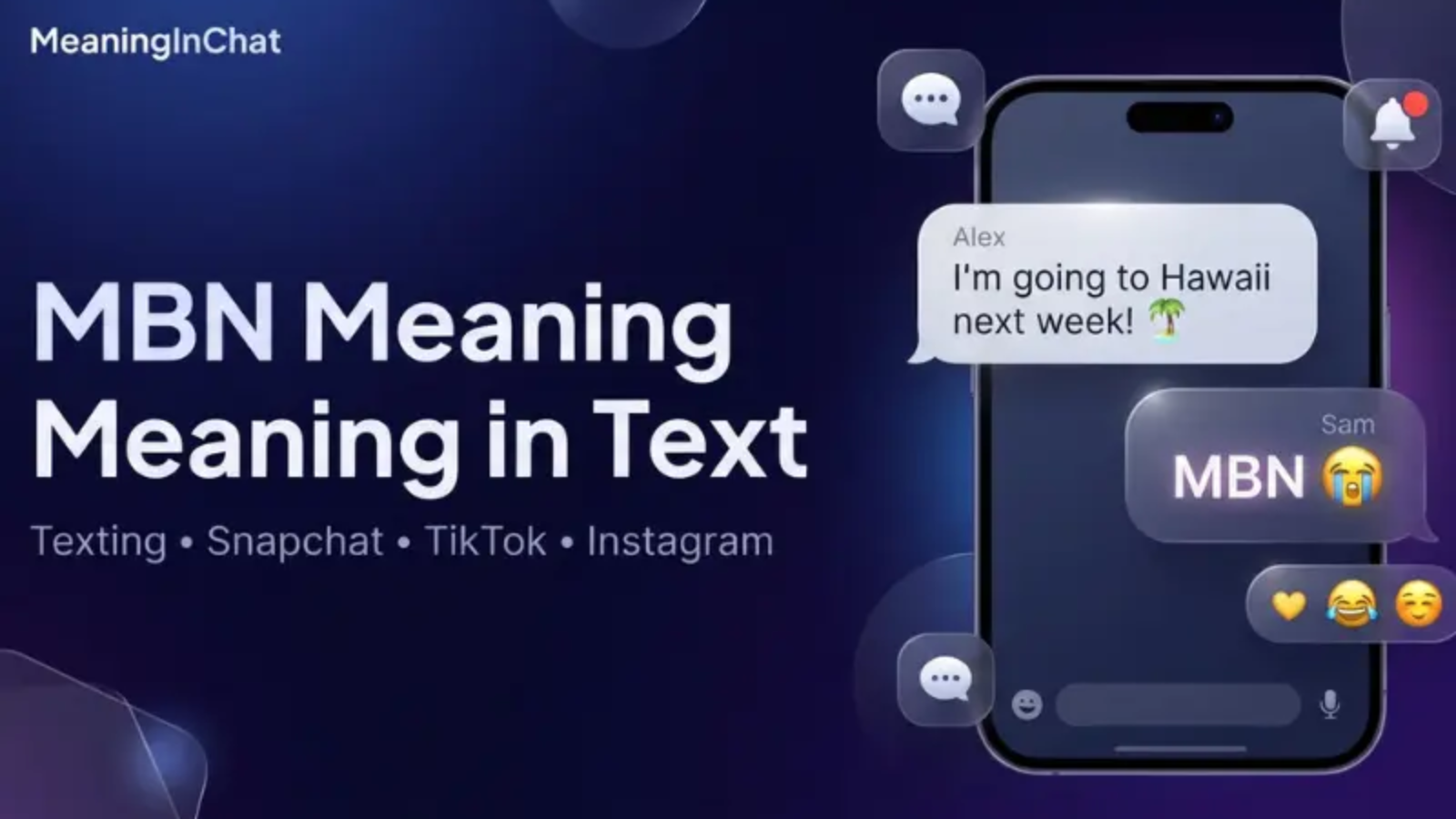
You may have seen someone reply with MBN after hearing good news, like “I’m off work tomorrow” or “We’re going to Hawaii next month.” At first glance, it can look like a random abbreviation, but it’s actually a common reaction in casual online conversations.
In texting, MBN stands for “Must Be Nice.” People use it when someone shares something desirable, exciting, or fortunate. The tone can be sincere, playful, or slightly sarcastic depending on the conversation and the relationship between the people chatting.
For example:
Alex: I finished all my exams yesterday. Jordan: MBN 😭
Jordan isn’t literally saying the exams “must be nice.” They’re reacting to the fact that Alex is already free while they probably still have exams left.
It Isn’t Always a Compliment
The same three letters can carry different emotions. Most of the time, the meaning stays the same, but the feeling behind it changes with context.
Situation
What the sender usually means
Friend got a promotion
Happy for you, a little jealous
Someone is on vacation
I wish I were there too
Person bought a new phone
Lucky you
Someone skipped work
I wish I could do that
Notice that the phrase rarely expresses anger. Instead, it’s often a lighthearted way of admitting envy.
When MBN Sounds Sarcastic
Sometimes people use it with obvious sarcasm, especially when they disagree with someone or think they’re showing off.
Example:
Chris: I only slept 10 hours today. Taylor: MBN 🙄
Here, Taylor isn’t praising Chris. The eye-roll emoji changes the tone into playful sarcasm.
Without emojis or additional context, it can occasionally be hard to know whether the sender is genuinely happy for someone or making a joking complaint. That’s why reading the rest of the conversation matters.
MBN on Different Social Platforms
Although the meaning stays the same, people use the abbreviation a little differently depending on where they’re chatting.
Platform
Typical Use
Text Messages
Reacting to good news from friends
Snapchat
Quick replies to Stories showing vacations, gifts, or days off
Instagram
Comments on travel photos, celebrations, and achievements
TikTok
Replies to videos showing expensive purchases or exciting experiences
X (Twitter)
Short reactions to posts about success, concerts, or events
Discord
Casual conversations while gaming or chatting with friends
Common Situations Where You’ll See It
You’ll often come across the abbreviation when someone mentions:
Getting a day off
Traveling somewhere exciting
Buying something expensive
Finishing work or school early
Receiving good news
Enjoying free time
Having an easy schedule
In each case, the sender is reacting to something they wish they had themselves.
How to Reply
There isn’t one correct response. A casual reply usually works best.
If it’s friendly:
“Haha, you’ll get your turn!”
If they’re joking:
“Come with me next time!”
If you think they’re genuinely disappointed:
“Hopefully you can do it soon too.”
The goal is simply to keep the conversation relaxed.
Emoji That Often Appear with MBN
Emojis help show whether the message is playful, sincere, or sarcastic.
Emoji
What It Adds
😭
“I wish that were me.”
😂
Friendly joke
😒
Mild envy
🙄
Sarcastic reaction
😩
Frustration mixed with humor
🥲
Happy for you, but also jealous
For example:
Sam: We don’t have school tomorrow. Emma: MBN 😭
The crying emoji doesn’t mean Emma is upset. It’s a humorous way of saying she wishes she had the same day off.
When You Shouldn’t Use MBN
The abbreviation works best in casual conversations. It may sound dismissive if someone is sharing serious personal news, such as a promotion they’ve worked toward for years or a major life achievement. In those situations, offering genuine congratulations is usually a better response than a joking expression of envy.
It’s also worth avoiding in professional emails, workplace chats, or conversations with people who may not recognize internet abbreviations.
Could MBN Mean Something Else?
Occasionally, yes. Some organizations, businesses, or online communities may use the same letters as initials for completely unrelated names. In everyday texting and social media conversations, though, “Must Be Nice” is by far the most common interpretation.
If the message doesn’t make sense with that meaning, look at the surrounding conversation before assuming something different.
Similar Slang Terms
If you often see MBN, you may also come across these abbreviations:
Slang
Meaning
IKR
I Know, Right
FR
For Real
TBH
To Be Honest
SMH
Shaking My Head
FOMO
Fear of Missing Out
IMO
In My Opinion
Similar Expressions
People often use these phrases in place of MBN:
Lucky you
Jealous!
Wish that were me
I wish
Must be great
You’re so lucky
All of them express a similar mix of admiration and envy, although each has its own tone.
Not usually. Between friends, it’s generally playful. It can sound passive-aggressive if used in a serious argument or if someone is clearly resentful.
Is it used on Snapchat and TikTok?
Yes. The abbreviation appears frequently in comments, captions, direct messages, and replies across social media platforms where short reactions are common.
Should I use it in professional messages?
No. Since it’s informal slang, it’s best saved for conversations with friends, family, or people you know well.
Can MBN be positive?
Absolutely. Many people use it as a friendly way of saying they’re happy for someone while admitting they’re a little jealous.
Does it always mean jealousy?
Not exactly. It often mixes admiration with envy, but sometimes it’s simply a humorous reaction without any real jealousy behind it.
Conclusion
MBN is a simple abbreviation, but its meaning depends heavily on context. In most conversations, it’s a friendly way to say, “I wish I had that too,” after someone shares good news, a fun experience, or a lucky situation. Depending on the relationship between the people chatting, it can express genuine admiration, playful jealousy, or light sarcasm without offending.
If you’re unsure how someone intended it, look at the surrounding messages, emojis, and the overall tone of the conversation. A reply like “MBN 😭” usually signals humorous envy, while “MBN 🙄” is more likely to be sarcastic. Knowing these small differences makes it much easier to interpret the abbreviation correctly on platforms like Snapchat, TikTok, Instagram, Discord, and in everyday text messages. Once you recognize the context, you’ll know exactly why someone used it and how to respond naturally.
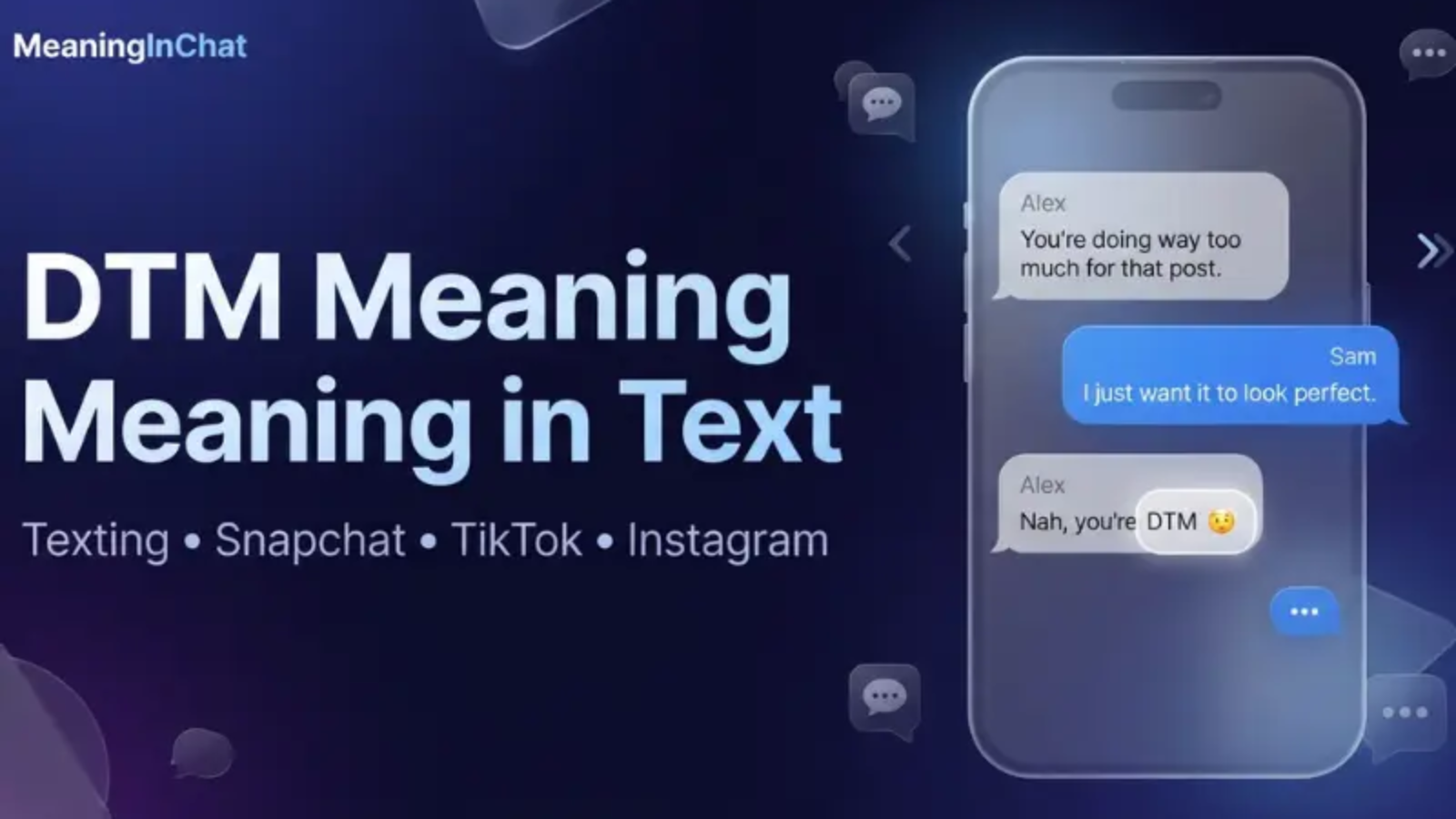
If you’re wondering what does DTM mean in text, it usually stands for “Doing Too Much.” People use it when someone is acting overly dramatic, trying too hard, or making a situation bigger than it needs to be. Depending on the conversation, it can also mean “Don’t Text Me” or “Down To Meet,” but those meanings are far less common.
You might see DTM in a text message, Snapchat chat, TikTok comment, or Instagram DM and wonder what the sender means. While the abbreviation has a few possible definitions, its meaning usually becomes clear from the conversation. Here’s what DTM commonly means, when people use it, and how to recognize the correct interpretation.
The Most Common Meaning of DTM
In texting and online conversations, DTM most often means “Doing Too Much.”
People use it when they think someone is exaggerating, overreacting, or putting unnecessary effort into something. It doesn’t always sound rude—in fact, it’s commonly used between friends as playful teasing rather than serious criticism.
Example Conversation
Emma: I changed my outfit six times before dinner. Lily: Girl, you’re DTM 😂
Here, Lily isn’t insulting Emma. She’s joking that changing outfits six times is more effort than the situation really needed.
Another example:
Ryan: I wrote a two-page apology text. Jake: Bro… DTM.
Jake believes Ryan is making the situation more complicated than necessary.
When Do People Say DTM?
Most people use DTM as a reaction rather than a description. Instead of calling someone dramatic all the time, they’re commenting on something the person just did.
You’ll often see it when someone:
Overreacts to a small problem.
Sends too many messages without getting a reply.
Makes a simple situation unnecessarily dramatic.
Tries too hard to impress someone.
Turns a harmless joke into a serious argument.
Gives an over-the-top reaction to ordinary news.
Because it focuses on a specific action, the abbreviation usually feels lighter than directly criticizing someone’s personality.
Does DTM Always Sound Negative?
Not at all. The same abbreviation can sound funny, supportive, or slightly critical depending on how it’s used.
Tone
Example
Meaning
Playful
“You’re DTM 😂”
Friendly teasing
Funny
“Bro, DTM 😭”
Laughing at someone’s exaggerated reaction
Sarcastic
“Wow… DTM 🙄”
Mild criticism
Serious
“You’re honestly DTM.”
Calmly pointing out excessive behavior
A single emoji can completely change how the message feels, so it’s worth paying attention to the sender’s tone instead of the abbreviation alone.
Where Is DTM Commonly Used?
As of 2026, DTM remains popular across casual messaging apps and social media platforms where people communicate using short reactions and internet slang.
Platform
Typical Use
Text Messages
Reacting to dramatic behavior
Snapchat
Replying to Stories or chats
TikTok
Commenting on over-the-top videos
Instagram
Responding to Reels, posts, or DMs
Discord
Casual conversations with friends
X (Twitter)
Quick reactions to trending posts
Although the platform changes, the meaning usually stays the same. In most cases, DTM is simply a quicker way of saying, “You’re doing more than necessary.”
Other Meanings of DTM
While Doing Too Much is the definition you’ll encounter most often, DTM can mean different things in specific conversations.
Meaning
When It’s Used
Doing Too Much
Everyday texting and social media
Don’t Text Me
Ending or pausing a conversation
Down To Meet
Making plans with someone
Dead To Me
Playful joke after disappointment
Don’t Text Me
Taylor: Whatever… DTM.
Here, Taylor is asking the other person to stop messaging them.
Down To Meet
Alex: Want to grab coffee later?
Ben: Yeah, DTM.
In this conversation, Ben is saying he’s available to meet.
Dead To Me
Chris: I finished the pizza without you.
Mike: Bro, you’re DTM 😂
Friends often use this meaning jokingly after a minor disappointment.
Although these alternative definitions still appear online, they’re much less common than Doing Too Much in everyday texting.
How to Tell Which Meaning Someone Intended
The easiest way to figure out DTM is to read the messages around it.
If someone is reacting to dramatic behavior, they’re almost certainly saying Doing Too Much.
If the conversation is ending after an argument, Don’t Text Me makes more sense.
If two people are arranging plans, Down To Meet is the likely interpretation.
Rather than memorizing every possible definition, focus on the situation. In most cases, the conversation itself tells you exactly which meaning fits.
How to Reply to DTM
If someone sends DTM, your response should match the tone of the conversation. Since the abbreviation can be playful, sarcastic, or slightly critical, there’s no single “correct” reply.
Here are a few natural responses:
If They Mean…
You Could Reply
Playful teasing
“😂 Maybe I am.”
Friendly joke
“Fair enough!”
You agree
“You’re right, I went a little overboard.”
You disagree
“I don’t think I was doing that much.”
Down To Meet
“Perfect, see you then!”
The best response is usually short and conversational. Avoid overthinking it—the abbreviation is meant to keep chats casual.
DTM vs. Similar Slang
Many internet abbreviations describe someone’s behavior, but they aren’t interchangeable. Knowing the difference helps you understand the speaker’s intention.
Slang
Meaning
How It’s Different
DTM
Doing Too Much
Someone is exaggerating or overreacting.
Extra
Overly dramatic or attention-seeking
Often describes a person’s style or personality.
OD
Overdoing it
Usually stronger criticism than DTM.
FR
For Real
Shows agreement or emphasizes sincerity.
SMH
Shaking My Head
Expresses disappointment or disbelief.
IJBOL
I Just Burst Out Laughing
Used to show something is extremely funny.
For example, someone can be extra every day, but they might only be DTM during a particular situation.
Common Mistakes People Make
Assuming DTM Always Means the Same Thing
Although “Doing Too Much” is the meaning you’ll see most often, don’t assume it applies to every conversation. Messages about meeting up or ending an argument may use a different definition.
Taking It as a Serious Insult
Friends frequently use DTM to tease each other. A laughing emoji or casual tone usually means the sender isn’t trying to offend anyone.
Using It in Professional Conversations
DTM belongs in casual chats, not workplace emails or business messages. Many people outside internet culture may not recognize the abbreviation, making your message confusing instead of clear.
Is DTM Still Popular in 2026?
Yes. As of 2026, DTM continues to appear regularly in text messages and across platforms like TikTok, Snapchat, Instagram, Discord, and X. While new slang constantly emerges, Doing Too Much has remained popular because it’s short, expressive, and easy to understand once you know the context.
It’s especially common among younger users who prefer quick reactions instead of typing full sentences.
Usually, no. It’s more of a playful observation or mild criticism. However, close friends sometimes use it jokingly, so it doesn’t always carry a negative tone.
Does DTM mean the same thing on Snapchat and TikTok?
Most of the time, yes. On both platforms, it usually means Doing Too Much, especially in comments, direct messages, and replies.
Why do people say DTM instead of typing the full phrase?
Like many internet abbreviations, DTM saves time while keeping conversations casual. It’s faster to type and widely recognized among people who regularly use online slang.
Is DTM only used by Gen Z?
No. Although it’s especially popular with Gen Z and younger millennials, anyone familiar with texting slang may use it in casual conversations.
Can DTM have more than one meaning?
Yes. Besides Doing Too Much, it can also mean Don’t Text Me, Down To Meet, or Dead To Me. The conversation almost always reveals which meaning is intended.
Should I use DTM in formal writing?
No. It’s best reserved for personal messages, social media, and casual chats. In professional communication, writing the full phrase is usually the better choice.
Conclusion
DTM is one of those abbreviations that’s easy to understand once you’ve seen it used in real conversations. In most text messages and social media chats, it simply means “Doing Too Much,” describing behavior that feels exaggerated, unnecessary, or over-the-top. Other meanings do exist, but they’re much less common and usually become obvious from the surrounding messages.
If you’re ever unsure, don’t focus only on the abbreviation itself. Read the conversation, notice the tone, and pay attention to any emojis or recent messages. Those small details usually tell you exactly what the sender intended. Once you recognize how DTM is used, you’ll find it much easier to understand not only this abbreviation but many other pieces of modern texting slang as well.
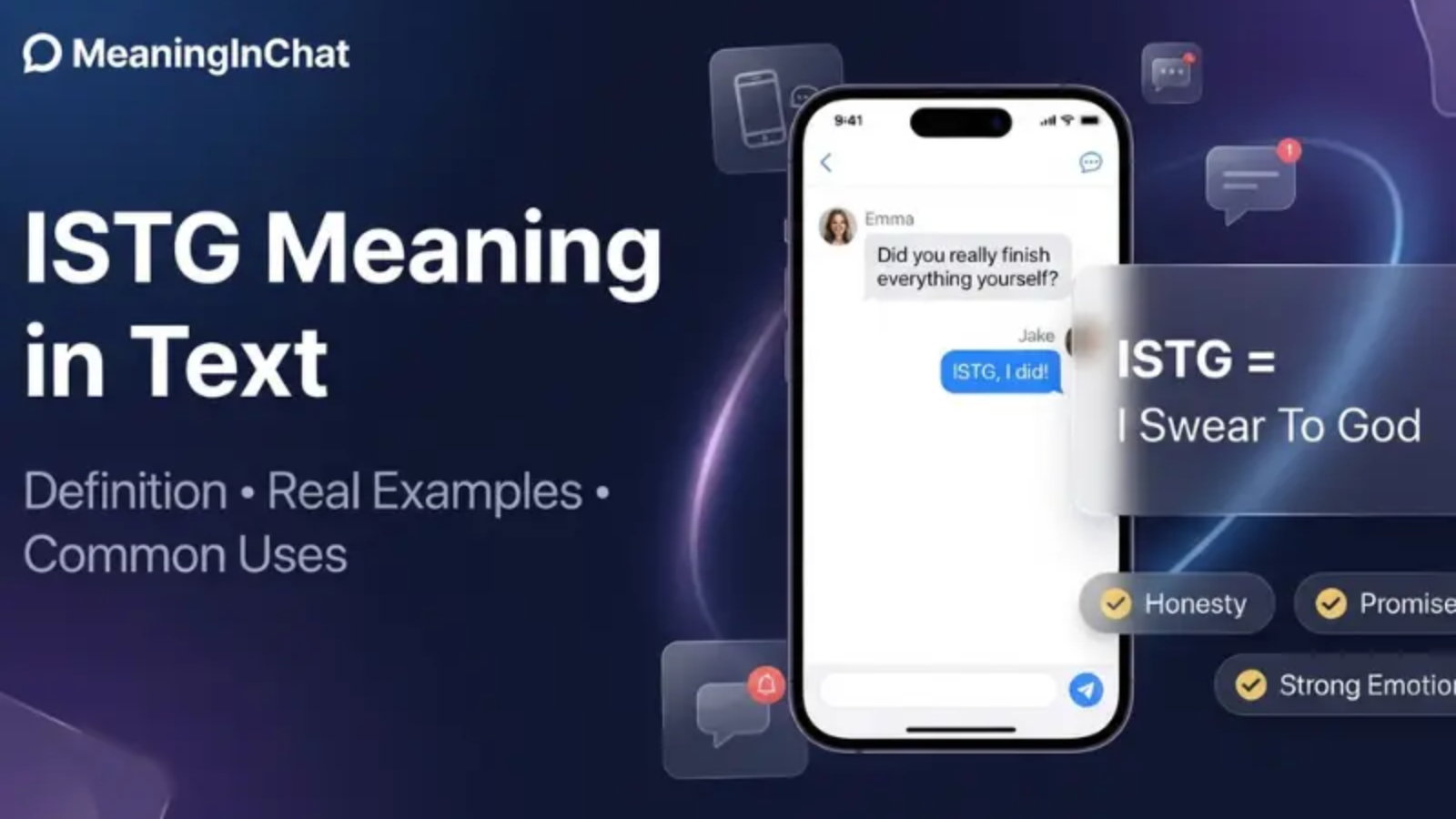
ISTG stands for “I Swear To God.” It’s commonly used in text messages and on social media to emphasize honesty, express frustration, make a promise, or react strongly to a situation. The tone depends on the conversation, but it usually shows that the speaker is being sincere or expressing strong emotions.
If you’ve come across ISTG in a text message or social media post, you may be wondering what it means. It’s a popular internet abbreviation that people use to add emphasis to what they’re saying without typing the full phrase.
In most conversations, ISTG stands for “I Swear To God.” Whether someone is insisting they’re telling the truth, making a promise, or reacting to something surprising, the meaning usually becomes clear from the context. This guide explains what it means, how people use it, and when it fits naturally into online conversations.
What Does ISTG Mean in Text?
ISTG stands for “I Swear To God.” It’s a popular internet abbreviation that people use to show they’re being completely honest, making a serious promise, expressing frustration, or reacting strongly to something. Instead of typing the full phrase, they simply write ISTG to make their message shorter while keeping the same emotional impact.
Unlike some texting abbreviations that have multiple unrelated meanings, ISTG almost always refers to “I Swear To God.” The exact tone depends on the conversation. It can sound sincere, annoyed, surprised, excited, or even playful when used between close friends.
For example:
Emma: Did you really finish the entire project by yourself?
Jake:ISTG, I didn’t get any help.
Here, Jake is emphasizing that he’s telling the truth.
Another example:
Sarah: The concert was canceled again.
Liam:ISTG, that’s the third time this month!
In this conversation, ISTG expresses frustration rather than making a promise.
Although the phrase includes the word “God,” most people use it simply as an expression of emphasis. In everyday texting, it’s usually understood as another way of saying “I’m serious,”“I promise,” or “Believe me.”
If you enjoy learning internet abbreviations, you might also like our guide on FR Meaning in Text, which explains another popular slang term used to emphasize honesty and sincerity.
What Does ISTG Stand For?
Many people search what does ISTG stand for after seeing it in a message or social media post.
The abbreviation expands to:
ISTG = I Swear To God
The full phrase has been part of spoken English for many years and is often used to stress that someone is telling the truth or making a sincere statement.
As texting became more popular, people shortened the phrase into ISTG because it was quicker to type while still carrying the same emotional impact.
Today, you’ll see ISTG used in conversations involving:
Honest statements
Promises
Frustration
Strong opinions
Emotional reactions
Surprising situations
Friendly jokes
Although the wording includes “God,” many people use ISTG simply as an expression of emphasis rather than a literal religious statement.
Common Ways ISTG Is Used
People use ISTG in many different situations, but its purpose is almost always the same—to add emphasis to what they’re saying. Whether someone is defending themselves, making a promise, or reacting to surprising news, the abbreviation helps make the message sound more sincere or emotional.
Situation
Example
What It Means
Telling the truth
ISTG, I didn’t touch your phone.
Emphasizes honesty
Making a promise
ISTG, I’ll pay you back tomorrow.
Gives reassurance
Expressing frustration
ISTG, this traffic never ends.
Shows annoyance
Reacting to surprising news
ISTG, I wasn’t expecting that!
Expresses surprise
Friendly joking
ISTG, you’re the funniest person I know 😂
Adds playful emphasis
Telling the Truth
One of the most common reasons people use ISTG is to convince someone that they’re being honest.
Example:
Alex: Did you eat the last slice of pizza?
Ben:ISTG, it wasn’t me.
Making a Promise
People also use ISTG when they want to reassure someone that they’ll keep their word.
Example:
Emma: Don’t forget to send me the notes.
Sophia:ISTG, I’ll send them tonight.
Expressing Frustration
Sometimes ISTG shows annoyance when something keeps going wrong.
Example:
ISTG, my internet disconnects every time I join a meeting.
Reacting to Something Unexpected
The abbreviation can also make a surprising reaction sound stronger.
Example:
ISTG, I thought that was the ending!
Using It Playfully
Friends often use ISTG in a humorous way instead of sounding completely serious.
Example:
ISTG, if you keep sending me memes, I’ll never get any work done. 😂
Although the tone changes from one conversation to another, the abbreviation always adds emphasis and emotion. Reading the messages around it is usually enough to understand exactly what the sender means.
If you enjoy learning common texting abbreviations, you might also like our guide on WSG Meaning in Text, another popular slang term frequently used in casual online conversations.
Why Do People Use ISTG?
One reason ISTG has remained popular is that it instantly adds emotion to a message without requiring a long explanation.
Instead of writing:
I’m completely serious.
I’m telling the truth.
I promise.
I really mean it.
People simply type:
ISTG
The abbreviation helps readers recognize that the speaker feels strongly about what they’re saying.
For example, someone waiting for a delayed flight might text:
ISTG, this is the longest airport line I’ve ever seen.
A student could write:
ISTG, I studied all weekend for this exam.
In both situations, ISTG strengthens the message and makes the speaker’s feelings more obvious.
Where Did ISTG Come From?
The phrase “I Swear To God” has been part of everyday English for many years. People have traditionally used it to emphasize that they’re telling the truth, making a sincere promise, or expressing strong emotions. As texting and instant messaging became more popular, the phrase was shortened to ISTG to make conversations faster while keeping the same meaning.
Today, ISTG is widely recognized across messaging apps and social media platforms such as Snapchat, Instagram, TikTok, WhatsApp, Discord, and X (formerly Twitter). Its popularity has continued because it’s quick to type, easy to understand, and adds emotion to a message without requiring a long explanation.
Unlike many internet abbreviations that fade over time, ISTG has remained common because it can express honesty, surprise, frustration, or playful exaggeration in just four letters.
If you’re curious about how other popular internet abbreviations evolved, you might also enjoy our guide on OTP Meaning in Text, which explains another widely used slang term with multiple meanings.
When Should You Use ISTG?
ISTG works best in casual conversations where you want to emphasize your feelings or make your message sound more sincere. People often use it while chatting with friends, replying to social media posts, or reacting to something surprising. Since it’s an informal abbreviation, it’s not suitable for professional emails, academic writing, or business communication.
Here are some of the most common situations where ISTG sounds natural:
Situation
Should You Use ISTG?
Example
Texting friends
✅ Yes
ISTG, I’ll be there in five minutes.
Snapchat or Instagram chats
✅ Yes
ISTG 😂, that was hilarious!
WhatsApp conversations
✅ Yes
ISTG, I completely forgot.
TikTok comments
✅ Yes
ISTG, this video made my day!
Business emails
❌ No
Write the full sentence instead.
School assignments
❌ No
Avoid internet slang in formal writing.
Best Times to Use ISTG
When you’re emphasizing that you’re telling the truth.
When you’re making a sincere promise.
When you’re reacting to something unexpected.
When you’re expressing frustration or excitement.
When you’re joking with close friends.
Although ISTG makes conversations feel more expressive, using it too often can reduce its impact. Save it for moments when you genuinely want to add emphasis rather than including it in every message.
If you enjoy learning how internet slang is used in everyday conversations, you may also like our guide on MO Meaning in Text, which explains another abbreviation that’s common in chats and social media.
When ISTG Fits Best
Situation
Use ISTG?
Example
Texting friends
✅ Yes
ISTG, I’ll be there soon.
Snapchat chats
✅ Yes
ISTG 😂
Instagram DMs
✅ Yes
ISTG, that’s amazing.
WhatsApp groups
✅ Yes
ISTG, I didn’t know that.
Business emails
❌ No
Use complete sentences instead.
Formal reports
❌ No
Avoid internet abbreviations.
Real Examples of ISTG in Everyday Conversations
The easiest way to understand ISTG is by seeing it in real conversations. These examples show how the abbreviation changes its tone depending on the situation while still emphasizing honesty or strong emotions.
Telling the Truth
Emma: Did you delete my photos?
Jake:ISTG, I didn’t even touch your phone.
Here, ISTG reassures Emma that Jake is being truthful.
Making a Promise
Sophia: Don’t forget to call me after work.
Liam:ISTG, I’ll call as soon as I get home.
In this conversation, ISTG strengthens Liam’s promise.
Expressing Frustration
Noah: How’s your day going?
Olivia:ISTG, everything that could go wrong has gone wrong today.
The abbreviation emphasizes Olivia’s frustration and makes the message feel more emotional.
Reacting to Something Surprising
Mia: I just won two concert tickets!
Ava:ISTG, that’s amazing! Congratulations!
Here, ISTG expresses excitement and surprise rather than honesty.
Playful Humor
Ethan: I only watched one episode.
Lucas:ISTG, you always say that and end up watching the whole season. 😂
In this example, the abbreviation is used jokingly between friends, creating a lighthearted tone.
These conversations show why ISTG has remained popular in texting. The abbreviation adapts easily to different emotions, making messages feel more natural and expressive without adding extra words.
If you enjoy learning internet slang through real-life examples, check out our guide on ONM Meaning in Text, where we explain another commonly used abbreviation with practical conversations.
Is ISTG Always Serious?
Not always. Although ISTG often expresses honesty or a serious promise, it doesn’t always carry a serious tone. In many conversations, people use it jokingly, sarcastically, or to exaggerate a situation for comedic effect. The intended meaning depends on the context, punctuation, emojis, and the relationship between the people chatting.
For example, if someone says:
“ISTG, this is the best burger I’ve ever had!”
They’re simply expressing excitement, not making a literal promise.
Likewise, a friend might text:
“ISTG, if you send me one more dog video, I’m going to waste my entire afternoon watching them. 😂”
The message is clearly playful and isn’t meant to be taken seriously.
On the other hand, ISTG can sound much more sincere during an important conversation.
Example:
“ISTG, I had nothing to do with what happened.”
Here, the speaker is emphasizing that they’re telling the truth.
The easiest way to understand the tone is to read the surrounding messages. Emojis, punctuation, and the topic of the conversation usually make it clear whether ISTG is expressing honesty, frustration, excitement, or playful exaggeration.
If you’re learning common internet slang, you might also enjoy our guide on WYL Meaning in Text, another abbreviation whose meaning depends heavily on context.
How ISTG Is Used Across Different Social Media Platforms
Although ISTG carries the same core meaning across the internet, the way people use it can vary slightly depending on the platform. As of 2026, it’s still a popular abbreviation because it quickly adds emotion, emphasis, or sincerity to a message without requiring a long explanation.
Platform
How ISTG Is Commonly Used
Text Messages
Emphasizing honesty, promises, or frustration in personal conversations.
Snapchat
Replying to Snaps or chats with strong reactions or playful exaggeration.
Instagram
Used in DMs, comments, and story replies to express surprise, excitement, or sincerity.
TikTok
Found in comments reacting to relatable, funny, or shocking videos.
Discord
Casual conversations while gaming or chatting with online communities.
X (Twitter)
Quick reactions to trending topics, opinions, or viral posts.
No matter where you see it, ISTG is almost always used to make a message feel stronger or more believable. Instead of typing the full phrase, people rely on the abbreviation to keep conversations fast while still expressing emotion.
As internet slang continues to evolve, ISTG remains widely recognized because it’s simple, memorable, and fits naturally into everyday online communication.
If you’re exploring more social media abbreviations, you may also enjoy our guide on SFS Meaning in Text, which explains another term frequently seen on platforms like Snapchat and Instagram.
IISTG vs Similar Texting Abbreviations
Internet slang often serves different purposes, even when the abbreviations seem similar. While ISTG emphasizes honesty or strong emotions, other terms are used to express agreement, opinions, or sincerity in different ways. Knowing the difference helps you choose the right abbreviation for the situation.
Abbreviation
Meaning
When It’s Used
ISTG
I Swear To God
Emphasizing honesty, promises, or strong emotions
TBH
To Be Honest
Sharing an honest opinion or personal thought
FR
For Real
Showing agreement or emphasizing that something is true
NGL
Not Gonna Lie
Introducing an honest confession or opinion
IKR
I Know, Right?
Agreeing enthusiastically with someone else’s statement
ISTG vs TBH
Although both abbreviations relate to honesty, they aren’t interchangeable. ISTG adds emphasis and emotion, while TBH simply introduces an honest opinion.
Example:
TBH, I didn’t enjoy the movie.
ISTG, I watched the entire thing!
ISTG vs FR
FR is commonly used to agree with someone or emphasize that something is true. ISTG, on the other hand, usually strengthens the speaker’s own statement or promise.
Example:
Alex: That exam was impossible.
Ben:FR!
Alex:ISTG, I’ve never seen questions like that before.
ISTG vs NGL
People use NGL before admitting something honestly, while ISTG makes a statement sound more convincing or emotionally charged.
Example:
NGL, I expected a better ending.
ISTG, I almost walked out of the theater.
ISTG vs IKR
IKR is simply a way to agree with someone else’s opinion. Unlike ISTG, it doesn’t express a promise or emphasize honesty.
Example:
Emma: This weather changes every five minutes.
Sophia:IKR!
Understanding these differences makes it easier to choose the right abbreviation and avoid using one where another fits better.
Although ISTG is easy to understand once you know what it stands for, people sometimes use or interpret it incorrectly. Avoiding these common mistakes will help you use the abbreviation naturally and understand it correctly in different conversations.
Assuming It Always Sounds Serious
Many people think ISTG is only used when someone is making a serious promise. In reality, it’s often used jokingly, sarcastically, or to exaggerate a reaction. Always consider the context before deciding how the message is intended.
Using It in Professional Communication
ISTG is informal internet slang, so it doesn’t belong in business emails, academic assignments, or professional messages. In formal situations, it’s better to write the full sentence instead of using abbreviations.
Ignoring the Conversation Around It
The same abbreviation can express honesty, frustration, excitement, or humor. Reading only ISTG without looking at the surrounding messages can lead to misunderstanding the sender’s tone.
Assuming Every Abbreviation Means the Same Thing
Some people confuse ISTG with abbreviations like TBH, FR, or NGL because they all relate to honesty in different ways. Each one has its own purpose, so choosing the right abbreviation depends on what you’re trying to express.
By paying attention to context and using ISTG only in casual conversations, you’ll understand it more naturally and avoid the most common mistakes people make online.
📚 See Also
If you’re learning internet slang, these related guides can help you understand other popular abbreviations used in text messages, social media, and online conversations.
FR Meaning in Text
— Discover how FR is used to emphasize honesty or agreement in everyday conversations.
TBH Meaning in Text
— Learn when people use TBH to share honest opinions and personal thoughts.
NGL Meaning in Text
— Find out how NGL introduces honest confessions and candid statements online.
IKR Meaning in Text
— See why IKR is a popular way to show agreement in texting and social media.
WSG Meaning in Text
— Learn what WSG means and how it’s commonly used to start casual conversations.
WTV Meaning in Text
— Explore the different meanings of WTV and when people use it in online chats.
FAQs
Can ISTG be used sarcastically?
Yes. Although ISTG often expresses honesty or a serious promise, it can also be used sarcastically or humorously. The conversation, emojis, and tone usually make it clear whether the sender is joking or being sincere.
Is ISTG considered rude?
No. ISTG isn’t considered rude on its own. However, if it’s used during an argument or with an angry tone, it may come across as confrontational. Between friends, it’s usually seen as a casual way to add emphasis.
Is ISTG popular in 2026?
Yes. As of 2026, ISTG remains widely used in text messages and on platforms like Snapchat, Instagram, TikTok, Discord, WhatsApp, and X. It’s still a common abbreviation because it’s short, expressive, and easy to recognize.
Should I use ISTG in professional emails?
No. ISTG is meant for casual conversations and social media. In professional or academic writing, it’s better to write your message in full instead of using internet abbreviations.
Does ISTG always mean “I Swear To God”?
Almost always. In modern texting and online conversations, ISTG is universally understood as “I Swear To God.” Unlike many abbreviations, it rarely has alternative meanings.
What are some abbreviations similar to ISTG?
Common alternatives include TBH (To Be Honest), FR (For Real), NGL (Not Gonna Lie), and IKR (I Know, Right?). While they all appear in casual conversations, each has a different purpose and isn’t a direct replacement for ISTG.
If you’re expanding your internet slang vocabulary, you might also enjoy our guides on TBH Meaning in Text and FR Meaning in Text, which explain two of the most commonly used abbreviations in online conversations.
Conclusion
ISTG is one of those internet abbreviations that’s easy to understand once you’ve seen it used in real conversations. Whether someone is emphasizing that they’re telling the truth, making a promise, reacting to surprising news, or expressing frustration, the abbreviation adds emotion without making a message longer.
If you’re ever unsure what ISTG means, look at the surrounding conversation, the sender’s tone, and any emojis they use. Those details usually reveal whether the message is serious, playful, or sarcastic. As online slang continues to evolve, ISTG remains a popular part of everyday texting because it’s simple, expressive, and widely recognized.
If you’re interested in learning more texting abbreviations, be sure to explore our guides on WSG Meaning in Text and TBH Meaning in Text to expand your internet slang vocabulary
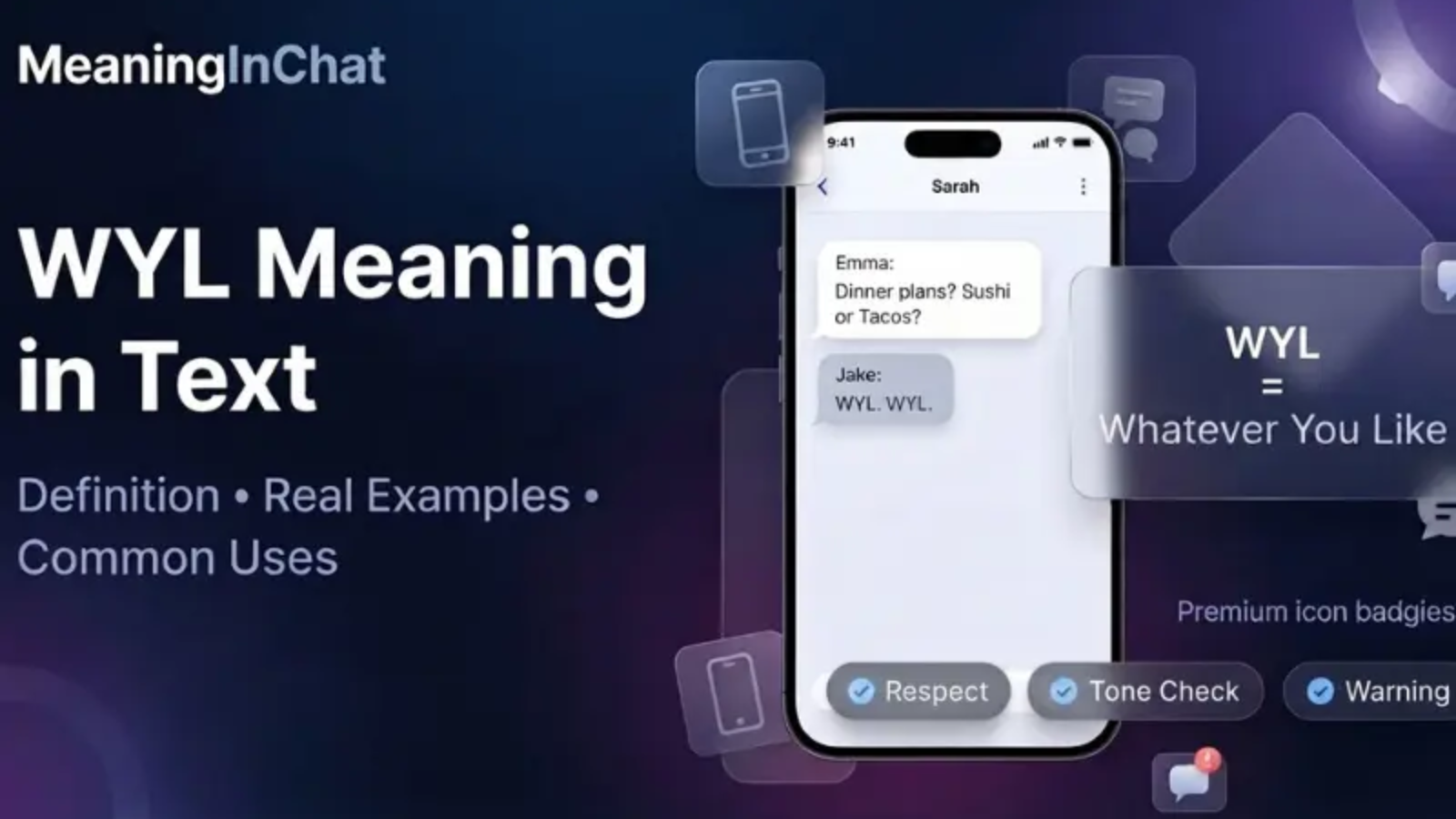
WYL usually means “Whatever You Like” in text messages and online conversations. People use it when they want someone else to choose or decide something, such as a place to go, an activity, or a preferred option. In some situations, WYL can also mean “What You Like?”, but the surrounding conversation usually makes the meaning clear.
If you have seen WYL in a text message, you may wonder what the abbreviation means. Like many texting shortcuts, its meaning depends on the situation and how it appears in a conversation.
This guide explains the meaning of WYL, how people use it in everyday conversations, real chat examples, other possible meanings, and how to tell which definition fits the situation.
What Does WYL Mean in Text?
WYL most commonly means “Whatever You Like” in text messages, social media chats, and online conversations. People use it when they do not have a strong preference and want the other person to make the decision.
For example:
Person 1: Where should we eat tonight? Person 2: WYL.
Here, WYL means “Whatever You Like” and shows that the person is happy with any choice.
In some conversations, WYL can also mean “What You Like?” when someone is asking about your interests or preferences. This use is less common and usually appears as part of a question.
For example:
WYL in movies?
This means:
“What do you like in movies?”
The easiest way to identify the meaning is to look at how WYL appears in the conversation. When it is used as a reply, it usually means “Whatever You Like.” When it starts a question about interests, it may mean “What You Like?”
Like many texting shortcuts, its meaning depends on how it is used. Other short texting terms such as
WTV,
FR,
and
TBH
are also commonly used in online conversations, but each abbreviation has its own meaning and purpose.
Common Ways WYL Is Used
WYL is mainly used when someone wants to give another person the freedom to choose or when asking about personal preferences. The meaning depends on how it appears in the conversation.
Giving Someone the Freedom to Choose
The most common use of WYL is “Whatever You Like.” People use it when they are comfortable with any option and want the other person to decide.
Example:
Friend: Which restaurant should we try tonight? Reply: WYL.
Meaning: Whatever You Like — you can choose the restaurant.
Asking About Preferences
In some conversations, WYL can mean “What You Like?” This usage appears when someone wants to know another person’s interests or favorites.
Example:
Person 1: WYL in music? Person 2: I like pop and rock.
Here, WYL is asking about someone’s personal taste rather than giving them a choice.
Making Everyday Decisions
People often use WYL when discussing simple decisions such as:
Choosing a movie
Picking a place to eat
Planning activities
Deciding between different options
Because it is short and informal, WYL helps conversations move quickly without needing a long explanation.
Similar preference-based texting expressions like
ASL
can also appear in casual conversations when people ask about personal interests or choices.
Where Did WYL Come From?
Like many texting abbreviations, WYL became popular as online communication became shorter and faster. People started creating simple shortcuts to express common phrases without typing full sentences.
The phrase “Whatever You Like” was already commonly used in everyday English before texting became popular. Shortening it to WYL made it easier to use in messages, social media chats, and online communities.
Over time, WYL also became associated with “What You Like?” in some conversations, especially when people were asking about preferences or interests.
Today, WYL continues to appear in informal digital conversations where people want to quickly express a choice or ask about someone’s preferences.
Real Examples of WYL in Conversations
The meaning of WYL becomes easier to recognize when you see how it appears in real messages. In most cases, it is used as a quick way to give someone a choice or ask about their preferences.
Example 1: Making Plans
Person 1: Where should we go for dinner? Person 2: WYL.
Meaning: Whatever You Like. The person is letting the other person choose.
Example 2: Choosing Between Options
Friend: Should we watch a movie or play a game? Reply: WYL, both are fine.
Meaning: The person does not mind either option.
Example 3: Asking About Interests
Person 1: WYL in music? Person 2: I like rock and pop.
Meaning: What You Like? The person is asking about preferences.
These examples show that the same abbreviation can have different meanings depending on how it is used. Looking at the complete message usually makes the intended meaning clear.
Is WYL Always “Whatever You Like”?
No. Although “Whatever You Like” is the most common meaning of WYL, the abbreviation can also mean “What You Like?” in some conversations.
The difference is usually easy to notice:
When WYL is used as a reply to a decision or choice, it usually means “Whatever You Like.”
Example:
Person 1: Which restaurant should we choose? Person 2: WYL.
When WYL appears as part of a question about interests or preferences, it may mean “What You Like?”
Example:
Person 1: WYL in movies?
This asks about someone’s movie preferences.
Reading the full conversation is the easiest way to identify the intended meaning.
How WYL Is Used Across Different Messaging Platforms
WYL has the same meaning across most messaging platforms, including social media apps, group chats, and online communities. The abbreviation is usually used when people want to quickly express a choice or ask about someone’s preferences.
On platforms like Snapchat, Instagram, WhatsApp, and Discord, friends often use WYL while making plans, discussing activities, or sharing personal interests.
For example:
Group chat: “Movie tonight or gaming?” “WYL.”
Here, the person is saying that either option works.
In another conversation:
Message: “WYL watching these days?”
This version asks about someone’s interests or preferences.
Although WYL is not as common as abbreviations like LOL or TBH, people still use it in informal digital conversations because it is short, simple, and easy to understand from context.
WYL vs WYD vs WYM vs IDK
Texting abbreviations can look similar, especially when they start with the same letters. However, each one has a different purpose in a conversation.
Abbreviation
Full Meaning
Used For
Example
WYL
Whatever You Like / What You Like?
Giving a choice or asking about preferences
WYL, I’m okay with anything.
WYD
What You Doing?
Asking what someone is currently doing
WYD tonight?
WYM
What You Mean?
Asking someone to explain something
WYM by that?
IDK
I Don’t Know
Showing uncertainty or lack of information
IDK which one to choose.
The main difference is that WYL focuses on choices and preferences, while the others are used for different types of questions or responses.
Examples:
WYL: “Which restaurant?” — “WYL.”
WYD: “WYD after work?”
WYM: “WYM by that message?”
IDK: “IDK what to pick.”
Knowing these common abbreviations makes online conversations easier to follow.
Texting abbreviations can look similar, especially in fast conversations. For example, terms like
WTV
and
FR
may appear in similar chats but have completely different meanings.
Common Mistakes People Make With WYL
Although WYL is simple, people sometimes misunderstand how it should be used. These are the most common mistakes to avoid.
Assuming WYL Has Only One Meaning
Many people think WYL always means “Whatever You Like.” While this is the most common definition, it can also mean “What You Like?” when someone is asking about preferences.
Always check how the abbreviation is used in the message before deciding its meaning.
Using WYL Without Clear Context
WYL works best when the conversation already makes the topic clear. Sending only “WYL” in a random conversation may confuse someone who does not know what you mean.
Adding a little context can make the message easier to understand.
Example:
Instead of:
“WYL”
Try:
“Which movie should we watch? WYL.”
Using WYL in Formal Communication
WYL is casual texting slang, so it is not suitable for professional emails, academic writing, or formal messages.
In those situations, use complete phrases such as:
“What do you prefer?”
“Whatever you prefer.”
“You can choose.”
These habits help keep your conversations friendly and easy to follow.
WYL is casual texting slang, so it is not suitable for professional emails, academic writing, or formal messages. The same applies to other informal abbreviations like
TBH,
which are mainly used in personal conversations rather than professional communication.
WYL usually means “Whatever You Like” in text messages and online conversations. It is used when someone gives another person the freedom to choose something.
What does WYL stand for?
WYL most commonly stands for “Whatever You Like.” In some conversations, it can also mean “What You Like?” when someone is asking about preferences.
Can WYL have more than one meaning?
Yes. Although “Whatever You Like” is the most common meaning, WYL can sometimes mean “What You Like?” The surrounding conversation helps determine the correct meaning.
Is WYL commonly used on social media?
WYL appears on platforms such as Snapchat, Instagram, WhatsApp, Discord, and other messaging apps. However, it is less common than popular abbreviations like LOL, BRB, or TBH.
Is WYL rude when someone sends it?
No. WYL is usually a friendly and casual expression. When it means “Whatever You Like,” it shows flexibility and allows someone else to make a choice.
Should I use WYL in professional messages?
It is better to avoid WYL in formal communication. Since it is texting slang, writing the complete phrase is usually clearer in workplace or professional conversations.
Conclusion
WYL is a simple texting abbreviation that usually means “Whatever You Like.” People use it when they want someone else to choose or when they are comfortable with different options. In some conversations, it can also mean “What You Like?” when asking about someone’s interests or preferences.
The meaning of WYL is usually clear from the way it appears in a message. Whether someone is planning an activity, choosing between options, or starting a conversation about interests, this abbreviation helps keep online communication short and casual.
Although WYL is not one of the most common texting shortcuts, it remains useful because it quickly expresses flexibility or curiosity in everyday digital conversations. Similar abbreviations like
WTV
and
FR
are also commonly used in online chats, but each one has its own meaning and purpose.
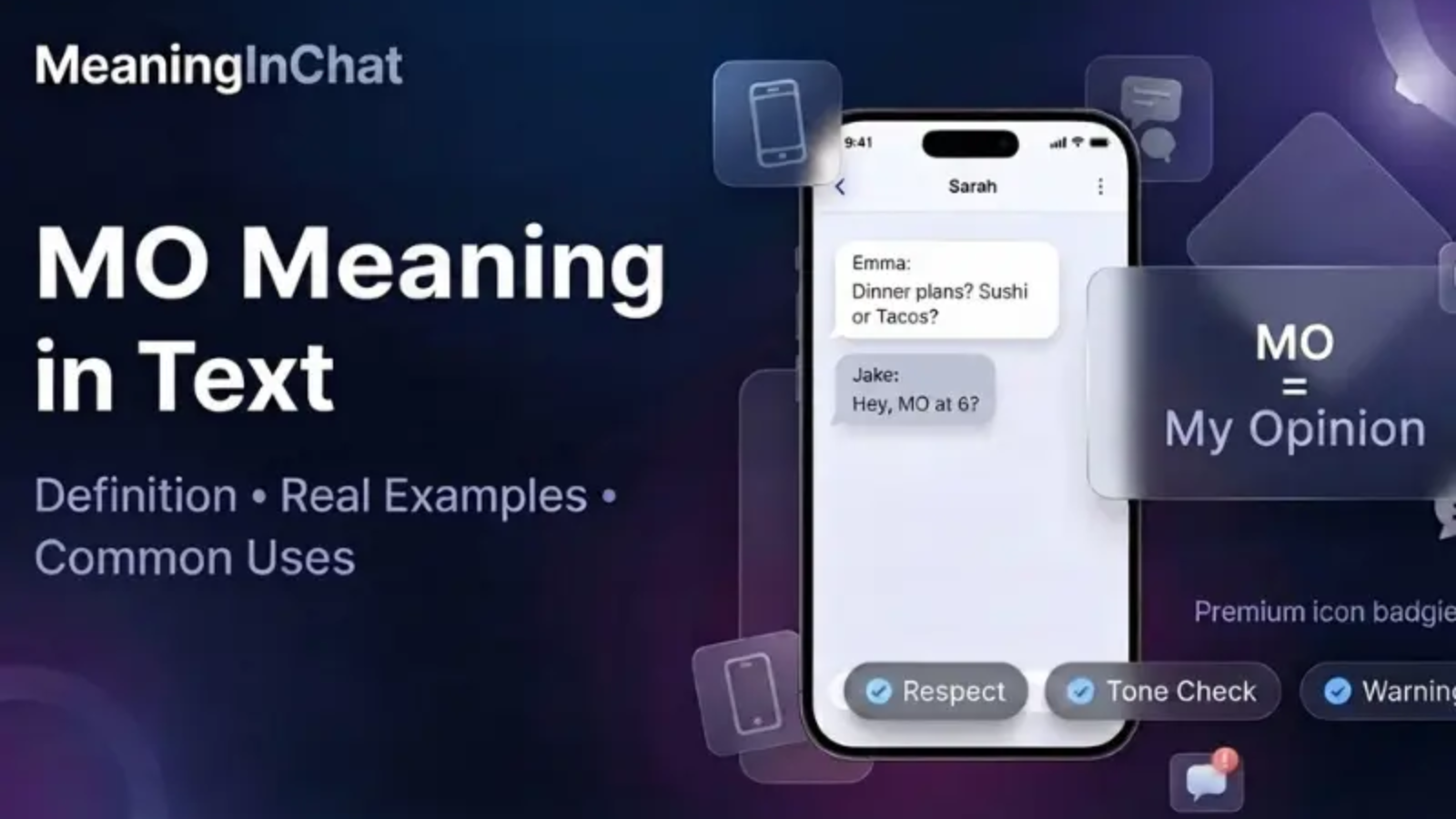
MO usually means “Moment” in text messages, where it’s used to ask someone to wait briefly before replying. Depending on the conversation, it can also stand for “More” or “Modus Operandi.” The surrounding messages almost always make the intended meaning clear.
If you’ve received MO in a text message, you may be wondering what it means. Although it’s only two letters, MO can have several meanings, and the correct one depends on the conversation.
In most casual chats, it stands for “Moment” and is used to ask someone to wait briefly. However, it can also mean “More” or “Modus Operandi” in different situations. This guide explains each meaning, when it’s used, and how to identify the correct definition with real conversation examples.
What Does MO Mean in Text?
MO has several meanings in text messages, but the correct definition depends on the conversation. In casual chats, it most commonly stands for “Moment,” which people use to ask someone to wait briefly before replying. It’s a quick alternative to typing phrases like “one moment” or “give me a minute.”
For example:
Emma: Can you send me the address?
Jake:MO, I’m driving right now.
In this conversation, Jake is simply asking Emma to wait a short time before he replies.
Another common meaning is “More,” although it’s less frequently used. You might see it when someone is asking for additional information.
Example:
Alex: Your vacation looked amazing!
Ben: I’ll tell you MO when we meet.
Outside of texting, MO can also stand for “Modus Operandi,” a Latin phrase that means a person’s usual method, behavior, or way of doing something.
Example:
Sarah: Why does he always leave work so late?
David: That’s just his MO.
Unlike many internet abbreviations, MO doesn’t always have a single meaning. The easiest way to understand it is to read the surrounding conversation. In most cases, the context immediately tells you whether the sender is asking you to wait, requesting more information, or referring to someone’s typical behavior.
If you enjoy learning common texting abbreviations, you might also like our guide on WSG Meaning in Text, another popular slang term used in everyday online conversations.
What Does MO Stand For?
Many people search what does MO stand for after seeing it online because the abbreviation doesn’t always represent the same phrase.
The most common meanings include:
Moment
More
Modus Operandi
Although other niche definitions exist in specialized industries, these are the meanings most people encounter in everyday conversations.
If someone is asking you to wait, MO probably means Moment.
If the discussion involves someone’s habits or behavior, MO likely refers to Modus Operandi.
If someone is requesting additional details, MO may simply mean More.
Fortunately, the surrounding conversation almost always makes the intended meaning clear.
Common Meanings of MO
Although “Moment” is the meaning you’ll see most often in text messages, MO can represent different phrases depending on the situation. The table below summarizes the three most common definitions and where they’re typically used.
Meaning
Commonly Used In
Example
Moment
Text messages, WhatsApp, Snapchat
MO, I’ll reply in a minute.
More
Casual conversations
Tell me MO about your new job.
Modus Operandi
Everyday English, workplace discussions, news
That’s always been her MO.
Moment
This is the most common meaning in texting. People use MO as a quick way to ask someone to wait briefly before they reply. It’s commonly seen in fast-moving conversations where typing a full sentence isn’t necessary.
Example:
Liam: Are you free to talk?
Noah:MO, I’m finishing something.
More
In some informal conversations, MO is used as a shortened form of “More.” While this meaning is less common, it occasionally appears when someone wants additional details or information.
Example:
Emma: Your trip looked amazing!
Olivia: I’ll tell you MO later.
Modus Operandi
Outside of casual texting, MO often stands for “Modus Operandi,” a phrase that describes a person’s usual method, habit, or way of doing something. You’ll often hear this meaning in workplace discussions, news reports, or everyday conversations.
Example:
Chris: He always waits until the last minute.
Ryan: That’s just his MO.
If you’re learning common internet abbreviations, you may also find our guide on FR Meaning in Text helpful, as it’s another expression frequently used in everyday online conversations
Where Did MO Come From?
Unlike many modern internet abbreviations, MO existed long before texting became popular. One of its oldest meanings is “Modus Operandi,” a Latin phrase meaning “method of operating.” It has been used for decades in everyday English to describe a person’s usual behavior, routine, or way of doing things.
As texting and instant messaging became more common, people also started using MO as a shorthand for “Moment” to quickly ask someone to wait before replying. In some casual conversations, it was also shortened from “More” when requesting additional information, although this usage is much less common.
Today, all three meanings are still used. Instead of memorizing every definition, it’s easier to look at the surrounding conversation. The context almost always makes it clear whether MO refers to Moment, More, or Modus Operandi.
If you’re interested in how everyday words become internet slang, you may also enjoy our guide on OTP Meaning in Text, another abbreviation that can have different meanings depending on the context.
When Should You Use MO?
The meaning of MO depends on the situation, so it’s important to use it where the context is clear. In most text conversations, people understand the abbreviation without any confusion because the surrounding messages reveal the intended definition.
Use MO to mean “Moment” when you need someone to wait briefly before you reply. This is the most common use in texting and works well in one-on-one chats or group conversations.
Example:
Sophia: Can you check the document?
Mason:MO, I’m in another meeting.
If you’re using MO to mean “More,” make sure the conversation is casual. Since this meaning is less common, some people may not recognize it immediately.
Example:
Emma: I loved your presentation.
Jake: I’ll share MO details tomorrow.
When referring to “Modus Operandi,” use MO while discussing someone’s habits, routines, or typical behavior. This meaning is common in workplace conversations, news articles, and everyday English.
Example:
Sarah: He always leaves everything until Friday.
Daniel: That’s been his MO for years.
If there’s any chance the abbreviation could confuse the reader, it’s better to write the complete word or phrase instead. Clear communication is always more important than saving a few keystrokes.
If you enjoy learning everyday chat abbreviations, you might also like our guide on ONM Meaning in Text, another common term you’ll see in online conversations
When Each Meaning Fits Best
Situation
Meaning of MO
Asking someone to wait
Moment
Requesting extra information
More
Talking about habits
Modus Operandi
Describing someone’s routine
Modus Operandi
Casual texting
Moment or More
Professional discussions
Modus Operandi
Real Examples of MO in Conversations
One of the easiest ways to understand MO is by seeing how it’s used in real conversations. Although the abbreviation has multiple meanings, the surrounding messages usually make the intended definition obvious.
MO = Moment
Emma: Can you send me the photos?
Liam:MO, I’m finishing lunch.
Here, MO means “Moment.” Liam is asking Emma to wait briefly before he replies.
MO = More
Olivia: Your new job sounds exciting!
Noah: I’ll tell you MO after work.
In this conversation, MO means “More,” showing that Noah plans to share additional information later.
MO = Modus Operandi
Sarah: Why does he always arrive at the last minute?
Daniel: That’s just his MO.
Here, MO stands for “Modus Operandi,” referring to someone’s usual behavior or habit.
Group Chat
Alex: Is everyone ready for the meeting?
Chris:MO, I’m joining now.
This is another example of “Moment,” where Chris is simply asking everyone to wait a short time.
No matter which meaning is intended, reading the surrounding conversation is the easiest way to understand MO correctly. Instead of focusing only on the abbreviation, pay attention to the topic and the other messages in the chat.
If you’re exploring more internet slang, check out our guide on ASL Meaning in Text, another abbreviation that can have different meanings depending on the context.
Is MO Always “Moment”?
No. Although “Moment” is the meaning you’ll encounter most often in text messages, MO doesn’t always refer to asking someone to wait. The abbreviation can have different definitions depending on the topic of the conversation.
For example, if someone says, “Tell me MO about your weekend,” they’re using MO to mean “More.” In a workplace discussion or news article, MO usually stands for “Modus Operandi,” describing a person’s typical behavior, routine, or method of doing something.
Rather than assuming MO always has the same definition, read the surrounding messages carefully. The context usually makes it obvious whether the sender is asking you to wait, requesting additional information, or referring to someone’s usual habits.
If you’re interested in abbreviations that can have multiple meanings, you may also enjoy our guide on OTP Meaning in Text, where the meaning also changes based on the conversation.
How MO Is Used Across Different Messaging Platforms
The meaning of MO stays consistent across most messaging apps, but the way people use it can vary depending on the platform and the type of conversation. As of 2026, it’s still a common abbreviation in private chats where quick replies are more important than typing complete words.
WhatsApp
On WhatsApp, MO usually means “Moment.” People often send it when they’re busy and need a minute before responding.
Example:
MO, I’ll text you back after this meeting.
Snapchat
Snapchat users commonly use MO while replying to Snaps or chat messages. Since conversations happen in real time, the abbreviation is a quick way to let someone know a response is coming soon.
Example:
MO, opening your Snap now.
Instagram
On Instagram, MO mostly appears in direct messages rather than public comments. Friends may use it while chatting or responding to story replies.
Example:
MO, I’m checking your message.
Discord
In Discord servers and gaming communities, MO usually means “Moment” when someone is finishing a game or joining a voice channel. However, discussions about habits or strategies may use MO to mean “Modus Operandi.”
Example:
MO, I’m finishing this match first.
X (formerly Twitter)
Although less common in public posts, MO sometimes appears in replies or private messages. When discussing someone’s behavior, users may also use it to mean “Modus Operandi.”
Regardless of the platform, context is what determines the meaning. Reading the messages before and after the abbreviation is the easiest way to understand what the sender intended.
If you’re learning social media abbreviations, you might also enjoy our guide on WTV Meaning in Text, another expression commonly used across messaging apps and online conversations.
MO vs BRB vs AFK vs IMO
Many texting abbreviations look similar because they’re used in casual conversations, but each one has a different purpose. Knowing the difference helps you interpret messages correctly and choose the right abbreviation when replying.
Abbreviation
Meaning
When It’s Used
Example
MO
Moment
Asking someone to wait briefly
MO, I’ll reply in a minute.
BRB
Be Right Back
Leaving the conversation temporarily
BRB, someone’s at the door.
AFK
Away From Keyboard
Temporarily unavailable, especially while gaming or working
I’m AFK for 10 minutes.
IMO
In My Opinion
Sharing a personal opinion
IMO, the first option is better.
Although MO, BRB, and AFK all suggest a delay, they aren’t interchangeable. MO usually means the person will reply almost immediately, while BRB indicates they’re stepping away for a short time. AFK often suggests they’ll be unavailable for longer, particularly during online games or work discussions.
Unlike the other three, IMO has nothing to do with availability. Instead, it’s used to introduce a personal opinion or viewpoint.
Learning these abbreviations together makes it much easier to follow conversations across text messages, social media, gaming communities, and messaging apps.
If you’re curious about opinion-based abbreviations, check out our guide on FR Meaning in Text, another expression people use to emphasize honesty and agreement in online conversations.
Common Mistakes People Make With MO
Because MO has multiple meanings, it’s easy to misinterpret if you don’t consider the context. Here are the most common mistakes people make and how to avoid them.
Assuming MO Always Means “Moment”
Although “Moment” is the most common meaning in text messages, it isn’t the only one. In some conversations, MO refers to “More” or “Modus Operandi.” Always read the surrounding messages before deciding what the abbreviation means.
Using MO in Professional Communication
If you’re referring to “Moment” or “More,” it’s usually better to write the complete word in formal emails, business messages, or academic writing. The abbreviation works best in casual conversations with people who are familiar with texting slang.
Ignoring the Context
The same abbreviation can mean different things depending on the topic. For example, “MO, I’ll reply soon” clearly means “Moment,” while “That’s always been her MO” refers to someone’s usual behavior. Looking at the rest of the conversation is the easiest way to identify the correct definition.
Assuming Everyone Knows the Abbreviation
While MO is common in online chats, not everyone recognizes it immediately. If you’re talking to someone who may be unfamiliar with texting abbreviations, writing the full word or phrase can help avoid confusion.
If you’re learning common internet abbreviations, you may also find our guide on SSA Meaning in Text useful for expanding your texting vocabulary.
📚 See Also
Want to learn more texting abbreviations? These related guides explain other popular slang and internet acronyms commonly used in text messages and social media conversations.
WSG Meaning in Text
— Learn what WSG means and how people use it in everyday online conversations.
ONM Meaning in Text
— Discover the meaning of ONM and when it’s used in casual chats and messaging apps.
OTP Meaning in Text
— Explore the different meanings of OTP in texting and social media.
ASL Meaning in Text
— Find out what ASL means and how it’s commonly used in online chats.
FR Meaning in Text
— See how FR is used to express honesty, agreement, or emphasize a statement.
WTV Meaning in Text
— Learn the common meanings of WTV and how it’s used in everyday texting.
FAQs
What does MO mean in text?
In most text messages, MO means “Moment.” People use it to ask someone to wait briefly before they reply. Depending on the conversation, it can also mean “More” or “Modus Operandi.”
What does MO stand for?
MO commonly stands for Moment, More, or Modus Operandi. The correct meaning depends on the topic and context of the conversation.
Is MO always short for “Moment”?
No. Although “Moment” is the most common meaning in texting, MO can also refer to “More” or “Modus Operandi.” Reading the surrounding messages usually makes the intended meaning clear.
Is MO commonly used on social media?
Yes. MO appears on platforms like WhatsApp, Snapchat, Instagram, Discord, and X, where people use it as a quick way to communicate during casual conversations.
Is MO appropriate for professional communication?
If you mean “Moment” or “More,” it’s better to write the complete word in formal communication. However, Modus Operandi is a well-known phrase that is widely accepted in business, journalism, and professional writing.
Can MO have different meanings in the same conversation?
It’s uncommon, but possible. Most of the time, the surrounding messages make it obvious whether MO means Moment, More, or Modus Operandi, so there’s little room for confusion.
Conclusion
MO is a short abbreviation with several meanings, but in most text messages it stands for “Moment,” letting someone know you’ll reply shortly. Depending on the situation, it can also mean “More” or “Modus Operandi,” making context an important part of interpreting the abbreviation correctly.
Whenever you’re unsure what MO means, don’t focus only on the letters themselves. Read the surrounding conversation, consider the topic being discussed, and pay attention to the sender’s tone. Once you know how MO is commonly used, you’ll find it much easier to understand not only this abbreviation but many other pieces of modern texting slang as well.
WSG means “What’s Good?” in text messages and on social media. It’s a casual greeting people use instead of saying “What’s up?”, “How are you?”, or “What’s going on?” You’ll commonly see it on Snapchat, TikTok, Instagram, WhatsApp, Discord, and in everyday text conversations. Although WSG can have other meanings in specific industries, “What’s Good?” is almost always the intended meaning in casual online chats.
Texting abbreviations have become a normal part of everyday online communication. Instead of typing complete phrases, people often use short acronyms to make conversations quicker and more casual. While some internet slang disappears after a short time, others become widely recognized across messaging apps and social media. WSG is one of those abbreviations that has remained popular because it’s simple, friendly, and easy to use.
If you’ve received a message that says “WSG?”, you may be wondering what the sender is asking. In most conversations, WSG stands for “What’s Good?”—a casual greeting that’s similar to “What’s up?”, “How are you?”, or “What’s going on?” Rather than asking whether something is literally “good,” it’s simply a way to start a conversation or check in with someone.
In this guide, you’ll learn what WSG means in text, where it came from, when to use it, real conversation examples, how it’s used across different social media platforms, common mistakes to avoid, and how it compares with similar texting abbreviations.
If you’re learning popular internet slang, you may also like our guide on ONM Meaning in Text, another abbreviation commonly used in online conversations.
What Does WSG Mean in Text?
If someone sends you “WSG?” in a text message or social media chat, they’re usually starting a conversation in a friendly, informal way. In most cases, WSG stands for “What’s Good?”—a popular slang greeting that’s similar to “What’s up?”, “How’s it going?”, or “What’s happening?”
Unlike a literal question about whether something is “good,” WSG is simply a way to check in with someone or see what they’re doing.
Example
Emma: WSG? Haven’t talked to you in a while.
Liam: Not much! Just got home from work.
Here, Emma is using WSG to ask how Liam has been and start a conversation.
Example
Jake: WSG tonight?
Noah: Thinking about watching a movie. You?
In this example, WSG is asking about someone’s plans for the evening.
Because it’s short and easy to type, WSG has become one of the most common greetings across text messages, Snapchat, Instagram, TikTok, Discord, and WhatsApp. Once you know the meaning, it’s easy to recognize whenever someone uses it to start a casual conversation.
If you’re exploring common internet greetings, check out our guide on SUP Meaning in Text, another abbreviation people use to say “What’s up?” in online chats.
Common Ways WSG Is Used
Although “What’s Good?” is the primary meaning of WSG, people use it in different ways depending on the conversation. It’s more than just a greeting—it can also be used to ask about someone’s plans, start a chat, or check how someone is doing.
How WSG Is Used
What It Means
Example
Greeting
Saying hello casually
WSG? Long time no see!
Checking In
Asking how someone is doing
WSG? Everything good?
Asking About Plans
Finding out what someone is doing
WSG tonight?
Starting a Conversation
Opening a casual chat
WSG bro, how’ve you been?
Greeting Someone
The most common use of WSG is as a friendly greeting. Instead of typing a longer message, people simply send “WSG?” to start a conversation.
Example:
Alex: WSG!
Chris: Not much. Just relaxing.
Asking About Plans
People also use WSG to ask what someone is doing or planning.
Example:
Emma: WSG this weekend?
Sophia: I’m visiting my cousins.
Checking In
Sometimes WSG is simply a way to see how a friend is doing.
Example:
Ryan: WSG? Haven’t heard from you lately.
Jake: I’ve been busy with work.
Although the wording is short, the purpose is the same—to begin a friendly, casual conversation without sounding formal.
If you’re learning everyday texting slang, you might also enjoy our guide on WTV Meaning in Text, another abbreviation frequently used in online conversations.
Where Did WSG Come From?
Unlike many internet abbreviations that were created specifically for texting, WSG comes from the everyday phrase “What’s good?” The expression has been used in spoken English for years as a casual way to greet someone or ask how they’re doing.
As texting and social media became more popular, people shortened the phrase to WSG to make conversations faster. The abbreviation gained momentum on platforms like Twitter (now X), Snapchat, Instagram, and later TikTok, where short messages and quick replies became the norm.
Today, WSG is widely recognized as one of the most common online greetings. Whether you’re sending a text, replying to a story, or starting a group chat, it’s a quick and friendly way to ask someone what’s happening or how they’ve been.
Although the abbreviation has a few niche meanings in specific industries, “What’s Good?” is almost always the intended definition in casual online conversations.
If you’re interested in how internet slang evolves, check out our guide on OTW Meaning in Text, another popular abbreviation that became widely used through texting and social media.
When Should You Use WSG?
WSG works best in casual conversations where you want to greet someone or start a chat. Since it simply means “What’s Good?”, it’s a friendly alternative to phrases like “What’s up?” or “How’s it going?” You can use it with friends, classmates, coworkers you know well, or anyone you’re comfortable speaking with informally.
One of the most common situations is when you’re checking in with someone you haven’t talked to for a while.
Example:
Olivia: WSG? It’s been a minute!
Mia: I know! I’ve been so busy lately.
You can also use WSG when asking about someone’s plans or what they’re doing.
Example:
Ethan: WSG this weekend?
Lucas: I’m heading to the beach. You should come!
Because WSG is informal, it’s best to avoid using it in professional emails, job applications, academic writing, or conversations with people who may not be familiar with texting slang. In those situations, writing a complete greeting is usually the better choice.
If you’re learning common conversation starters, you may also like our guide on HRU Meaning in Text, another popular abbreviation used to check in with friends online.
Real Examples of WSG in Conversations
The easiest way to understand WSG is to see how it’s used in everyday conversations. In most cases, it’s simply a casual greeting that helps start a chat or ask what someone is doing.
Greeting a Friend
Emma: WSG?
Liam: Not much! Just watching a movie.
In this conversation, WSG is another way of saying “What’s up?” or “How are things?”
Asking About Plans
Jake: WSG tonight?
Noah: I’m meeting a few friends for dinner.
Here, WSG is asking what someone has planned for the evening.
Checking I
Sophia: WSG? Haven’t seen you online lately.
Olivia: I’ve been busy studying for finals.
This example shows how WSG can be used to reconnect with someone after a while.
Group Chat
Alex: WSG everyone?
Chris: Just got home from work.
Mia: I’m about to order pizza.
In a group conversation, WSG is an easy way to greet everyone and get the conversation started.
No matter where you see it, WSG is usually meant to create a friendly and relaxed conversation. Once you understand the context, it’s one of the easiest texting abbreviations to recognize.
If you’re learning more conversation starters, check out our guide on ASL Meaning in Text, another popular abbreviation you’ll often see in online chats.
Is WSG Always “What’s Good?”
In most online conversations, yes. The vast majority of people use WSG to mean “What’s Good?”, especially in text messages and on social media. It’s simply a casual greeting that’s similar to “What’s up?” or “How’s it going?”
However, like many abbreviations, WSG can have different meanings in specific industries, organizations, or technical discussions. These alternative definitions are uncommon in everyday texting, so they’re rarely the intended meaning when you’re chatting with friends or browsing social media.
The easiest way to identify the correct definition is to look at the surrounding conversation. If someone starts a message with “WSG?”, they’re almost always greeting you or asking what you’re doing. In a specialized or professional setting, the abbreviation may refer to something entirely different, but the topic of the conversation will usually make that clear.
For everyday texting, you can safely assume that WSG means “What’s Good?” unless the context suggests otherwise.
If you’re curious about other abbreviations with multiple meanings, check out our guide on MO Meaning in Text, where context also plays an important role in identifying the correct definition.
How WSG Is Used Across Different Messaging Platforms
Although WSG has the same basic meaning across most apps, the way people use it depends on the conversation. Whether you’re chatting with friends, replying to a story, or joining a group discussion, WSG is usually a quick and friendly way to start talking.
Snapchat
On Snapchat, WSG is commonly used when starting a chat or replying to a Snap. Since conversations happen in real time, it’s an easy way to ask someone what they’re doing.
Example:
WSG? Haven’t seen your Snaps today.
Instagram
On Instagram, you’ll often see WSG in direct messages or story replies. Friends use it as a casual greeting before continuing the conversation.
Example:
WSG? That vacation looked amazing!
WhatsApp
WhatsApp users frequently send WSG to check in with friends or start a conversation without typing a longer greeting.
Example:
WSG? You free to talk later?
Discord
In Discord communities, WSG is often used when joining a server or voice chat. It’s a simple way to greet other members before discussing games, hobbies, or shared interests.
Example:
WSG everyone? Ready for tonight’s game?
TikTok and X
On TikTok and X (formerly Twitter), WSG appears in comments, captions, and direct messages. It’s commonly used to engage with followers or start casual conversations.
No matter which platform you’re using, WSG almost always means “What’s Good?” The context stays the same—a friendly greeting or conversation starter.
If you enjoy learning social media slang, you might also like our guide on SN Meaning in Text, another abbreviation frequently seen across messaging apps and social platforms.
WSG vs WYD vs WSP vs HRU
Several texting abbreviations are used to start conversations, but each one asks a slightly different question. Knowing the difference helps you understand what the sender is really asking and respond naturally.
Abbreviation
Full Form
Meaning
Example
WSG
What’s Good?
A casual greeting or conversation starter
WSG? How’ve you been?
WYD
What You Doing?
Asking what someone is doing right now
WYD this afternoon?
WSP
What’s Up?
Casual way to say hello
WSP bro?
HRU
How Are You?
Asking how someone is feeling
HRU today?
Although these abbreviations are often used interchangeably, they don’t always mean the same thing. WSG is a broad, friendly greeting that can start almost any conversation. WYD is more specific because it asks about someone’s current activity, while WSP is another informal way of saying “hello” or “what’s happening.” HRU, on the other hand, focuses on the person’s well-being rather than their plans or activities.
Choosing the right abbreviation depends on what you want to ask. If you simply want to start a relaxed conversation, WSG is usually the best choice.
If you’re not sure when to use WYD, read our guide on WYD Meaning in Text to see how it differs from other popular greetings.
Common Mistakes People Make With WSG
Although WSG is a simple abbreviation, it’s still easy to misuse if you don’t understand the context. Here are some of the most common mistakes and how to avoid them.
Thinking WSG Has Only One Meaning
In casual texting, WSG almost always means “What’s Good?” However, the abbreviation can have different meanings in specific industries or organizations. Before assuming its definition, consider the topic of the conversation.
Using WSG in Formal Communication
WSG is designed for informal conversations with friends, classmates, or people you know well. It’s generally not appropriate for business emails, academic writing, or professional messages where a complete greeting is more suitable.
Misinterpreting It as a Literal Question
Some people think “What’s Good?” is asking whether something is good or bad. In reality, it’s simply a friendly greeting, much like “What’s up?” or “How’s it going?” Most of the time, the sender is just starting a conversation.
Ignoring the Conversation Context
The easiest way to understand WSG is to read the messages around it. A simple “WSG?” at the beginning of a chat is usually just a casual hello, while the rest of the conversation will help clarify what the sender wants to discuss.
If you’re learning more internet slang, check out our guide on WWA Meaning in Text, another abbreviation that depends on context for its correct interpretation.
📚 See Also
Looking for more texting abbreviations? Explore these related guides to learn the meanings of other popular internet slang used in text messages and social media.
WYD Meaning in Text
— Learn what WYD means and when people use it in everyday conversations.
WTV Meaning in Text
— Discover the different meanings of WTV in texting and social media.
ONM Meaning in Text
— Find out what ONM stands for and how it’s used in online chats.
ASL Meaning in Text
— Explore the common meanings of ASL across messaging apps and social media.
HRU Meaning in Text
— See what HRU means and how people use it to check in with friends.
FAQs
What does WSG mean in text?
WSG stands for “What’s Good?” It’s a casual greeting people use in text messages and on social media to ask how someone is doing or what’s happening.
What does WSG stand for?
WSG stands for “What’s Good?” The abbreviation is commonly used as an informal way to start a conversation with friends or online contacts.
Is WSG the same as “What’s up?”
They’re very similar. Both are casual greetings, but WSG (“What’s Good?”) often feels a little more conversational, while “What’s up?” is a broader everyday greeting.
Where is WSG commonly used?
You’ll frequently see WSG on Snapchat, Instagram, TikTok, WhatsApp, Discord, X (formerly Twitter), and in regular text messages. It’s especially popular among younger users who communicate through social media.
Can I use WSG in professional communication?
No. WSG is internet slang intended for informal conversations. In business emails or professional settings, it’s better to use greetings like “Hello,” “Hi,” or “Good morning.”
How should I reply when someone says “WSG”?
You can reply naturally based on what you’re doing. Common responses include:
I’m good! What’s up with you?
Not much, you?
Just relaxing.
Getting ready for work.
Conclusion
WSG is one of the easiest internet abbreviations to recognize once you know what it means. In most text messages and social media conversations, it simply stands for “What’s Good?” and is used as a friendly way to say “What’s up?”, “How are you?”, or “What’s happening?”
Whether you’re chatting on Snapchat, Instagram, TikTok, WhatsApp, Discord, or through regular text messages, you’ll often see WSG used to start casual conversations. If you’re ever unsure about its meaning, reading the surrounding messages will usually make the context clear.
Now that you know how WSG is used, you’ll be able to recognize it quickly and respond naturally whenever someone sends you “WSG?” in a conversation.
ONM usually means “Oh Never Mind” in text messages and online chats. People use it when they no longer need a reply, have already found an answer, or want to politely end a topic.
Texting abbreviations have become a normal part of online communication. People often shorten common phrases to make conversations faster and more casual. While some abbreviations like LOL, BRB, and IDK are widely recognized, others can be confusing when they appear for the first time. ONM is one such abbreviation that people often see in messages and social media chats.
In most casual conversations, ONM means “Oh Never Mind.” It is used when someone solves a problem themselves, remembers something they forgot, or decides that a previous question no longer matters. Instead of waiting for another person to respond, they use ONM to quickly let them know that no further help is needed.
For example, if you ask a friend for a file and then find it yourself, you might send “ONM, I found it.” This tells the other person they do not need to continue searching or replying.
It has a similar meaning to
NVM Meaning in Text,
another common abbreviation people use when they want to end a topic or say that a reply is no longer needed.
ONM at a Glance
Abbreviation
Full Form
Meaning
Tone
Common Platforms
ONM
Oh Never Mind
No need to reply, I figured it out
Casual
Text messages, WhatsApp, Snapchat, Instagram, Discord
What Does ONM Mean in Text?
If someone sends you ONM in a message, they are usually telling you that your reply is no longer needed. The abbreviation is a quick way of saying that the situation has already been solved or the previous question is no longer important.
ONM commonly means:
ONM = Oh Never Mind
Depending on the conversation, it can mean:
Never mind.
Forget it.
It’s okay now.
I figured it out.
Don’t worry about it.
For example:
Alex: Do you know where the meeting link is? Sam: I was about to send it. Alex: ONM, I found it.
In this conversation, Alex is letting Sam know that help is no longer needed.
People also use ONM when they remember something they forgot or when they decide not to continue a topic.
Example:
Emma: Can you send me that photo from yesterday? Liam: Sure, I’ll look for it. Emma: ONM, I already saved it.
Here, ONM keeps the conversation simple and prevents unnecessary replies.
Although ONM and NVM Meaning in Text are often used in similar situations, ONM usually has a slightly more casual and conversational feel.
What Does ONM Stand For?
ONM stands for “Oh Never Mind.” In casual texting, this is the only meaning most people expect.
Common Situations Where People Use ONM
ONM is mostly used when someone wants to let another person know that they no longer need an answer or explanation. Instead of leaving someone waiting for a response, they use the abbreviation to quickly explain that the situation has already been resolved.
People commonly use ONM in these situations:
Situation
What It Means
Example
Found the answer
The person solved the issue themselves
ONM, I found the information.
Fixed a problem
Something started working again
ONM, it’s working now.
Remembered something
They no longer need help
ONM, I just remembered.
Changed their mind
They don’t want to continue the topic
ONM, it’s not important.
Why Do People Use ONM?
The main reason people use ONM is convenience. In fast conversations, waiting for someone to answer a question that is already solved can create unnecessary messages. ONM gives a quick update and lets the other person know they do not need to respond.
For example, imagine asking a friend for a restaurant address. Before they reply, you find it through a previous message. Sending:
“ONM, I found the address.”
is faster and clearer than waiting for their response.
Another reason people use ONM is that it sounds more polite than simply disappearing from a conversation. If someone asks for help and later solves the problem themselves, ONM acknowledges that the other person was willing to help.
The abbreviation works best in casual conversations because it matches the quick style of texting. It is commonly used with friends, classmates, family members, gaming groups, and online communities.
For more casual internet expressions, you can also explore WTV Meaning in Text, another abbreviation frequently used in informal chats.
Where Did ONM Come From?
Like many texting abbreviations, ONM developed from the need for faster online communication. The phrase “Oh, never mind” has been used in everyday spoken English for many years before people started shortening phrases in digital conversations.
As texting, instant messaging, and social media became more common, users began creating shorter versions of familiar expressions. Abbreviations like LOL, BRB, and IDK became popular because they saved time while keeping conversations casual.
ONM followed the same pattern by shortening a phrase people already used naturally. Although it never became as common as some major texting abbreviations, it continues to appear in casual online conversations.
Today, you may see ONM in:
Text messages
WhatsApp chats
Snapchat conversations
Instagram direct messages
Discord communities
Gaming conversations
The meaning usually stays the same across these platforms: the person is saying that further help or discussion is no longer necessary.
When Should You Use ONM?
ONM works best when you want to quickly tell someone that you no longer need an answer. Since it is informal slang, it fits naturally in relaxed conversations rather than professional communication.
You can use ONM when:
You solved a problem yourself.
You found the information you needed.
Someone already answered your question.
You remembered something.
You want to move on from a topic.
Examples:
“ONM, I checked my email and found the file.”
“ONM, I found my keys.”
“ONM, someone already explained it.”
In each example, the sender is preventing unnecessary replies.
However, ONM is not suitable for formal situations. In workplace emails, customer communication, or academic writing, it is better to write the full phrase “Never mind” instead of using a texting abbreviation.
“Similar casual expressions like FR Meaning in Text are also mainly used in informal online conversations.”
When ONM Fits Best
Although ONM is simple, it works better in some situations than others. Because it is a casual texting abbreviation, it is most natural when talking with people you already know or when communicating in informal online spaces.
Situation
Is ONM Appropriate?
Example
Texting friends
✅ Yes
ONM, I found it.
WhatsApp chats
✅ Yes
ONM, I already checked.
Snapchat conversations
✅ Yes
ONM 😂 I figured it out.
Gaming chats
✅ Yes
ONM, I found the location.
Business emails
❌ No
Use “Never mind” instead.
Professional meetings
❌ No
Avoid texting slang.
The best time to use ONM is when the conversation is relaxed and the other person will easily understand the abbreviation. It helps keep messages short without creating confusion.
For example:
Friend: I’ll send you the address. You: ONM, I found it online.
This sounds natural because both people are having a casual conversation.
However, if you are messaging a manager, customer, teacher, or someone in a professional setting, writing the complete phrase is usually clearer.
Real Examples of ONM in Everyday Conversations
The easiest way to recognize how ONM works is by seeing it in realistic conversations. In most cases, it appears when someone no longer needs assistance or wants to close a topic quickly.
Finding Information
Emma: Do you know when the movie starts? Liam: I can check for you. Emma: ONM, I found the schedule.
Here, Emma uses ONM because she already found the answer.
Solving a Problem
Alex: Is your computer still frozen? Chris: ONM, it started working again.
The abbreviation tells Alex that the issue has been fixed.
Remembering Something
Sarah: What was the name of that restaurant? Mike: I’m trying to remember. Sarah: ONM, it just came back to me.
Sarah no longer needs help because she remembered the answer.
Group Chat
Jake: Does anyone know where the event is happening? Mia: I think it’s at the community center. Jake: ONM, I just checked the invitation.
In group conversations, ONM prevents multiple people from sending unnecessary replies.
Is ONM Always “Oh Never Mind”?
In everyday texting, ONM almost always means “Oh Never Mind.” This is the definition most people expect when they see it in casual conversations.
However, like many abbreviations, ONM can represent other phrases in specific industries, organizations, or technical contexts. These meanings are uncommon and usually depend on the subject being discussed.
For example, if ONM appears in a professional document, research material, or a specialized field, it may have a completely different meaning. The surrounding information usually makes the intended definition clear.
In normal conversations with friends, family members, or people online, you can safely assume that ONM means “Oh Never Mind.”
If you enjoy learning abbreviations that depend on context, you may also like MO Meaning in Text, where the meaning can change depending on how it is used.
How ONM Is Used Across Different Messaging Platforms
ONM can appear on different apps, but its purpose remains the same: telling someone that an answer or explanation is no longer needed.
WhatsApp
On WhatsApp, ONM is often used in personal chats and group conversations. Someone may ask a question and then quickly realize they already know the answer.
Example:
“ONM, I found the document.”
This saves time and keeps the chat moving.
Snapchat
Snapchat conversations are usually quick and informal, which makes short expressions like ONM useful. Someone might ask a question through chat and then send ONM after figuring something out.
Example:
“ONM, I just saw your message.”
Instagram
On Instagram, ONM may appear in direct messages when users are discussing posts, products, events, or plans.
Example:
“ONM, I found the details in your Story.”
Discord and Gaming Communities
In Discord servers and gaming chats, quick communication is important. Players may ask about a game setting, location, or objective and then send ONM once they solve the issue themselves.
Example:
“ONM, I found the map
For other gaming-related abbreviations, you can also check AFK Meaning in Text, another common term used in online gaming conversations.
ONM vs NVM vs IDC vs BRB
Several texting abbreviations may look similar because they are all short and informal, but each one has a different purpose. Knowing the difference helps you understand what someone is trying to say and how to respond naturally.
Abbreviation
Full Form
Meaning
Best Used When
ONM
Oh Never Mind
The issue is already solved or a reply is no longer needed
Ending a topic politely
NVM
Never Mind
Ignore the previous message or forget about it
Changing direction in a conversation
IDC
I Don’t Care
Showing that something does not matter to you
Expressing no preference
BRB
Be Right Back
Temporarily leaving a conversation
Returning after a short time
The closest abbreviation to ONM is NVM Meaning in Text because both are used when someone wants to say that something is no longer important or that they no longer need an answer.
For example:
ONM, I found the answer. NVM, I found the answer.
Both messages communicate almost the same idea.
The main difference is the tone. ONM includes the word “Oh,” which can make it sound slightly more conversational, while NVM is shorter and more widely recognized.
BRB has a completely different purpose because it tells someone that the person is leaving temporarily but plans to return.
Example:
“BRB, I need to answer the door.”
IDC is also different because it expresses a lack of concern rather than ending a conversation.
Example:
“IDC where we eat.”
Common Mistakes People Make With ONM
Although ONM is easy to use, people sometimes misunderstand its meaning or use it in situations where it does not fit.
Confusing ONM With NVM
Because ONM and NVM have very similar meanings, many people think they are completely different abbreviations. In casual conversations, they are often interchangeable.
Using ONM Too Quickly
Sometimes people send ONM before giving others enough time to respond. If someone is already typing a helpful answer, the message may create unnecessary confusion.
It is usually better to wait briefly before sending ONM, especially in group chats.
Using ONM in Professional Communication
ONM is designed for casual conversations. It is not the best choice for workplace emails, customer messages, formal requests, or academic writing.
Instead of writing:
“ONM, I found the information.”
A professional message would be clearer as:
“Never mind, I found the information.”
Assuming Everyone Knows ONM
Unlike more popular abbreviations like LOL or OMG, ONM is not recognized by everyone. If you are chatting with someone who rarely uses texting slang, writing the full phrase may prevent confusion.
Why ONM Is Useful in Online Conversations
Even with modern keyboards and autocorrect features, people continue using abbreviations because they make conversations faster and more natural.
ONM is useful because it quickly tells someone that they no longer need to spend time replying. Instead of leaving a question unanswered or disappearing from the conversation, the sender gives a simple update.
For example, if you ask several friends for a recommendation and then find the answer yourself, sending:
“ONM, I figured it out.”
lets everyone know they can stop searching.
Another reason people use ONM is that it keeps conversations polite. A person who receives a question may be ready to help, so letting them know the issue has already been solved is a considerate way to end the topic.
Although ONM is not one of the most common texting abbreviations, it remains useful in situations where quick and casual communication is preferred.
📚 See Also
Looking for more texting abbreviations? Explore these related guides to learn the meanings of other popular internet slang used in text messages, social media, and online conversations.
NVM Meaning in Text
— Learn what NVM means and how people use it when they want to say “never mind” in casual conversations.
WTV Meaning in Text
— Discover the different meanings of WTV and how it is used in texting and social media chats.
FR Meaning in Text
— Find out what FR stands for and how people use it to express agreement or honesty online.
AFK Meaning in Text
— Learn what AFK means and why it is commonly used in gaming and online conversations.
BRB Meaning in Text
— Explore the meaning of BRB and when people use it to say they will return soon.
MO Meaning in Text
— Discover the common meanings of MO and how context changes its meaning in messages.
FAQs
What does ONM mean in text?
ONM usually means “Oh Never Mind” in text messages and online chats. People use it when they no longer need an answer, have already solved a problem, or want to end a topic without continuing the conversation.
What does ONM stand for?
ONM stands for “Oh Never Mind.” It is a casual abbreviation commonly used in messages, social media chats, and online communities when someone wants to say that something is no longer important.
Is ONM the same as NVM?
ONM and NVM have almost the same meaning. Both are used when someone wants to say that a previous question, request, or topic is no longer necessary. The main difference is that ONM includes the word “Oh,” which can make it sound slightly more conversational.
Can I use ONM on WhatsApp and social media?
Yes. ONM can be used on platforms like WhatsApp, Snapchat, Instagram, Discord, and other casual messaging apps. It works best when talking with friends, family members, classmates, or online communities.
Is ONM appropriate for professional conversations?
No. ONM is informal internet slang and is better suited for casual chats. In professional emails, workplace messages, or formal communication, it is clearer to write “Never mind” instead.
How should I reply when someone sends ONM?
You usually do not need to reply because ONM means the person has already solved the issue or no longer needs help. If you want to respond, a simple message like “Okay” or “No problem” works naturally.
Conclusion
ONM is a simple texting abbreviation that usually means “Oh Never Mind.” People use it when they have already found an answer, solved a problem, remembered something, or decided that a topic no longer needs discussion.
You will most often see ONM in casual conversations on text messages, WhatsApp, Snapchat, Instagram, Discord, and other online platforms. While it is not as common as abbreviations like LOL or BRB, it remains useful because it helps people quickly explain that a reply is no longer needed.
The meaning of ONM is usually easy to recognize from the surrounding conversation. When someone sends it, they are generally saying that everything is fine and there is no need to continue with the previous question or issue.
OTP has more than one meaning in texting, but the most common are “One True Pairing” and “One-Time Password.” In casual online conversations, it usually refers to a favorite couple from movies, TV shows, books, or fandoms. In banking, apps, and account verification messages, OTP means a temporary security code used to confirm your identity.
Text messaging and social media have created thousands of abbreviations that make conversations faster and easier. While some slang terms have only one meaning, others change depending on where they appear. OTP is one of the most common examples because it is used both in online communities and digital security systems.
When someone uses OTP in a conversation, the surrounding context usually reveals the meaning. A fan discussing fictional characters may use it to describe their favorite pairing, while a bank message asking you to enter an OTP is referring to a verification code.
In this guide, you will learn the different meanings of OTP, how people use it in conversations, real examples, common mistakes, and how to recognize which definition applies.
If you enjoy learning common texting abbreviations, you can also explore
WYD Meaning in Text,
another popular term people use in casual online conversations.
OTP at a Glance
Abbreviation
Full Form
Meaning
Common Usage
Tone
OTP
One True Pairing
Perfect couple
Social media, fandoms
Casual
OTP
One-Time Password
Security code
Banking, websites
Formal
What Does OTP Mean in Text?
If someone sends OTP in a conversation, don’t assume it always has the same meaning. Unlike many internet abbreviations, OTP has two widely accepted definitions.
In casual conversations, the most common meaning is:
OTP = One True Pairing
People use this phrase when talking about two characters, celebrities, or even friends they believe belong together as the perfect couple.
For example:
Those two are my OTP.
The speaker is saying they think the pair is a perfect match.
However, if you receive a message like:
Your OTP is 482913.
The meaning changes completely.
Here, OTP stands for:
One-Time Password
This is a temporary security code sent by banks, websites, shopping apps, email providers, and other online services to verify your identity.
The surrounding conversation almost always tells you which definition is intended.
Similar context-based abbreviations like
WTV Meaning in Text
can also have different meanings depending on how they are used in a conversation.
Common Meanings of OTP
OTP Meaning
Used In
Example
One True Pairing
Texting, fandoms, social media
They’re my OTP.
One-Time Password
Banking, websites, login verification
Enter your OTP to continue.
Temporary verification code
Apps and online accounts
Your OTP expires in five minutes.
What Does OTP Stand For?
Many people search what does OTP stand for because they notice the abbreviation in different situations.
TOTP stands for two commonly used phrases:
One True Pairing
One-Time Password
The first is used in entertainment and fandom discussions, while the second is used in online security and account verification.
Why Does OTP Have Multiple Meanings?
OTP developed in two different areas. Fans started using “One True Pairing” when discussing their favorite relationships in movies, shows, books, and anime. Later, the technology industry adopted OTP as a short form for “One-Time Password.”
Because these meanings developed in separate communities, both are still commonly used today., OTP developed independently in different communities.
The expression One True Pairing became popular among fans discussing books, television shows, movies, and anime. Fans used it to describe the couple they believed belonged together more than anyone else.
Years later, the technology industry adopted the same abbreviation for One-Time Password, referring to temporary security codes that protect online accounts.
Since these communities rarely overlap, both meanings became widely accepted without causing much confusion.
Today, millions of people use OTP every day, but the intended meaning depends entirely on where the abbreviation appears.
When Each OTP Meaning Fits
Situation
OTP Meaning
Talking about favorite TV couples
One True Pairing
Anime discussions
One True Pairing
Celebrity relationships
One True Pairing
Bank verification message
One-Time Password
Shopping website login
One-Time Password
Mobile banking app
One-Time Password
Real Examples of OTP in Conversations
Seeing OTP used naturally makes it much easier to recognize the correct meaning.
A friend finishes watching a television series and posts:
“Those two characters are still my OTP after all these years.”
Someone discussing a new movie writes:
“I really hoped those characters would end up together. They’re my OTP.”
A banking app sends a notification:
“Your OTP is valid for 10 minutes.”
A shopping website displays:
“Enter the OTP sent to your phone.”
A friend texts after watching an anime:
“I don’t care what anyone says—that couple is my OTP.”
Each example becomes clear because of the surrounding conversation.
In entertainment discussions, OTP refers to a favorite couple.
In security messages, OTP refers to a verification code.
Is OTP Always “One True Pairing”?
No.
This is one of the most common misunderstandings.
Many people assume OTP always refers to relationships because they frequently see it on social media. Others believe it only means a security code because they encounter it through banking apps.
In reality, both meanings are equally correct.
The key is reading the rest of the message.
If someone talks about romance, relationships, books, movies, or celebrities, OTP almost certainly means One True Pairing.
If the message includes numbers, account verification, passwords, banking, or login requests, it means One-Time Password.
Learning to recognize the context makes OTP one of the easiest abbreviations to interpret correctly.
How OTP Is Used Across Different Platforms
OTP appears differently depending on the platform.
On TikTok, Instagram, and fan communities, it usually refers to favorite couples or fictional relationships.
On banking apps, websites, and account login pages, OTP refers to a One-Time Password.
On WhatsApp and Discord, the meaning depends on the conversation.
Online communities also use many short gaming and chat expressions.
For example,
AFK Meaning in Text
explains another common abbreviation frequently seen in gaming conversations.
OTP vs Ship vs Canon vs One-Time Password
When discussing movies, TV shows, books, or anime, you’ll often encounter several related terms. Although they’re connected, they don’t all mean the same thing.
Term
Meaning
Example
OTP
One True Pairing
They’re my favorite couple in the series.
Ship
Supporting a relationship
I ship those two characters.
Canon
Official relationship confirmed by the story
They’re canon now.
One-Time Password
Temporary verification code
Enter the OTP to log in.
Here’s the difference:
OTP refers to the one couple you personally think is the perfect match.
Ship means you support or enjoy a relationship, even if it isn’t official.
Canon describes a relationship that has been confirmed within the story.
One-Time Password has nothing to do with relationships and is used for online security.
Knowing these differences helps avoid confusion, especially in fan communities where these terms appear frequently.
If you are exploring more internet abbreviations with multiple meanings,
you may also find
MO Meaning in Text
helpful because its meaning can change depending on the situation.
Common Mistakes People Make With OTP
Because OTP has two popular meanings, it’s easy to misunderstand it if you don’t pay attention to the context.
Assuming It Always Means a Security Code
People who regularly use banking apps sometimes believe OTP always refers to a verification code. If someone comments, “They’re my OTP,” they’re almost certainly talking about a favorite couple rather than online security.
Thinking OTP Only Refers to Relationships
Fans of movies, books, or TV shows often use OTP so frequently that they forget the abbreviation has another meaning. If a website asks for an OTP during login, it’s requesting a One-Time Password, not asking about relationships.
Sharing Your OTP With Others
This mistake involves the security meaning of OTP. A one-time password is designed to protect your account and should never be shared with anyone, even if someone claims to represent your bank or another trusted organization. Legitimate companies generally won’t ask you to reveal your verification code.
Ignoring the Conversation
Context is everything. Reading the complete message usually tells you immediately whether OTP refers to a couple or a temporary security code.
📚 See Also
Looking for more texting abbreviations? Explore these related guides to learn the meanings of other popular internet slang used in text messages, social media, and online conversations.
ASL Meaning in Text
— Learn what ASL means and how people use it in online chats.
WYA Meaning in Text
— Discover what WYA stands for and when people use it in messages.
SMD Meaning in Text
— Find out the meaning of SMD and how it is used in online conversations.
RLS Meaning in Text
— Learn what RLS means and how it appears in texting and social media.
WYA Meaning in Text
— Explore the meaning of WYA and how people use it in everyday chats.
WTV Meaning in Text
— Discover the different meanings of WTV and how it is used in online conversations.
FAQs
What does OTP mean in text?
OTP usually means One True Pairing in casual texting and social media conversations. However, in banking, websites, and apps, it commonly means One-Time Password.
What does OTP stand for?
OTP most commonly stands for either One True Pairing or One-Time Password. The intended meaning depends on the context of the conversation.
What does OTP mean in texting?
If you’re wondering what OTP mean in texting, it generally refers to One True Pairing, especially when people discuss relationships, celebrities, movies, books, or TV shows.
Why do banks send OTPs?
Banks use One-Time Passwords as temporary verification codes to help protect customer accounts during logins, payments, and other sensitive transactions.
Can OTP have more than one meaning?
Yes. OTP has two widely recognized meanings. It can describe a favorite couple in entertainment discussions or a temporary security code used for online verification.
Should I share my OTP with anyone?
No. If OTP refers to a One-Time Password, you should never share it with anyone unless you’re certain it’s safe and necessary. Sharing verification codes can put your account at risk.
Conclusion
OTP is one of those abbreviations that can have completely different meanings depending on where you see it. In casual conversations, social media posts, and fan communities, it usually means “One True Pairing,” describing a favorite couple or a relationship people strongly support. In banking, apps, and online accounts, it refers to a “One-Time Password,” a temporary code used to verify identity and protect personal information.
The easiest way to identify the correct meaning is to look at the context around the message. If the conversation is about movies, shows, celebrities, or relationships, OTP is likely referring to a pairing. If it appears in a login message, payment request, or security notification, it means a verification code.
Because both meanings are widely used today, OTP has become a common part of digital communication. Whether you see it in a fan discussion or receive it while accessing an account, knowing the context will help you understand exactly what the sender means.