
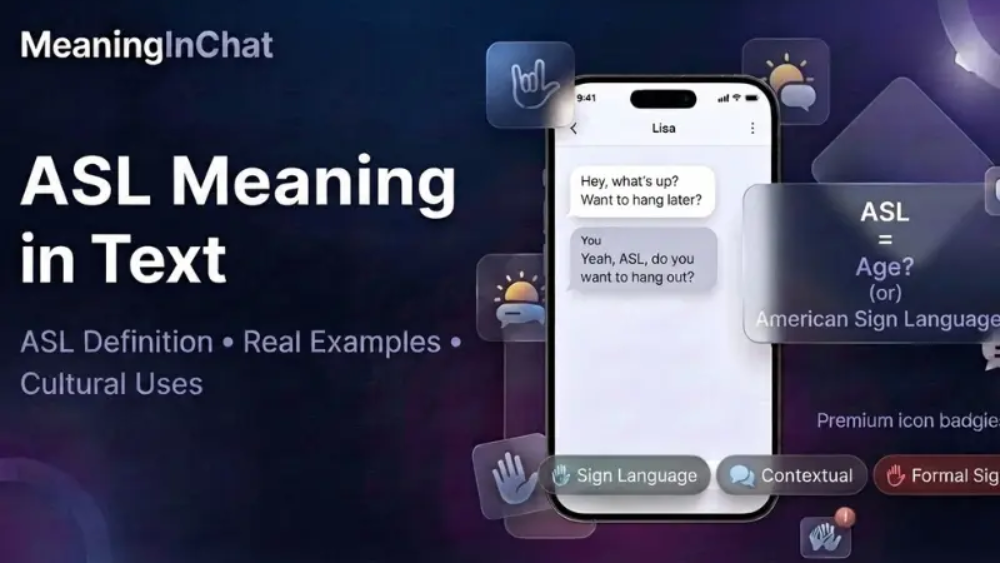
ASL usually means “Age, Sex, Location?” in text messages and online chats. People use it to ask someone’s age, gender, and where they live when getting to know them online. However, ASL can also stand for American Sign Language, so the correct meaning depends on the context. In casual texting, “Age, Sex, Location?” is the definition you’ll see most often.
Internet abbreviations have become a normal part of everyday communication, helping people send messages faster across text messages, social media, and online chats. While some acronyms have only one meaning, others can represent different phrases depending on the situation. ASL is one of the best examples because its meaning changes based on the context of the conversation.
If you’ve received a message that simply says “ASL?”, the sender is usually asking “Age, Sex, Location?” This abbreviation became popular in the early days of online chat rooms and is still occasionally used on messaging apps and social media. However, in other situations, ASL may refer to American Sign Language, especially in discussions about education, accessibility, or the Deaf community.
In this guide, you’ll learn what ASL means in text, what it stands for, when people use it, real chat examples, how it’s used across different messaging platforms, the difference between its common meanings, and how to identify the correct definition based on the conversation.
If you’re learning popular chat abbreviations, you may also like our guide on WSG Meaning in Text, another common slang term used in online conversations.What Does ASL Mean in Text?
If someone sends you “ASL?” in a text message or online chat, they’re usually asking for three basic pieces of information:
- Age
- Sex (or Gender)
- Location
The abbreviation became popular in the early days of internet chat rooms, where people used it as a quick way to introduce themselves and learn more about others. Even today, you’ll occasionally see ASL in text messages, online games, social media, and messaging apps when someone is starting a conversation.
Example
Alex: ASL?
Jordan: 22, Male, California.
Here, Alex is simply asking Jordan for their age, gender, and location.
Example
Emma: Hey! ASL?
Sophia: 19, Female, Toronto.
This is a common way people introduce themselves when chatting with someone new online.
It’s important to remember that ASL doesn’t always mean “Age, Sex, Location?” In conversations about education, accessibility, or the Deaf community, it usually stands for American Sign Language. The surrounding conversation will almost always make the intended meaning clear.
If you’re learning common internet abbreviations, check out our guide on OTP Meaning in Text, another popular acronym with multiple meanings depending on the context.What Does ASL Stand For?
Although ASL is most commonly used to mean “Age, Sex, Location?” in text messages, it doesn’t always represent the same phrase. The abbreviation has two widely recognized meanings, and the correct one depends on the conversation.
| ASL Meaning | Used In | Example |
|---|---|---|
| Age, Sex, Location? | Text messages, chat rooms, social media | ASL? I’m 21, Male, Texas. |
| American Sign Language | Education, accessibility, Deaf community | She’s learning ASL at college. |
Age, Sex, Location?
In casual texting, this is the meaning you’ll see most often. People use ASL when they want to know someone’s basic information before continuing a conversation. Although it was especially popular in early internet chat rooms, it’s still occasionally used on messaging apps and online communities today.
American Sign Language
Outside of texting slang, ASL also stands for American Sign Language, a complete and natural language used by many Deaf and hard-of-hearing people in the United States and parts of Canada. If the conversation is about schools, communication, accessibility, or sign language, this is almost certainly the intended meaning.
The easiest way to identify the correct definition is by reading the surrounding conversation. In casual online chats, ASL usually refers to “Age, Sex, Location?”, while educational or accessibility-related discussions almost always refer to American Sign Language.
If you’re interested in abbreviations with multiple meanings, you may also like MO Meaning in Text, another acronym whose definition depends on the context.Where Did ASL Come From?
The abbreviation ASL became popular during the early days of the internet, especially in online chat rooms and instant messaging platforms like AOL Instant Messenger (AIM), Yahoo! Messenger, and IRC. Since users often chatted with strangers, they wanted a quick way to learn basic information before continuing the conversation.
Instead of typing “How old are you? Are you male or female? Where are you from?”, people simply typed “ASL?” This three-letter abbreviation saved time and quickly became one of the most recognizable internet acronyms of the late 1990s and early 2000s.
Although modern social media platforms have changed the way people communicate, ASL still appears in text messages, online games, Discord servers, and messaging apps. While it’s less common than it once was, many people continue to recognize it as a classic internet abbreviation.
It’s also important to remember that ASL has another widely accepted meaning: American Sign Language. This meaning developed independently and is commonly used in education, accessibility, and discussions about the Deaf community. The conversation itself usually makes it clear which definition is intended.
If you’re interested in classic internet slang, check out our guide on BRB Meaning in Text, another abbreviation that became popular during the early days of online messaging.When Should You Use ASL?
ASL is most appropriate when you’re getting to know someone in a casual online conversation. If you’re chatting with a new person on a messaging app, gaming platform, or social media, asking “ASL?” is a quick way to learn their age, gender, and location before continuing the conversation.
Example: Starting a Conversation
Chris: Hey! ASL?
Taylor: 24, Female, New York.
In this example, ASL helps break the ice and start a casual conversation.
Example: Meeting Someone in a Gaming Community
Alex: ASL?
Jordan: 20, Male, London.
Players sometimes use the abbreviation to introduce themselves before continuing the discussion.
When You Shouldn’t Use ASL
Although ASL is still recognized, it’s less common than it was years ago. Some people may find the question too personal, especially if they don’t know you well. If someone isn’t comfortable sharing personal information, it’s important to respect their privacy and continue the conversation without asking again.
You should also avoid using ASL in professional emails, workplace conversations, or formal communication. In those situations, introducing yourself naturally is much more appropriate than using internet slang.
Remember that if the conversation is about sign language, education, or accessibility, ASL refers to American Sign Language, not “Age, Sex, Location?” Context always determines the correct meaning.
If you’re learning more online conversation starters, check out our guide on HRU Meaning in Text, another common abbreviation used to begin friendly conversations.Real Examples of ASL in Conversations
The easiest way to understand ASL is by seeing how it’s used in real conversations. In casual texting, it usually means “Age, Sex, Location?” and is often used when people are getting to know each other online.
Example: Meeting Someone New
Emma: Hi! ASL?
Liam: 22, Male, Chicago.
Here, Emma is asking for Liam’s age, gender, and location before continuing the conversation.
Example: Social Media Chat
Olivia: ASL?
Sophia: 19, Female, Toronto.
This is a common way to start a casual conversation with someone you’ve recently met online.
Example: Gaming Community
Alex: ASL? Looking for teammates.
Chris: 25, Male, Texas.
In gaming communities, people sometimes use ASL as a quick introduction before playing together.
Example: American Sign Language Context
Sarah: Do you know ASL?
Michael: Yes, I’ve been learning American Sign Language for two years.
In this conversation, ASL clearly means American Sign Language, not “Age, Sex, Location?” The surrounding topic makes the intended meaning obvious.
These examples show why context is important. The same abbreviation can represent different phrases, but the conversation almost always tells you which meaning is correct.
If you’re interested in abbreviations with multiple meanings, check out our guide on OTP Meaning in Text, another acronym whose definition depends on the context.How ASL Is Used on Different Messaging Platforms
Although ASL has been around since the early days of the internet, people still use it on several messaging platforms today. The meaning usually stays the same, but the way it’s used depends on the type of conversation.
Snapchat
On Snapchat, ASL sometimes appears when people add new friends and want to learn a little about them. Instead of asking several separate questions, they simply send “ASL?” to start the conversation.
Example:
ASL? You seem cool.
On Instagram, the abbreviation occasionally appears in direct messages between people who have recently connected through mutual friends or shared interests. However, many users now prefer asking each question separately instead of using the abbreviation.
Discord
In Discord servers and gaming communities, ASL is sometimes used before joining voice chats or multiplayer games. Players may ask for basic information to get to know each other or find people in a similar age group.
Example:
ASL? Looking for teammates around my age.
Because WhatsApp conversations usually happen between friends or family members, ASL isn’t used as often. If you do receive it, the sender is most likely asking your age, gender, and location.
When ASL Means American Sign Language
On educational websites, accessibility forums, schools, and community groups, ASL almost always refers to American Sign Language rather than Age, Sex, Location. The topic of the conversation makes the intended meaning clear.
No matter which platform you’re using, reading the surrounding messages is the easiest way to understand which definition of ASL is being used.
If you’re learning more social media abbreviations, you may also like WYA Meaning in Text, another common acronym used in online conversations.ASL vs HRU vs WSG vs WYD
Many texting abbreviations are used to start conversations, but each one has a different purpose. Knowing the difference helps you reply naturally and avoid misunderstandings.
| Abbreviation | Full Form | Purpose | Example |
|---|---|---|---|
| ASL | Age, Sex, Location? | Asking someone’s basic information | ASL? 21, Female, California. |
| HRU | How Are You? | Asking how someone is feeling | HRU today? |
| WSG | What’s Good? | Casual greeting | WSG? Long time no see! |
| WYD | What You Doing? | Asking what someone is doing | WYD this evening? |
Although these abbreviations can all begin a conversation, they aren’t interchangeable. ASL is used to learn basic details about someone, while HRU focuses on their well-being. WSG is simply a friendly greeting similar to “What’s up?”, and WYD asks about a person’s current activity or plans.
If you’re talking to someone for the first time, ASL may help you get to know them. If you’re chatting with a friend, HRU, WSG, or WYD will usually sound more natural depending on the situation.
If you want to learn more conversation starters, read our guides on HRU Meaning in Text and WYD Meaning in Text.Common Mistakes People Make With ASL
Although ASL is a well-known internet abbreviation, it’s easy to misunderstand if you ignore the context. Here are the most common mistakes people make and how to avoid them.
Assuming ASL Always Means “Age, Sex, Location?”
Many people immediately think ASL means “Age, Sex, Location?” While that’s true in most text messages and online chats, the abbreviation can also stand for American Sign Language. The topic of the conversation usually makes the intended meaning clear.
Forgetting That ASL Is Informal
Using ASL is fine in casual chats, gaming communities, and social media conversations. However, it’s not appropriate for professional emails, workplace communication, or formal writing, where complete questions are more suitable.
Asking Personal Questions Too Quickly
Although ASL was once a common way to introduce yourself online, some people today prefer not to share personal details with strangers. If someone doesn’t answer your question, it’s best to respect their privacy and continue the conversation naturally.
Ignoring the Context
The easiest way to understand ASL is to read the messages before and after it. If the discussion is about online introductions, it usually means “Age, Sex, Location?” If the topic involves education, accessibility, or the Deaf community, it almost certainly refers to American Sign Language.
If you’re learning abbreviations that have multiple meanings, check out OTP Meaning in Text, another acronym whose definition depends on the conversation.📚 See Also
Interested in learning more internet slang? Explore these related guides to understand the most common abbreviations used in text messages and social media.
- WSG Meaning in Text — Learn what WSG means and how it’s used as a casual greeting in online conversations.
- OTP Meaning in Text — Discover the different meanings of OTP in texting and social media.
- HRU Meaning in Text — Find out how HRU is used to ask someone how they’re doing.
- WYD Meaning in Text — See what WYD means and when people use it in everyday texting.
- MO Meaning in Text — Learn the different meanings of MO in chats and online conversations.
- ONM Meaning in Text — Discover what ONM stands for and how it’s used to end conversations politely.
FAQs
What does ASL mean in text?
In text messages, ASL usually stands for “Age, Sex, Location?” It’s a quick way to ask someone’s age, gender, and where they live when starting an online conversation.
What does ASL stand for?
ASL has two common meanings. In casual texting, it means “Age, Sex, Location?” In other contexts, especially education and accessibility, it stands for American Sign Language.
Is ASL still used today?
Yes, although it’s not as common as it was during the early days of internet chat rooms. You may still see ASL in text messages, gaming communities, Discord servers, and social media conversations.
Does ASL always mean “Age, Sex, Location?”
No. The meaning depends on the context. In online chats, it usually means “Age, Sex, Location?”, while in discussions about the Deaf community or education, it refers to American Sign Language.
Is it safe to answer an ASL question online?
Only share personal information if you’re comfortable doing so and trust the person you’re talking to. If you’re chatting with someone you don’t know, it’s always a good idea to protect your privacy.
Where is ASL commonly used?
You’ll most often see ASL in text messages, Discord, online gaming communities, Snapchat, Instagram, and other social media platforms. It also appears in educational settings where it refers to American Sign Language.
Conclusion
ASL is one of the oldest internet abbreviations and is still recognized by many people today. In most text messages and online chats, it stands for “Age, Sex, Location?” and is used as a quick way to get to know someone. However, in conversations about education, accessibility, or the Deaf community, ASL refers to American Sign Language.
The easiest way to Know the correct meaning is to look at the context. Once you know how the abbreviation is used, it’s easy to recognize whether someone is asking for basic personal information or talking about sign language. Knowing both meanings will help you avoid confusion and communicate more confidently in online conversations.
