
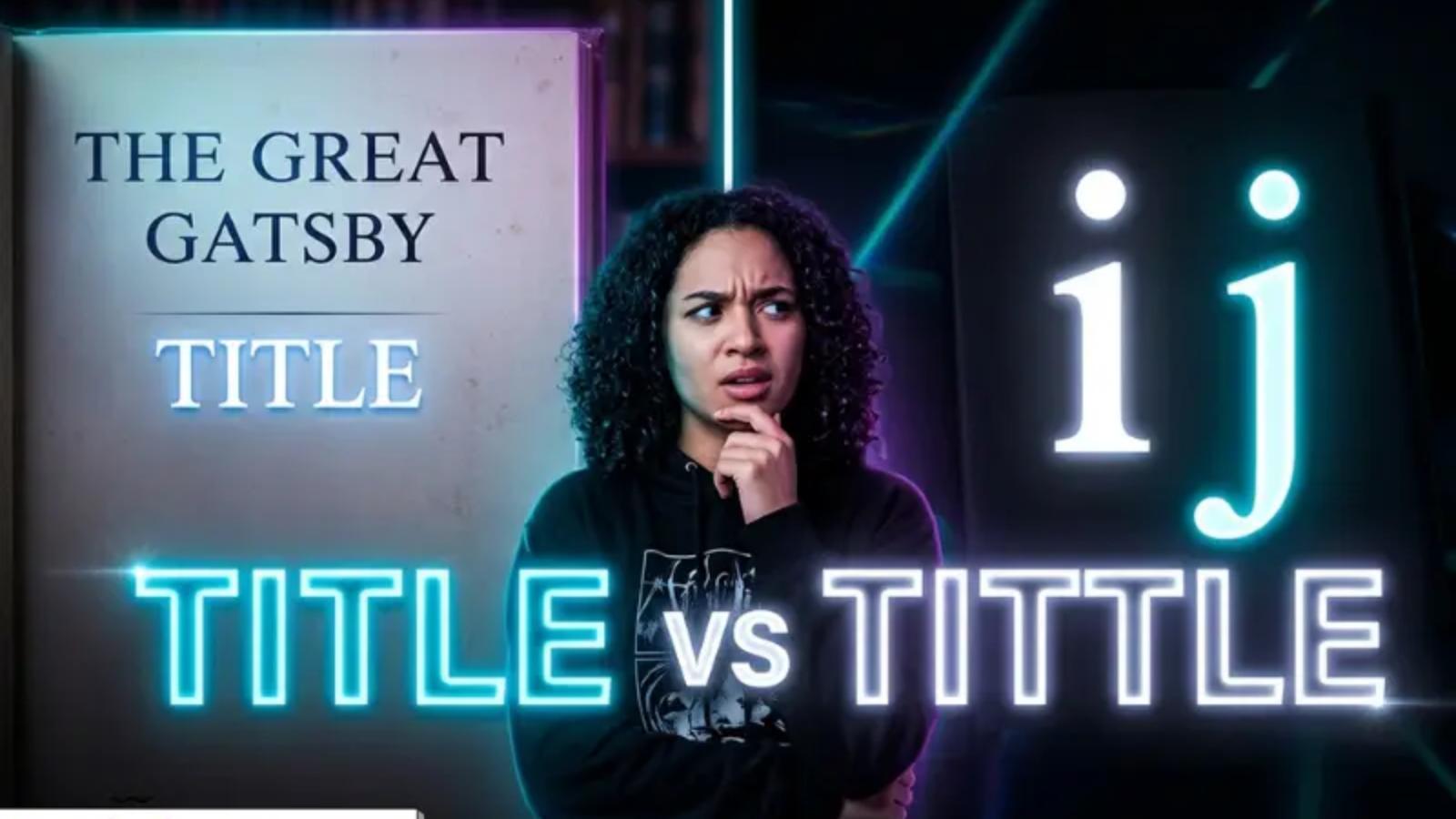
The correct spelling is “title”, not “tittle” in most situations.
Title means a name, heading, rank, position, or label given to something or someone.
Tittle is a real English word, but it has a completely different meaning. It refers to a small mark or dot, especially the dot above letters like i and j.
In simple words:
✔ Title = name, heading, position
✔ Tittle = small dot or mark
The confusion between title vs tittle is very common because these two words look almost identical. They have only one extra letter difference, but their meanings are completely different.
Many people search for title or tittle because they see both spellings online and wonder whether they are interchangeable. The truth is that both words exist in English, but they are used in completely different situations.
The word title appears everywhere in daily life. We use titles for books, movies, articles, jobs, people, documents, and many other things. For example, the name of a book is its title, and “Doctor” is a title given to a person.
On the other hand, tittle is a much less common word. It describes a tiny dot or small mark used in writing. A simple example is the dot above the letter “i.”
This article explains the complete difference between tittle vs title, correct usage, examples, common mistakes, and how to choose the right word.
Title vs Tittle Main Difference
| Word | Meaning | Common Use | Example |
| Title | Name, heading, rank, position | Books, movies, people, documents | Book title |
| Tittle | Small dot or mark | Writing and letters | Dot above i |
| Title | Identification or label | Articles, songs, jobs | Song title |
| Tittle | Tiny detail | Rare expression | A small tittle mark |
What Does “Title” Mean?
The word title has several meanings depending on the situation. It is one of the most commonly used words in English.
A title can be:
- The name of a book, movie, song, or article
- A position or rank
- A name used before someone’s name
- A heading that describes content
- A label or identification
Examples of Title:
- The title of this book is interesting.
- “Mr.” and “Mrs.” are common social titles.
- She earned the title of champion.
- What is the title of your presentation?
The meaning changes slightly based on context, but it always relates to identification, naming, or status.
What Does “Tittle” Mean?
The word tittle is a genuine English word, but it is rarely used in everyday conversation.
A tittle means:
- A small dot
- A tiny mark
- A very small detail
The most common example is the dot above the letters:
- i
- j
That tiny mark is called a tittle.
Examples:
- The letter “i” has a tittle above it.
- The designer carefully placed every small tittle in the logo.
- A tiny tittle can change the appearance of writing.
Because the word is uncommon, many people mistake it for a spelling variation of “title.”
Title or Tittle Which One Should You Use?
Choosing between title or tittle depends completely on your meaning.
Use title when talking about:
✔ Names
✔ Headings
✔ Positions
✔ Awards
✔ Labels
Use tittle when talking about:
✔ Small dots
✔ Tiny marks
✔ Minor details
Examples:
Correct:
- The movie title is amazing.
- The letter has a missing tittle.
Incorrect:
- The movie tittle is amazing. ❌
- The letter has a missing title. ❌
Why People Confuse Title and Tittle
The confusion happens mainly because the words are visually similar.
They both:
- Start with “tit”
- Have similar pronunciation
- Differ by only one letter
Many people assume tittle is just an alternate spelling of title, but English does not work that way. Some words may look similar while having unrelated meanings.
Another reason is that people often hear words before reading them. Since “title” and “tittle” sound close, spelling mistakes happen frequently.
Tittle vs Title Pronunciation Difference
The pronunciation difference is small but important.
Title:
Usually pronounced like:
“tie-tuhl”
Example:
- book title
- movie title
Tittle:
Usually pronounced like:
“tit-uhl”
Example:
- dot above i
The middle sound is slightly different, but in fast speech, they may sound almost identical.
Title vs Tittle in Everyday Communication
In normal conversations, you will use title much more often.
People talk about titles when discussing:
- Books
- Movies
- Jobs
- Names
- Awards
- Social positions
The word tittle appears mostly in:
- Typography
- Writing discussions
- Language explanations
- Design contexts
Title Usage Examples
Here are different ways “title” is used:
Book Title
- I forgot the title of that novel.
Movie Title
- The movie title sounds exciting.
Job Title
- Her job title is manager.
Personal Title
- Doctor is a professional title.
Championship Title
- He won the world title.
Tittle Usage Examples
Although uncommon, tittle has specific uses.
Examples:
- The printer missed the tittle on the letter.
- The font designer adjusted the tittle of the character.
- Every small tittle matters in handwritten text.
Is It Title vs Tittle? Correct Question Explained
Many users search its it title vs tittle because they are unsure which spelling is right.
The correct phrase is:
✔ Is it title vs tittle?
✔ What is the difference between title and tittle?
Not:
❌ Its it title vs tittle?
The word “its” shows ownership, while “is it” creates a question.
Common Mistakes With Title and Tittle
Mistake 1
Using Tittle for Names
Wrong:
The article tittle is interesting. ❌
Correct:
The article title is interesting. ✔
Mistake 2
Using Title for Letter Marks
Wrong:
The dot above i is a title. ❌
Correct:
The dot above i is a tittle. ✔
Mistake 3
Assuming Tittle Is Wrong
Some people think “tittle” is not a real word.
Actually, it is a valid English word, but it has limited usage.
Title vs Tittle Comparison
| Category | Title | Tittle |
| Word type | Noun | Noun |
| Frequency | Very common | Rare |
| Meaning | Name or rank | Small mark |
| Used in books | Yes | No |
| Used in typography | Sometimes | Yes |
| Daily conversation | Common | Uncommon |
Title in Modern Media
The word title is everywhere in modern media.
Examples include:
- Video titles
- News titles
- Social media titles
- Song titles
- Game titles
A good title helps people identify what something is about.
For example:
- The title of a video tells viewers its topic.
- The title of a movie gives its identity.
Tittle in Writing and Design
The word tittle is mostly connected with written characters.
Typography experts and designers may discuss:
- Letter shapes
- Fonts
- Character details
- Spacing
A small mark like a tittle may seem insignificant, but it affects how letters look.
Similar Words Related to Title
Some words connected with title include:
| Word | Meaning |
| Heading | Name of a section |
| Caption | Short description |
| Label | Identification mark |
| Name | Identifier |
| Rank | Position |
Similar Words Related to Tittle
Words close to tittle include:
| Word | Meaning |
| Dot | Small round mark |
| Mark | Visible sign |
| Point | Tiny spot |
| Detail | Small feature |
Title or Tittle in Online Writing
Most online content uses the word title because it refers to names and headings.
Examples:
- Article title
- Page title
- Video title
- Blog title
The word tittle is almost never used in this context.
See Also:
FAQs
Is tittle a correct word?
Yes, tittle is a real English word meaning a small dot or mark.
What is the difference between title and tittle?
Title means a name, heading, or position. Tittle means a small mark or dot.
Which is correct: title or tittle?
Both are correct words, but they have different meanings.
Is a book called a title or tittle?
A book has a title.
What is the tittle on an i?
The small dot above “i” is called a tittle.
Why do people confuse title and tittle?
Because they look and sound very similar.
Conclusion
The difference between title vs tittle is simple once you know their meanings. A title is a name, heading, label, or position, while a tittle is a tiny dot or mark used in writing.
Although these words look almost the same, they are not interchangeable. Most everyday situations require the word title, especially when discussing books, movies, jobs, names, and content.
The word tittle is correct but appears only in specific situations related to letters and small marks.