
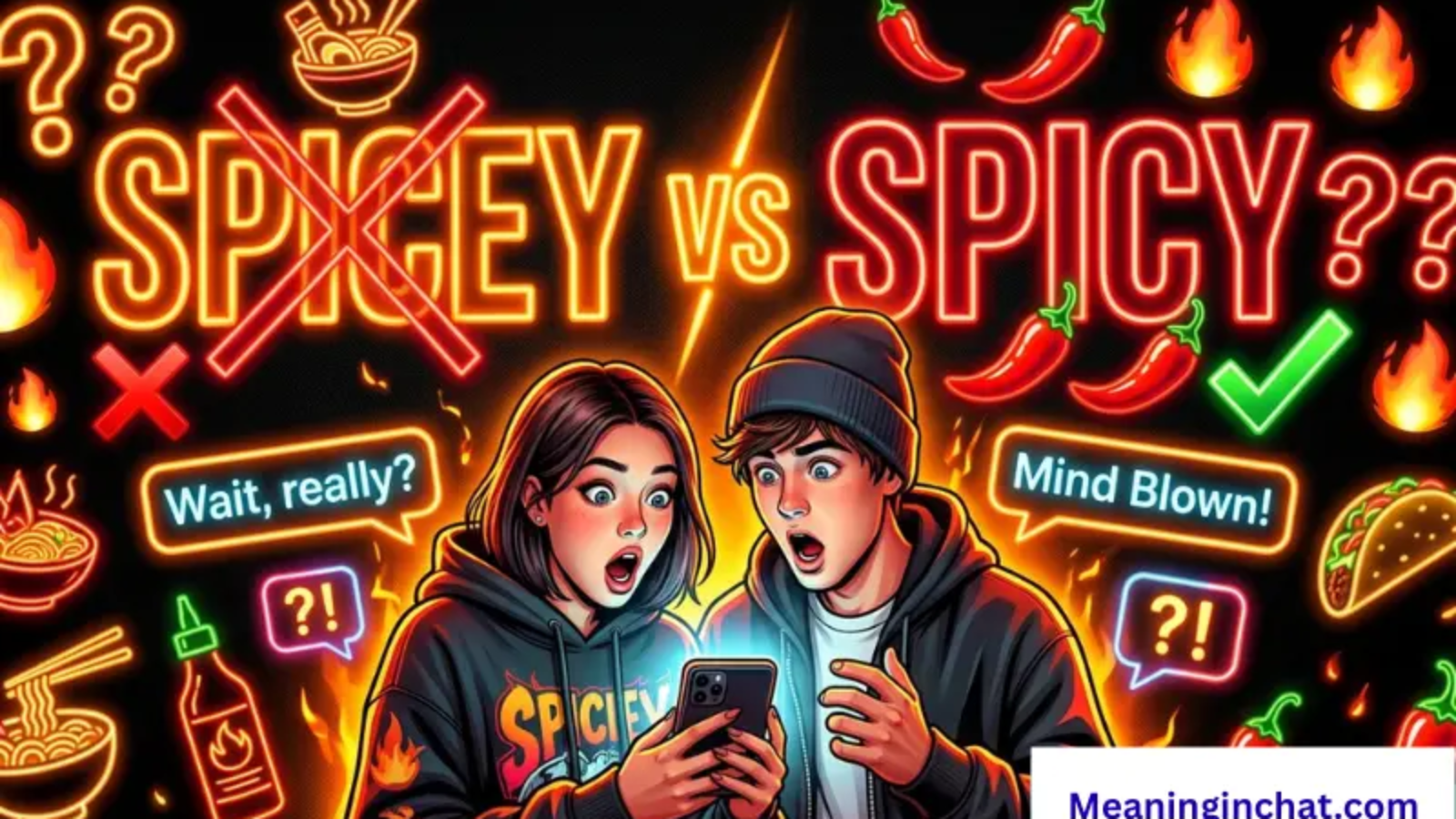
The correct spelling is “spicy”, which refers to food or flavor that has heat, strong seasoning, or pungent taste.
“Spicey” is incorrect in standard English, but it appears in informal writing, brand names, or misspellings of “spicy”.
So in short:
✔ Correct → spicy
❌ Incorrect → spicey
The confusion between spicey vs spicy is very common in everyday writing, especially in chats, social media posts, food blogs, and casual comments. Many people think both words are acceptable variations, but in formal English usage, only one spelling is recognized as correct.
The word “spicy” is widely used to describe food items that contain chili, pepper, or strong seasoning that creates a burning or hot sensation on the tongue. On the other hand, “spicey” is often seen due to spelling mistakes, pronunciation-based writing, or creative branding.
This article breaks down the difference in detail, shows correct usage patterns, explains common confusion points, and provides multiple real-world examples so you never mix them again.
Spicey vs Spicy – Core Difference Table
| Feature | Spicy | Spicey |
| Correct spelling | Yes | No |
| Standard dictionary word | Yes | No |
| Meaning | Hot or strongly flavored food | Common misspelling of spicy |
| Usage in writing | Formal & informal | Informal/errors only |
| Acceptable in English exams | Yes | No |
| Used in branding | Rare but correct | Sometimes used creatively |
What Does “Spicy” Mean?
The word spicy refers to food or flavors that create heat, sharpness, or a strong taste due to ingredients like chili, pepper, ginger, or masala blends.
It can also describe:
- Bold personality traits
- Strong opinions or comments
- Intense situations (informal usage)
Examples of “Spicy” in Sentences
- This curry is very spicy and full of chili flavor.
- I love eating spicy noodles at night.
- The chef added a spicy twist to the dish.
- Her spicy attitude makes conversations interesting.
In most cases, spicy is directly linked to food culture, especially in South Asian, Mexican, Thai, and Indian cuisines.
What Does “Spicey” Mean?
The word spicey does not have an official meaning in standard English dictionaries. It is generally:
- A spelling mistake of “spicy”
- A phonetic variation people write as they pronounce it
- A branding or stylistic choice in rare cases
Even though it appears frequently on social media or menus, it is not considered grammatically correct.
Examples of Incorrect Usage
- This pizza is very spicey ❌
- I like spicey food ❌
- That dish looks too spicey ❌
Correct versions should always use “spicy”.
Spicey or Spicy – Why the Confusion Happens
The confusion between spicey or spicy comes from multiple linguistic and behavioral reasons:
Pronunciation Influence
People pronounce “spicy” in a way that sounds like it might end with “-ey”, leading to spelling mistakes.
Social Media Writing Style
Fast typing and casual communication lead to incorrect spellings becoming common.
Brand Naming Trends
Some food brands intentionally use “spicey” to look unique or catchy.
Lack of Grammar Awareness
Many learners assume both forms are correct because they see both online.
Its it spicey vs spicy – Correct Usage Explained
The phrase “its it spicey vs spicy” is commonly searched due to confusion in spelling comparison.
The correct form should always be:
✔ Is it spicy?
❌ Its it spicey?
Correct Sentence Examples
- Is this food spicy or mild?
- Is the sauce too spicy for kids?
- Is this dish supposed to be spicy?
Incorrect Sentence Examples
- Its it spicey? ❌
- Is it spicey? ❌ (still incorrect spelling)
Spicy vs Spicey Usage Table in Real Context
| Context | Correct Form | Incorrect Form |
| Food description | spicy noodles | spicey noodles |
| Restaurant menu | spicy chicken burger | spicey chicken burger |
| Reviews | very spicy taste | very spicey taste |
| Chat messages | too spicy! | too spicey! |
| Recipes | add spicy sauce | add spicey sauce |
Why “Spicy” is the Standard Form
The word spicy comes from “spice,” which refers to seasoning ingredients used in cooking. The suffix “-y” is added to form an adjective.
Word Formation Breakdown
| Base Word | Suffix | Final Word |
| spice | -y | spicy |
There is no linguistic rule that supports adding “-ey” in this case, which is why “spicey” is not accepted.
Common Mistakes People Make
Many writers and learners repeatedly make similar errors with this word:
Mistake 1
Adding unnecessary “e”
- spicey ❌ instead of spicy ✔
Mistake 2
Mixing spelling in one sentence
- This is spicy and spicey food ❌
Mistake 3
Using both forms interchangeably
- Thinking both are correct ❌
Mistake 4
Typing based on pronunciation
- Writing exactly how it sounds ❌
Spicy in Different Contexts
The word “spicy” is not only limited to food. It has expanded meanings in modern usage.
Food Context
- spicy curry
- spicy ramen
- spicy tacos
Personality Context
- a spicy attitude
- spicy humor
- spicy comments
Social Context
- spicy gossip
- spicy news
- spicy debate
Entertainment Context
- spicy scenes in movies
- spicy plot twists
- spicy dialogues
Spicey or Spicy in Internet Culture
Online platforms often show both spellings, but usage trends clearly favor “spicy”.
Observations:
- “spicy” dominates in professional content
- “spicey” appears mostly in casual posts
- meme culture sometimes uses “spicey” intentionally
- food influencers almost always use “spicy”
Regional Usage Differences
Although English is global, usage patterns differ slightly across regions.
| Region | Common Usage |
| USA | spicy |
| UK | spicy |
| India | spicy (very common due to cuisine references) |
| Pakistan | spicy |
| Philippines | spicy |
| Online slang | spicy / spicey (mixed) |
No region officially uses “spicey” as correct spelling.
Grammar Rule Behind “Spicy”
The correct adjective formation follows a simple pattern:
- noun ending in “e” + “y” → usually drop “e” and add “y”
Example Pattern Table
| Noun | Adjective |
| spice | spicy |
| ice | icy |
| space | spacy (rare usage) |
This rule explains why “spicey” does not fit grammatical structure.
Spicy vs Spicey in Branding
Some food brands or restaurants intentionally use “spicey” to stand out.
Why brands use it:
- Unique identity
- Creative spelling
- Easy trademark recognition
- Visual branding appeal
However, this does not make it grammatically correct.
Examples of Correct Usage in Daily Life
Here are practical sentences showing correct usage:
- I ordered a spicy burger from the restaurant.
- This sauce is too spicy for me.
- She enjoys spicy street food.
- The dish has a spicy aroma.
- I can’t handle very spicy meals.
Spicy Usage Across Categories
| Category | Example |
| Food | spicy noodles, spicy curry |
| Drinks | spicy chai, spicy cocktail (flavored) |
| Personality | spicy mood, spicy tone |
| Entertainment | spicy scenes, spicy jokes |
| Online slang | spicy memes, spicy posts |
Why People Still Search “Spicey”
Despite being incorrect, “spicey” remains popular in searches because:
- People hear it more than they read it
- Typing errors spread quickly
- Autocorrect sometimes fails
- Social media reinforces incorrect spelling
This keeps the confusion alive.
Final Comparison Table Deep Summary
| Factor | Spicy | Spicey |
| Dictionary recognition | Yes | No |
| Correct usage | Always | Never (formal writing) |
| Meaning clarity | Clear | Confusing |
| Professional use | Accepted | Avoid |
| Informal use | Common | Occasional error |
| Recommended choice | Yes | No |
See Also:
FAQs
Is spicey a correct word?
No, “spicey” is not a correct spelling in standard English.
What is correct: spicey or spicy?
The correct spelling is spicy.
Why do people write spicey?
It happens due to pronunciation influence, typing mistakes, or creative branding.
Is spicy only used for food?
No, it can also describe personality, humor, and situations.
Can spicey be used in names?
Yes, but only as a brand or stylistic choice, not as standard English.
Conclusion
The difference between spicey vs spicy is simple but important. The correct and accepted form is spicy, used in food descriptions, personality expressions, and everyday communication. The word spicey appears only as a mistake or creative variation but is not recognized in formal writing.
Using the correct spelling improves clarity and avoids confusion in both casual and professional communication.