
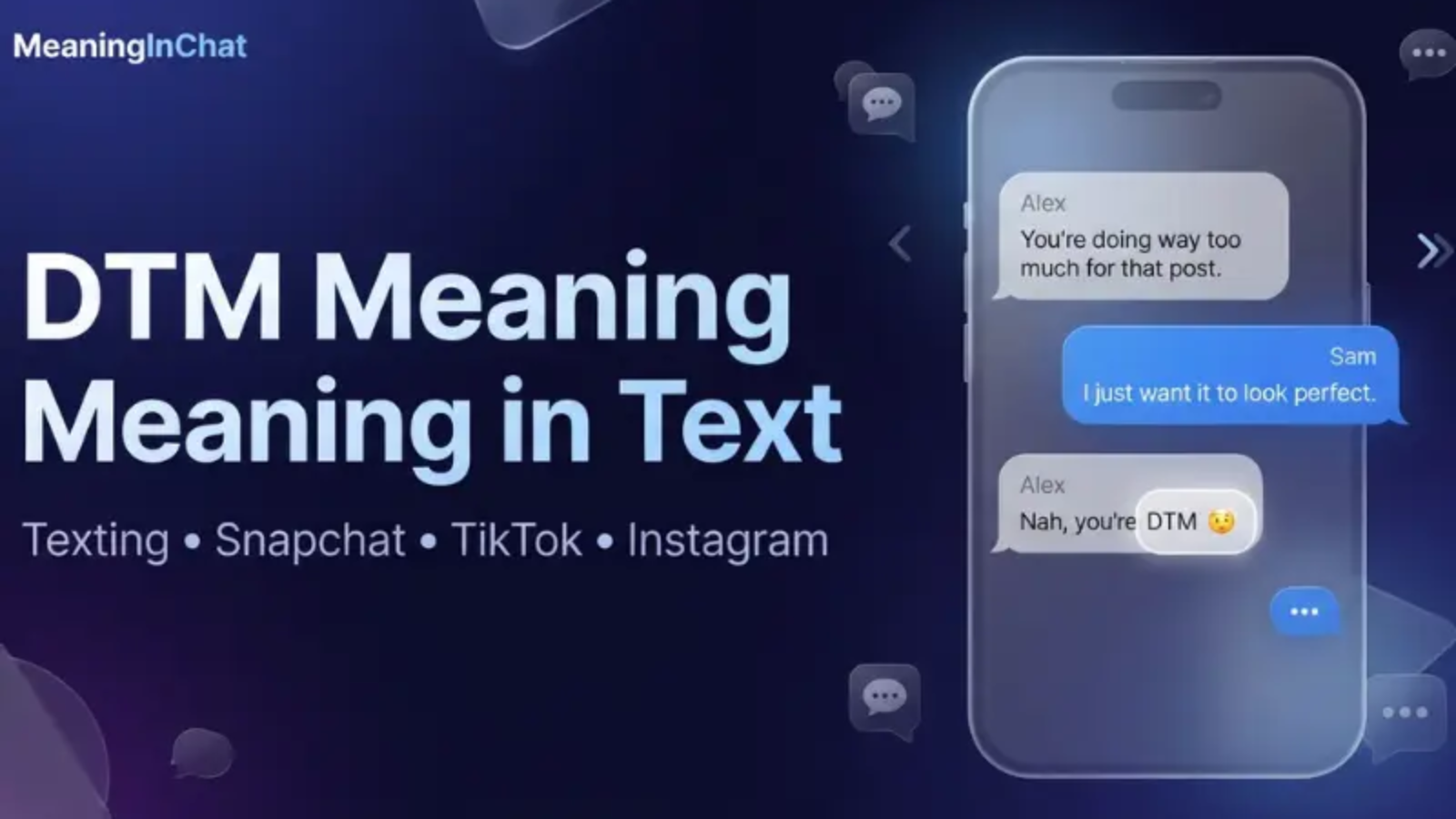
If you’re wondering what does DTM mean in text, it usually stands for “Doing Too Much.” People use it when someone is acting overly dramatic, trying too hard, or making a situation bigger than it needs to be. Depending on the conversation, it can also mean “Don’t Text Me” or “Down To Meet,” but those meanings are far less common.
You might see DTM in a text message, Snapchat chat, TikTok comment, or Instagram DM and wonder what the sender means. While the abbreviation has a few possible definitions, its meaning usually becomes clear from the conversation. Here’s what DTM commonly means, when people use it, and how to recognize the correct interpretation.
The Most Common Meaning of DTM
In texting and online conversations, DTM most often means “Doing Too Much.”
People use it when they think someone is exaggerating, overreacting, or putting unnecessary effort into something. It doesn’t always sound rude—in fact, it’s commonly used between friends as playful teasing rather than serious criticism.
Example Conversation
Emma: I changed my outfit six times before dinner.
Lily: Girl, you’re DTM 😂
Here, Lily isn’t insulting Emma. She’s joking that changing outfits six times is more effort than the situation really needed.
Another example:
Ryan: I wrote a two-page apology text.
Jake: Bro… DTM.
Jake believes Ryan is making the situation more complicated than necessary.
When Do People Say DTM?
Most people use DTM as a reaction rather than a description. Instead of calling someone dramatic all the time, they’re commenting on something the person just did.
You’ll often see it when someone:
- Overreacts to a small problem.
- Sends too many messages without getting a reply.
- Makes a simple situation unnecessarily dramatic.
- Tries too hard to impress someone.
- Turns a harmless joke into a serious argument.
- Gives an over-the-top reaction to ordinary news.
Because it focuses on a specific action, the abbreviation usually feels lighter than directly criticizing someone’s personality.
Does DTM Always Sound Negative?
Not at all. The same abbreviation can sound funny, supportive, or slightly critical depending on how it’s used.
| Tone | Example | Meaning |
| Playful | “You’re DTM 😂” | Friendly teasing |
| Funny | “Bro, DTM 😭” | Laughing at someone’s exaggerated reaction |
| Sarcastic | “Wow… DTM 🙄” | Mild criticism |
| Serious | “You’re honestly DTM.” | Calmly pointing out excessive behavior |
A single emoji can completely change how the message feels, so it’s worth paying attention to the sender’s tone instead of the abbreviation alone.
Where Is DTM Commonly Used?
As of 2026, DTM remains popular across casual messaging apps and social media platforms where people communicate using short reactions and internet slang.
| Platform | Typical Use |
| Text Messages | Reacting to dramatic behavior |
| Snapchat | Replying to Stories or chats |
| TikTok | Commenting on over-the-top videos |
| Responding to Reels, posts, or DMs | |
| Discord | Casual conversations with friends |
| X (Twitter) | Quick reactions to trending posts |
Although the platform changes, the meaning usually stays the same. In most cases, DTM is simply a quicker way of saying, “You’re doing more than necessary.”
Other Meanings of DTM
While Doing Too Much is the definition you’ll encounter most often, DTM can mean different things in specific conversations.
| Meaning | When It’s Used |
| Doing Too Much | Everyday texting and social media |
| Don’t Text Me | Ending or pausing a conversation |
| Down To Meet | Making plans with someone |
| Dead To Me | Playful joke after disappointment |
Don’t Text Me
Taylor: Whatever… DTM.
Here, Taylor is asking the other person to stop messaging them.
Down To Meet
Alex: Want to grab coffee later?
Ben: Yeah, DTM.
In this conversation, Ben is saying he’s available to meet.
Dead To Me
Chris: I finished the pizza without you.
Mike: Bro, you’re DTM 😂
Friends often use this meaning jokingly after a minor disappointment.
Although these alternative definitions still appear online, they’re much less common than Doing Too Much in everyday texting.
How to Tell Which Meaning Someone Intended
The easiest way to figure out DTM is to read the messages around it.
If someone is reacting to dramatic behavior, they’re almost certainly saying Doing Too Much.
If the conversation is ending after an argument, Don’t Text Me makes more sense.
If two people are arranging plans, Down To Meet is the likely interpretation.
Rather than memorizing every possible definition, focus on the situation. In most cases, the conversation itself tells you exactly which meaning fits.
How to Reply to DTM
If someone sends DTM, your response should match the tone of the conversation. Since the abbreviation can be playful, sarcastic, or slightly critical, there’s no single “correct” reply.
Here are a few natural responses:
| If They Mean… | You Could Reply |
| Playful teasing | “😂 Maybe I am.” |
| Friendly joke | “Fair enough!” |
| You agree | “You’re right, I went a little overboard.” |
| You disagree | “I don’t think I was doing that much.” |
| Down To Meet | “Perfect, see you then!” |
The best response is usually short and conversational. Avoid overthinking it—the abbreviation is meant to keep chats casual.
DTM vs. Similar Slang
Many internet abbreviations describe someone’s behavior, but they aren’t interchangeable. Knowing the difference helps you understand the speaker’s intention.
| Slang | Meaning | How It’s Different |
| DTM | Doing Too Much | Someone is exaggerating or overreacting. |
| Extra | Overly dramatic or attention-seeking | Often describes a person’s style or personality. |
| OD | Overdoing it | Usually stronger criticism than DTM. |
| FR | For Real | Shows agreement or emphasizes sincerity. |
| SMH | Shaking My Head | Expresses disappointment or disbelief. |
| IJBOL | I Just Burst Out Laughing | Used to show something is extremely funny. |
For example, someone can be extra every day, but they might only be DTM during a particular situation.
Common Mistakes People Make
Assuming DTM Always Means the Same Thing
Although “Doing Too Much” is the meaning you’ll see most often, don’t assume it applies to every conversation. Messages about meeting up or ending an argument may use a different definition.
Taking It as a Serious Insult
Friends frequently use DTM to tease each other. A laughing emoji or casual tone usually means the sender isn’t trying to offend anyone.
Using It in Professional Conversations
DTM belongs in casual chats, not workplace emails or business messages. Many people outside internet culture may not recognize the abbreviation, making your message confusing instead of clear.
Is DTM Still Popular in 2026?
Yes. As of 2026, DTM continues to appear regularly in text messages and across platforms like TikTok, Snapchat, Instagram, Discord, and X. While new slang constantly emerges, Doing Too Much has remained popular because it’s short, expressive, and easy to understand once you know the context.
It’s especially common among younger users who prefer quick reactions instead of typing full sentences.
See Also:
FAQs
Can DTM be a compliment?
Usually, no. It’s more of a playful observation or mild criticism. However, close friends sometimes use it jokingly, so it doesn’t always carry a negative tone.
Does DTM mean the same thing on Snapchat and TikTok?
Most of the time, yes. On both platforms, it usually means Doing Too Much, especially in comments, direct messages, and replies.
Why do people say DTM instead of typing the full phrase?
Like many internet abbreviations, DTM saves time while keeping conversations casual. It’s faster to type and widely recognized among people who regularly use online slang.
Is DTM only used by Gen Z?
No. Although it’s especially popular with Gen Z and younger millennials, anyone familiar with texting slang may use it in casual conversations.
Can DTM have more than one meaning?
Yes. Besides Doing Too Much, it can also mean Don’t Text Me, Down To Meet, or Dead To Me. The conversation almost always reveals which meaning is intended.
Should I use DTM in formal writing?
No. It’s best reserved for personal messages, social media, and casual chats. In professional communication, writing the full phrase is usually the better choice.
Conclusion
DTM is one of those abbreviations that’s easy to understand once you’ve seen it used in real conversations. In most text messages and social media chats, it simply means “Doing Too Much,” describing behavior that feels exaggerated, unnecessary, or over-the-top. Other meanings do exist, but they’re much less common and usually become obvious from the surrounding messages.
If you’re ever unsure, don’t focus only on the abbreviation itself. Read the conversation, notice the tone, and pay attention to any emojis or recent messages. Those small details usually tell you exactly what the sender intended. Once you recognize how DTM is used, you’ll find it much easier to understand not only this abbreviation but many other pieces of modern texting slang as well.